
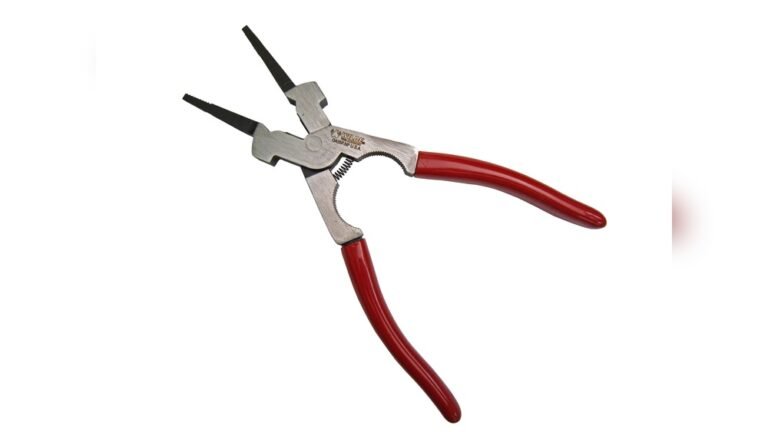
Welding pliers are essential tools for any welder, serving multiple purposes on the job. From holding hot metal to cleaning welding tips, these versatile pliers are indispensable. Understanding the different types and their specific uses can significantly improve a welder’s efficiency and safety.
This article will explore the various kinds of welding pliers, their features, and why they are crucial for professional welders.
The Multi-purpose Welding Pliers
The most common type of welding pliers is the multi-purpose welding plier. These are often the go-to tool for many welders due to their versatility. They are typically made from strong steel and designed to perform several tasks.
One of the primary functions of multi-purpose pliers is handling hot metal. Welders often need to move or position pieces of metal that have just been welded. These pliers provide a secure grip, allowing welders to manipulate hot workpieces without getting burned. Their sturdy construction ensures they can handle significant weight and heat.
Another key use is for removing slag and spatter. In processes like Stick welding (SMAW) or Flux-Cored Arc Welding (FCAW), a layer of slag forms over the weld. Welders use the jaws or a pointed tip on the pliers to chip away this slag, revealing a clean weld underneath. They are also used to knock off stubborn weld spatter that adheres to the workpiece or the welding gun.
Features Of Multi-purpose Welding Pliers
These pliers often come with several design features that enhance their utility. Many have a hammer head integrated into the handle. This allows welders to lightly tap or adjust metal pieces, or even to strike a welding arc to start the process.
The jaws of multi-purpose pliers are usually serrated to provide a strong grip. Some models also include a wire cutter for snipping off excess welding wire. Many also feature a nozzle cleaning hole designed to remove hardened metal from the tip of a MIG welding gun. This is crucial for maintaining consistent gas flow and a clean electrical contact, which are vital for quality welds.
Specialized Welding Pliers
While multi-purpose pliers are popular, some specialized pliers cater to specific welding needs or processes. These offer enhanced performance for particular tasks.
Mig Pliers
MIG welding pliers are specifically designed for Gas Metal Arc Welding (GMAW). MIG welding involves feeding a continuous wire electrode through a welding gun. These pliers are optimized for maintaining the MIG gun and managing the wire.
MIG pliers often have longer, thinner jaws compared to general-purpose pliers. This allows for better access to the confined spaces of the MIG gun nozzle. They are excellent for removing spatter that accumulates inside the nozzle and around the contact tip.
Many MIG pliers also feature a built-in wire cutter that is specifically designed to cut MIG wire cleanly. This prevents wire jams and ensures a smooth feed. Some models have a nozzle adjustment feature, allowing welders to tighten or loosen the nozzle on the gun.
Tig Pliers
TIG welding pliers are less common as a distinct category because TIG welding (Gas Tungsten Arc Welding – GTAW) generally produces less spatter and slag. However, some welders might use specialized pliers for manipulating filler rod or holding small parts.
Often, needle-nose pliers or small, precise locking pliers are used in TIG welding for delicate tasks. These tools allow for fine control when adding filler material to the weld puddle or when holding small components in place. The emphasis in TIG is on precision, so tools that offer fine manipulation are preferred.
Plier-style Clamps
While not strictly pliers, plier-style clamps are often used in welding environments for their ability to quickly secure workpieces. These tools act like a clamp but are operated with a lever or trigger mechanism, similar to how pliers work.
These clamps are useful for holding metal pieces together while welding, ensuring they don’t shift during the process. They offer a strong, adjustable grip and can be quickly released. They are particularly handy when tack welding parts before a full seam weld.

Credit: www.amazon.com
Key Features To Consider When Choosing Welding Pliers
When selecting welding pliers, several factors are important to ensure you get the right tool for your needs. The material, grip, and specific features all play a role.
Material And Durability
Welding pliers are exposed to high heat and often rough handling. Therefore, they should be made from high-quality steel, such as chrome vanadium or forged steel. This ensures durability and resistance to heat damage. The handles should be comfortable and provide a good grip, often insulated to protect against heat and electrical shock.
Jaw Design And Grip
The design of the jaws is critical. Serrated jaws provide excellent grip on metal. For MIG welding, jaws designed to clean nozzles and tips are essential. Some pliers have a smooth jaw section for delicate handling without marring surfaces.
Additional Features
Consider the extra features that might be beneficial. A hammer head can be useful for minor adjustments. A wire cutter is a must for MIG and flux-cored welding. A pointed tip on some pliers can be used for poking or cleaning small areas.
Ergonomics And Comfort
Welders often spend long hours using their tools. Ergonomically designed handles can reduce fatigue and improve comfort. Padded or rubberized grips can enhance control and reduce the risk of slipping.
How Different Welding Processes Use Pliers
The type of welding performed dictates the primary use of pliers. Understanding this connection helps in choosing the right tool.
Stick Welding (smaw)
In Stick welding, pliers are mainly used for chipping away slag that covers the weld. They are also used to remove the old electrode stub from the electrode holder. Some welders use them to clean the surface of the metal before welding.
Mig Welding (gmaw)
For MIG welding, pliers are indispensable for maintaining the MIG gun. This includes removing spatter from the nozzle and tip, cutting excess wire, and sometimes adjusting the nozzle. A good pair of MIG pliers can significantly reduce downtime and improve weld quality by ensuring proper gas flow and electrical contact.
Flux-cored Arc Welding (fcaw)
Similar to Stick welding, FCAW produces slag that needs to be removed. Flux-cored welding pliers are used for slag removal and also for managing the wire feed, including cutting off excess wire.
Tig Welding (gtaw)
TIG welding produces a very clean weld with minimal slag or spatter. Therefore, TIG welders typically use pliers less frequently. When used, they are usually for manipulating filler rod or holding small pieces. Precision tools like needle-nose pliers are often preferred.
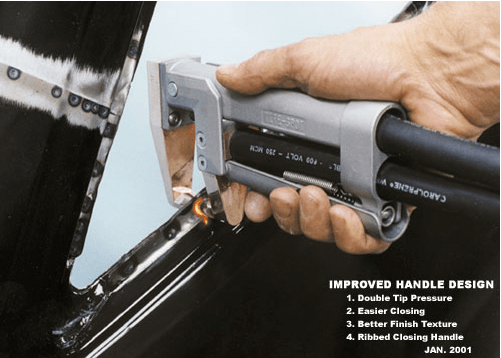
Credit: www.titespot.com
Pro Tip: Maintenance For Longevity
To keep your welding pliers in top condition, clean them regularly. Remove any metal dust, spatter, or slag buildup. A light application of oil can prevent rust, especially if the pliers are stored in a humid environment. Inspect the jaws for wear and tear, and replace them if they no longer provide a secure grip.
Frequently Asked Questions
What Is The Most Common Type Of Welding Plier?
The most common type is the multi-purpose welding plier. These are versatile tools designed to handle tasks like gripping hot metal, chipping slag, and cutting wire, making them suitable for various welding applications.
Why Do Mig Welders Need Special Pliers?
MIG welders use specialized pliers primarily for maintaining the MIG gun. These pliers are designed to efficiently remove spatter from the nozzle and contact tip, cut welding wire, and sometimes adjust the nozzle, all of which are crucial for consistent weld quality and smooth wire feeding.
Can I Use Regular Pliers For Welding?
While you might be able to use regular pliers for some basic tasks, it is not recommended for safety and efficiency reasons. Welding pliers are made from stronger materials to withstand heat and are designed with specific features like hammer heads and nozzle cleaners that regular pliers lack. Regular pliers can also be damaged by the heat and sparks.
How Do I Clean Welding Spatter From My Mig Gun Nozzle?
You can use the nozzle cleaning hole on specialized MIG welding pliers to scrape out hardened spatter. Gently insert the nozzle into the hole and