
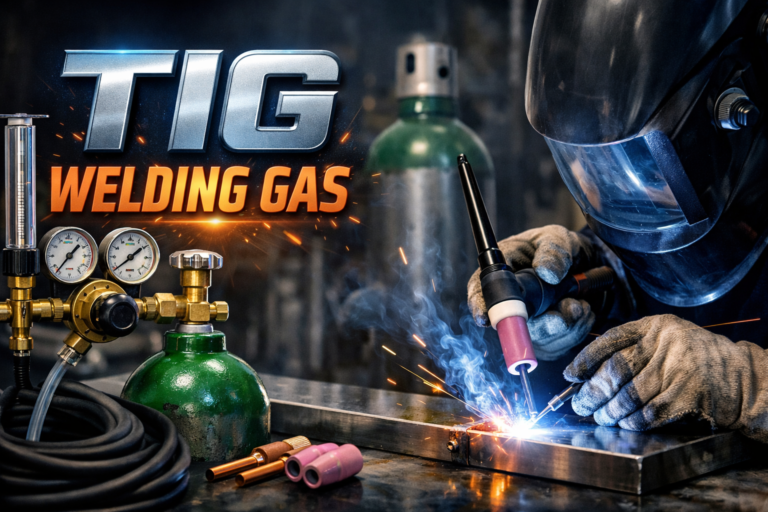
TIG welding is a precise and clean welding method, but the welding gas you use is just as important as your skill. Many beginners underestimate the role of gas in achieving strong, clean welds. If you want to avoid defects, save money, and produce quality work, understanding TIG welding gas is essential. This guide explains which gases work best, how to choose the right one, and common mistakes to avoid. You’ll also see real data, practical comparisons, and examples to help you make confident decisions.
Why Tig Welding Gas Matters
TIG (Tungsten Inert Gas) welding uses a non-consumable tungsten electrode and a shielding gas to protect the weld area. The shielding gas prevents contamination from the air, leading to a clean and strong weld. If the wrong gas is used, you can face problems like porosity, weak joints, and ugly welds.
A surprising fact: Over 90% of TIG welders use the wrong gas flow rate at some point, leading to wasted gas and poor results. Choosing the correct gas and setting it properly improves your weld quality and reduces costs.
Main Types Of Tig Welding Gas
The most common TIG welding gases are argon, helium, and argon-helium mixtures. Let’s compare them side by side:
| Gas Type | Main Uses | Pros | Cons |
|---|---|---|---|
| Argon | Most metals (steel, aluminum, titanium) | Easy to use, good arc stability, affordable | Lower heat input than helium |
| Helium | Thick materials, copper alloys | Higher heat, deeper penetration | More expensive, harder to control |
| Argon-Helium Mix | Specialty jobs, thick metals | Balanced heat and stability | Costlier than pure argon |
Argon is the most popular gas because it works well for most TIG jobs. It’s easy to control and gives a stable arc. Helium is used for thick or high-conductivity metals, but it’s much more expensive and needs careful handling. Argon-helium mixes give you the best of both worlds but are mainly used in advanced applications.
Choosing The Right Tig Welding Gas
Picking the best gas depends on your material, thickness, and budget. Here’s how to decide:
- Material Type: For stainless steel and aluminum, pure argon is usually best. For copper or very thick metals, helium or a mix can help.
- Thickness: Thin materials need less heat, so argon works well. For thick plates, adding helium increases penetration.
- Weld Appearance: Argon provides a smoother, shinier weld. Helium can sometimes produce a rougher surface.
- Cost: Argon is cheaper. Helium costs up to 3 times more per cylinder.
A real-world example: If you’re welding a 1/8” aluminum sheet, argon is ideal. For a 1/2” copper plate, a 75% helium/25% argon mix will give better results.
Gas Flow Rate And Pressure
Many welders waste gas by setting the flow rate too high. The typical flow rate for TIG welding is 15–20 cubic feet per hour (CFH). Higher rates don’t always mean better protection. In fact, too much gas can cause turbulence, pulling in air and ruining the weld.
Here’s a quick look at recommended rates:
| Material | Typical Flow Rate (CFH) | Notes |
|---|---|---|
| Steel | 15–20 | Most jobs |
| Aluminum | 18–22 | Use higher for thick pieces |
| Copper | 20–25 | Needs more gas |
Tip: Adjust your flow rate by starting low and increasing until you see stable arc and no contamination.
Gas Purity: Why It Matters
The purity of your TIG welding gas affects your results. Argon used for welding should be at least 99.998% pure. Lower purity can introduce oxygen or moisture, causing weld defects.
A common beginner mistake is using cheap or industrial-grade gas. Always check for welding-grade argon or helium from reputable suppliers. Even a tiny bit of contamination can cause porosity or color changes in the weld.
Equipment And Cylinder Safety
TIG welding gas is stored in high-pressure cylinders. It’s important to handle these safely:
- Always store cylinders upright and secure them to prevent falling.
- Check regulators and hoses for leaks before every use.
- Never use oil or grease on gas fittings; it can react dangerously with the gas.
A useful tip: Label your cylinders and keep them away from heat sources. This prevents accidents and confusion, especially if you’re using multiple gases.
Common Mistakes Beginners Make
Even experienced welders make errors with TIG welding gas. Here are mistakes to avoid:
- Using the wrong gas: Don’t use CO₂ or oxygen—these are for other welding methods.
- Setting flow too high: This wastes gas and can cause weld contamination.
- Ignoring gas purity: Low-purity gas leads to weak, porous welds.
- Poor cylinder handling: Dropped cylinders can cause injuries or leaks.
Non-obvious insight: Many beginners don’t realize that even small leaks in the gas line can ruin a whole batch of welds. Check connections and listen for hissing sounds regularly.
Comparing Tig Gas Costs
Let’s see how gas choice affects your wallet:
| Gas Type | Avg. Price per Cylinder (2024) | Weld Quality |
|---|---|---|
| Argon | $60–$80 | High |
| Helium | $180–$250 | Very High |
| Argon-Helium Mix | $120–$200 | Excellent |
Choosing argon saves money for most jobs, but helium is worth it for thick or specialty metals.
Real-world Applications
TIG welding is used in industries like aerospace, automotive, and food processing. For example, aerospace welders often use argon-helium mixes to weld titanium. In car manufacturing, argon is favored for aluminum parts. Food industry welders choose pure argon for stainless steel to avoid contamination.
If you want more details on welding gases, visit the Wikipedia TIG Welding page.
Frequently Asked Questions
What Gas Is Best For Tig Welding Aluminum?
Argon is the best gas for TIG welding aluminum. It gives a stable arc and clean welds.
Can I Use Co₂ For Tig Welding?
No, CO₂ is not suitable for TIG welding. It causes contamination and poor weld quality.
How Do I Know If My Gas Is Pure Enough?
Check the label for 99.998% purity or higher. Use only welding-grade argon or helium.
How Often Should I Check For Leaks In My Gas System?
Inspect your gas lines and regulators before every welding session. Even small leaks waste gas and ruin welds.
What Happens If I Use Too Much Gas Flow?
Excess gas flow can cause turbulence, pulling in air and causing weld contamination.
Getting the right TIG welding gas is not just a technical detail—it’s what separates clean, professional welds from messy, unreliable ones. With proper gas choice, flow rate, and safety, you’ll see better results and save money. Don’t ignore the small details; they make a big difference in your welding success.