
TIG welding is a precise technique used to join metals. Choosing the right TIG tungsten types is key for strong welds and smooth work. For beginners and professionals, understanding each tungsten type helps improve results, save money, and avoid common mistakes. Let’s explore the main types, how to select them, and what makes each unique.
What Is Tig Tungsten?
Tungsten is a hard, heat-resistant metal used for the electrode in TIG (Tungsten Inert Gas) welding. The electrode carries the current to the welding arc but doesn’t melt. Different tungsten types are mixed with other elements, changing their properties for specific metals and tasks.
A good tungsten choice gives:
- Stable arc
- Easy starting
- Less contamination
- Longer life
Let’s look at each major type, how they perform, and where they work best.
Main Tig Tungsten Types
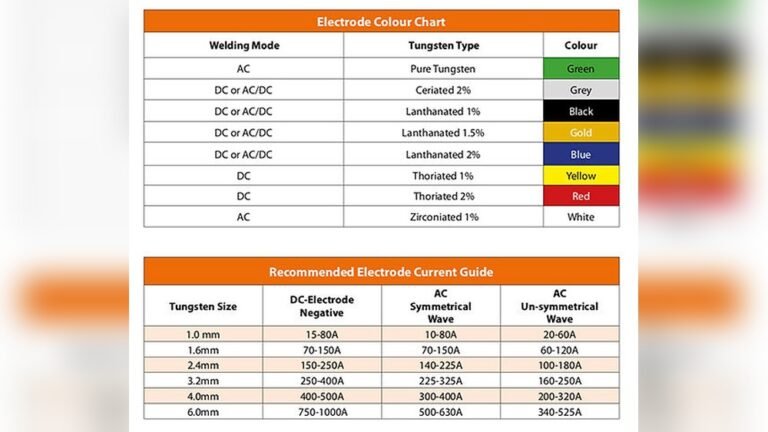
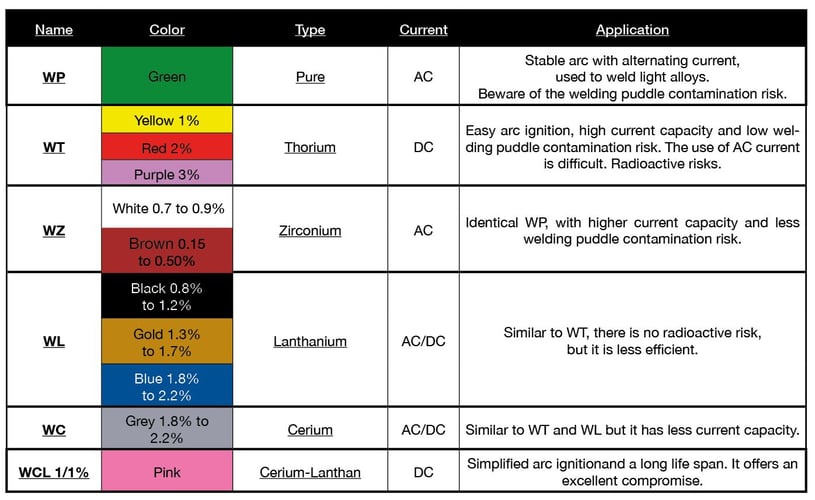
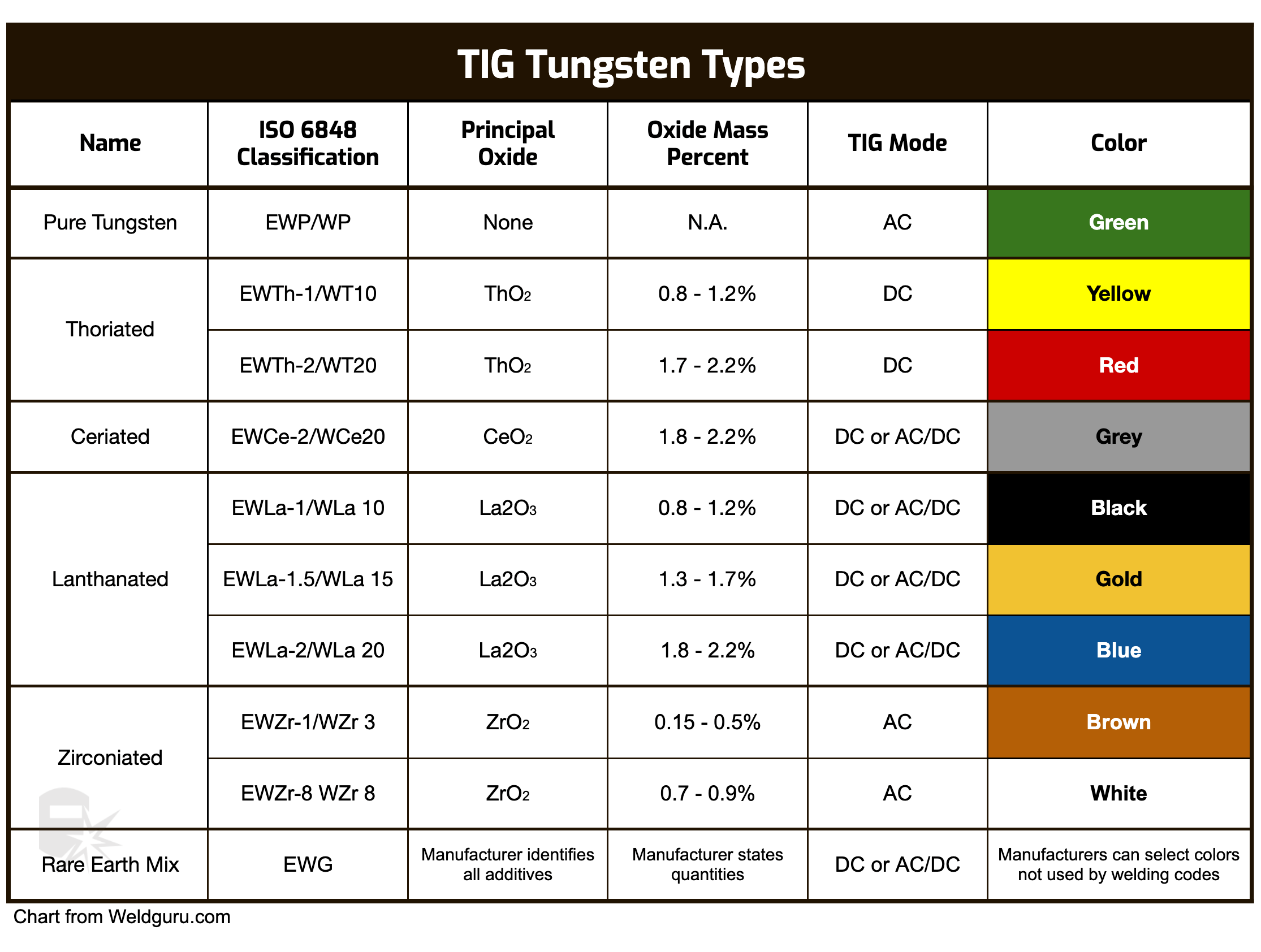
Tungsten electrodes are color-coded for easy identification. Each type has its own benefits and best uses.
| Type | Color Code | Main Alloy | Best For |
|---|---|---|---|
| Pure Tungsten | Green | None | AC welding, Aluminum |
| Thoriated | Red | Thorium | DC welding, Steel |
| Ceriated | Orange | Cerium | Low amperage, AC/DC |
| Lanthanated | Blue/Gold | Lanthana | Versatile, AC/DC |
| Zirconiated | White | Zirconium | AC welding, Aluminum |
Pure Tungsten (green)
Pure tungsten is 99.5% tungsten. It forms a nice ball tip, perfect for AC welding aluminum and magnesium. It’s cheap but wears out faster and isn’t good for DC welding.
Thoriated Tungsten (red)
Thoriated tungsten (usually 2% thorium) is popular for DC welding steel, copper, and nickel. It offers a stable arc and easy starts. However, thorium is radioactive, so safety is important. Always avoid inhaling dust when grinding.
Ceriated Tungsten (orange)
Ceriated tungsten has 1-2% cerium. It works well at low amperage and is used for both AC and DC welding. It’s great for thin metals and precise work, but not ideal for high-power jobs.
Lanthanated Tungsten (blue/gold)
Lanthanated tungsten (1-2% lanthana) is versatile, performing well in AC and DC welding. It has a stable arc and lasts longer than pure tungsten. Many welders use it as a universal electrode.
Zirconiated Tungsten (white)
Zirconiated tungsten contains 0.7-1.5% zirconium. It’s best for AC welding aluminum. It resists contamination and keeps its shape better than pure tungsten. It’s not suitable for DC welding.
Choosing The Right Tungsten
Selecting the right tungsten depends on:
- Metal type (aluminum, steel, copper)
- Current (AC or DC)
- Amperage range
- Welding position (hand, machine)
Let’s compare some key factors:
| Type | Arc Stability | Electrode Life | Contamination Resistance |
|---|---|---|---|
| Pure | Good (AC) | Short | Low |
| Thoriated | Excellent (DC) | Long | Moderate |
| Ceriated | Very Good | Moderate | Moderate |
| Lanthanated | Excellent | Long | High |
| Zirconiated | Good (AC) | Long | Very High |
Non-obvious insight: Many beginners overlook amperage limits. Using a tungsten that’s too thin or thick for your current can cause arc instability or quick wear. Always match electrode diameter to your amperage.
Common Mistakes To Avoid
- Using pure tungsten for DC welding – leads to unstable arc.
- Not matching electrode size to amperage – can overheat or cause poor arc.
- Ignoring color codes – may select the wrong tungsten type.
- Grinding the tip incorrectly – creates contamination and weak arc.
Tip: Always grind electrodes lengthwise, not around the circumference. This gives a focused arc and avoids contamination.
Credit: www.axxair.com
Real-world Examples
A hobbyist welding aluminum bike frames should use zirconiated or pure tungsten for AC welding. For stainless steel kitchen projects, thoriated or lanthanated tungsten works best with DC current.
In factories, lanthanated tungsten is often chosen for its reliability with both AC and DC processes. It reduces downtime and electrode changes.
Safety And Handling
Some tungsten types, especially thoriated, can be hazardous. When grinding, use a dedicated area and wear a mask. Dispose of dust safely. Store electrodes in a clean, dry place to prevent contamination.

Credit: www.jasic.co.uk
Tig Tungsten Size Guide
Matching tungsten size to amperage is important. Here’s a quick reference:
| Diameter (inches) | Recommended Amperage |
|---|---|
| 0.040 | 5–15 |
| 1/16 | 15–70 |
| 3/32 | 70–150 |
| 1/8 | 150–250 |
Non-obvious insight: Many welders use oversized electrodes for peace of mind, but this can reduce arc focus and make welding harder, especially on thin materials.
Frequently Asked Questions
What Is The Best Tungsten Type For Aluminum?
Zirconiated and pure tungsten are best for aluminum, especially for AC welding. Zirconiated gives better resistance to contamination.
Is Thoriated Tungsten Dangerous?
Thoriated tungsten is slightly radioactive. Grinding produces dust, which should not be inhaled. Use proper safety equipment and grind in a safe area. See more on the Wikipedia page.
Can I Use Lanthanated Tungsten For All Metals?
Lanthanated tungsten is very versatile and works well with both AC and DC welding. It is suitable for most metals including steel, aluminum, and copper.
How Do I Grind Tig Tungsten Electrodes?
Grind the tip lengthwise using a dedicated grinder. Avoid grinding around the electrode. A pointed tip is best for DC welding, while a rounded tip (ball) is preferred for AC welding.
What Happens If I Use The Wrong Tungsten?
Using the wrong type can cause unstable arc, contamination, quick wear, and poor weld quality. Always check color codes and match the electrode to your metal and welding process.
Making the right choice for TIG tungsten types saves time, improves welds, and ensures safety. With careful selection and handling, you’ll get better results and longer-lasting electrodes.
Credit: weldguru.com