
Locking Pliers For Welding: Your Essential Third Hand
Welding is a craft that requires precision, stability, and often, an extra set of hands. When you’re working with metal, holding pieces perfectly in place while you make a weld can be incredibly difficult. This is where locking pliers, also known as Vise-Grips, become indispensable tools for welders. They act like a strong, reliable clamp, holding your workpieces firmly together so you can focus on creating a clean, strong weld.
These specialized pliers are more than just a simple clamp. Their locking mechanism allows them to grip with immense force and stay locked in position, freeing up your hands. For anyone serious about welding, from hobbyists to professionals, understanding and using locking pliers effectively can significantly improve the quality of your work and your safety.
They are a true asset in any welding shop.
Why Welders Need Locking Pliers
The primary reason welders rely on locking pliers is the need for stable workpiece positioning. In welding, even slight movement during the process can ruin a weld, leading to weak joints or structural failures. Holding metal pieces steady by hand is often impractical, especially for larger projects or intricate assemblies.
Locking pliers provide a secure, hands-free solution. Once locked onto the material, they maintain consistent pressure without needing continuous manual effort. This stability is crucial for achieving accurate joint alignment and consistent weld bead appearance. They are especially useful for tack welding, where small, temporary welds are used to hold components in place before the final weld.

Credit: www.amazon.com
Types Of Locking Pliers For Welding
While the basic function remains the same, different types of locking pliers are designed for specific welding tasks. Choosing the right type can make a significant difference in efficiency and ease of use.
C-clamps
C-clamps are a staple in many workshops, and they are particularly useful in welding for holding larger or flatter pieces of metal. Their C-shape allows them to grip edges or surfaces, providing broad contact.
- Pros: Good for flat surfaces, can apply significant pressure, versatile for various shapes.
- Cons: Can be bulky, may not reach into tight corners, adjustment can be slower than other types.
Straight Jaw Locking Pliers
These are perhaps the most common type used in welding. Their straight jaws provide a good grip on flat surfaces, pipes, and angles. They are excellent for holding two pieces of metal flush against each other.
- Pros: Versatile for flat and cylindrical objects, good for general-purpose clamping.
- Cons: Jaws are not designed for gripping rounded edges at an angle.
Curved Jaw Locking Pliers
Curved jaw locking pliers are designed to grip round objects, like pipes or rods, with excellent force. The curved shape of the jaws allows them to wrap around the object, providing a secure hold.
- Pros: Ideal for holding pipes, tubes, and round stock; excellent grip on cylindrical shapes.
- Cons: Less effective on flat surfaces compared to straight jaw models.
Long Nose Locking Pliers
Also known as needle-nose locking pliers, these are perfect for reaching into tight spaces or holding small components. Their slender jaws allow for precise placement and gripping in confined areas.
- Pros: Excellent for small parts, reaching tight spots, and detailed work.
- Cons: Limited clamping capacity and pressure compared to larger models.
Welding Pliers (specialized)
Some pliers are specifically marketed for welding. These often combine features like a hammerhead, wire cutters, and a tip cleaner, along with a locking jaw mechanism. They are an all-in-one tool for MIG welding.
- Pros: Multi-functional, designed specifically for welding tasks, convenient.
- Cons: May not offer the same specialized grip strength as dedicated locking pliers for certain tasks.
Key Features To Look For
When selecting locking pliers for welding, several features can enhance their performance and durability in a demanding environment.
Material And Construction
Look for pliers made from high-quality steel, such as chrome vanadium or hardened alloy steel. This ensures durability and resistance to heat and wear, which are common in welding. The jaw hardness is also important; harder jaws will last longer and grip better.
Jaw Opening Capacity
The maximum jaw opening determines the size of the material you can clamp. Consider the typical thickness and size of the metal you will be welding. A wider opening offers more versatility.
Adjustment Mechanism
A fine adjustment screw allows for precise pressure control. This is crucial for not damaging delicate materials or for achieving the exact fit required for a perfect weld. The release lever should be easy to operate, even when wearing gloves.
Jaw Shape And Grip
The shape of the jaw is critical for the type of material you’re working with. Serrated jaws provide a stronger grip, but they can mar softer materials. For welding, this is often less of a concern, but consider if you need to grip polished or finished surfaces.
Heat Resistance
While most locking pliers are made of steel, some may have coatings or handles that are more or less resistant to heat. For welding, ensure the tool can withstand proximity to heat without degrading.

Credit: www.amazon.com
Using Locking Pliers Effectively In Welding
Proper use of locking pliers can elevate your welding game. Here are some tips and techniques.
Proper Placement For Tack Welds
When tack welding, place the locking pliers to hold the pieces securely but avoid placing them where you intend to weld. Ensure the pliers do not interfere with your torch or electrode path. Position them to provide maximum stability for the joint area.
Consistent Pressure
Adjust the locking pliers to provide firm, consistent pressure. Too little pressure won’t hold the pieces, while too much can distort thin metal. Experiment on scrap pieces to find the right balance for your material thickness and type.
Multiple Clamping Points
For larger or irregularly shaped pieces, use multiple sets of locking pliers to ensure the entire assembly is stable. This prevents warping or shifting during the welding process. Distribute the clamping points evenly for best results.
Protecting Surfaces
If you are working with materials where surface finish is important, you can place thin pieces of wood, plastic, or soft metal shims between the plier jaws and the workpiece. This acts as a protective buffer to prevent scratches or deep indentations.
Maintaining Your Pliers
Keep your locking pliers clean and lubricated. Remove any weld spatter or debris that accumulates on the jaws or the adjustment screw. A light coat of oil on the pivot and screw will ensure smooth operation and prevent rust.
Common Mistakes To Avoid
Even experienced welders can make mistakes with locking pliers. Being aware of these can save you time and improve your work.
- Over-tightening: This can warp thin metal or even break the workpiece. Always start with moderate pressure and increase as needed.
- Clamping too close to the weld area: This can heat up the pliers excessively, making them difficult to handle and potentially damaging their mechanism. It can also interfere with the welding process.
- Using the wrong type of pliers: Trying to grip a round pipe with straight jaw pliers will be ineffective and potentially damaging to the pliers.
- Neglecting maintenance: Dirty or rusted pliers are hard to adjust, won’t grip well, and can fail unexpectedly.
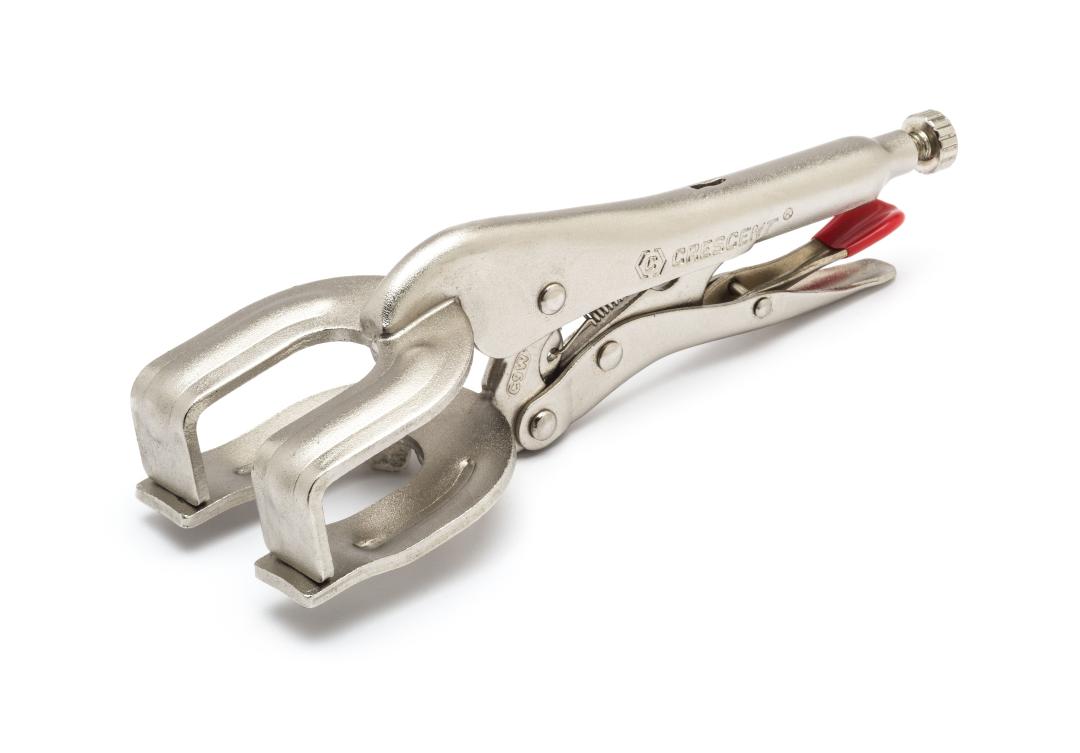
Credit: www.crescenttool.com
Locking Pliers Vs. Other Clamping Methods
While other clamping methods exist, locking pliers offer a unique advantage for welding.
| Feature | Locking Pliers | C-Clamps | Welding Magnets | Spring Clamps |
|---|---|---|---|---|
| **Grip Strength** | High, adjustable | High, adjustable | Moderate to High (depends on magnet size) | Low to Moderate |
| **Hands-Free** | Yes, they lock | Yes, they lock | Yes, they hold metal to metal | Yes, they hold |
| **Versatility** | High, various jaw types | High, good for flat surfaces | Limited to ferrous metals | Limited to thin materials |