
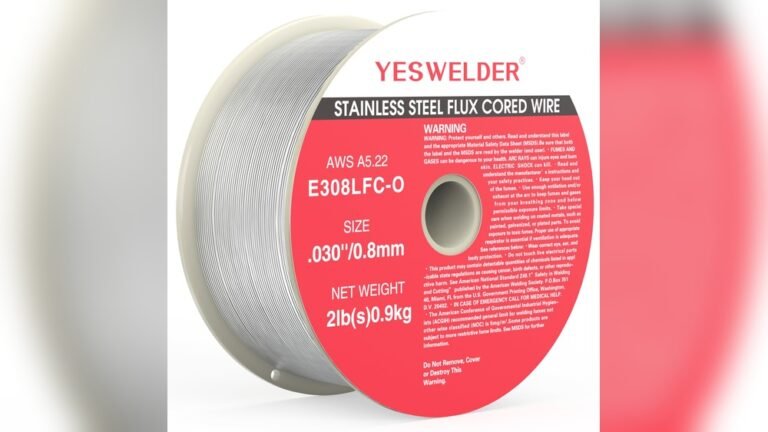
Flux core stainless wire is a special type of welding wire that is used in many industries. It lets welders join stainless steel quickly and easily, often without needing extra shielding gas. If you want strong, corrosion-resistant welds, this wire can be a smart choice.
But, it’s important to know how it works, when to use it, and what makes it different from other wires. Understanding these details can save you time and money.
What Is Flux Core Stainless Wire?
Flux core stainless wire is a self-shielded or gas-shielded wire for welding stainless steel. It has a hollow center filled with flux, which helps protect the weld from contamination. When heated, the flux releases gases and forms a protective slag over the weld pool. This keeps out oxygen and other elements that can weaken the weld.
Most flux core wires are used in MIG welding machines. They are popular for their versatility, especially in outdoor conditions where wind can blow away shielding gases. Stainless flux core wire is made with stainless steel alloys, so the finished weld resists rust and corrosion.
Benefits Of Using Flux Core Stainless Wire
There are several reasons welders choose flux core stainless wire:
- No external gas needed (for self-shielded types), which simplifies setup and reduces costs.
- Works well outdoors since wind cannot blow away the internal shielding.
- High deposition rate: Welders can lay down metal quickly, boosting productivity.
- Strong, corrosion-resistant welds: Ideal for food industry, marine, and chemical applications.
Here’s a quick comparison of flux core stainless wire versus solid stainless wire:
| Feature | Flux Core Stainless Wire | Solid Stainless Wire |
|---|---|---|
| Shielding Gas | Optional/Not Needed (Self-Shielded) | Required |
| Outdoor Use | Excellent | Poor |
| Deposition Rate | High | Medium |
| Ease of Use | Good for Beginners | Requires Practice |
Credit: promotions.lincolnelectric.com
Applications And Suitable Projects
Flux core stainless wire is used in many fields:
- Structural welding for bridges, buildings, and supports
- Food processing equipment where hygiene and corrosion resistance are key
- Marine fabrication to resist saltwater corrosion
- Repair jobs on stainless steel tanks, pipes, and machinery
Some beginners don’t realize that flux core stainless wire is not ideal for thin materials. It works best on steel thicker than 1/8 inch (3 mm). For thinner metals, you may get burn-through or rough welds.
Key Types Of Flux Core Stainless Wire
There are several types, each with its own strengths. The most common are:
- E308LT1-1/4: Used for 304 stainless steel. Good for tanks and piping.
- E316LT1-1/4: Designed for 316 stainless steel. It has extra molybdenum for marine and chemical uses.
- E2209T1-1/4: For duplex stainless steels, which combine high strength and corrosion resistance.
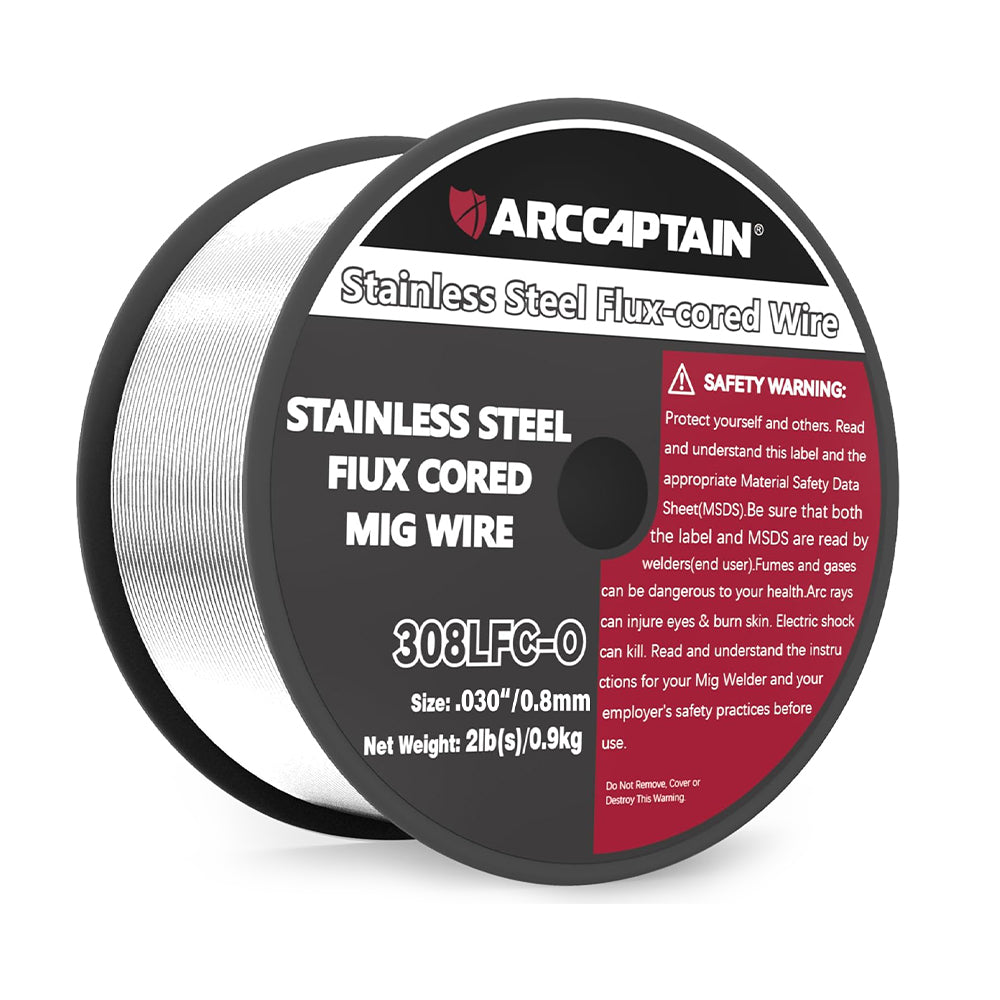
You can find these wires in different diameters, usually between 0. 035 inch and 0. 045 inch (0. 9–1. 2 mm). Choosing the right type depends on the base metal and the environment where the weld will be used.
Here’s a quick guide to wire selection:
| Wire Type | Best For | Not Recommended For |
|---|---|---|
| E308LT1 | 304 Stainless | High Chloride Environments |
| E316LT1 | 316 Stainless | Basic 304 Applications |
| E2209T1 | Duplex Stainless | Regular Stainless |
Credit: www.arccaptain.com
How To Weld With Flux Core Stainless Wire
Welding with flux core stainless wire is straightforward, but there are some important steps:
- Clean the surface: Remove dirt, oil, and old paint for best results.
- Set machine parameters: Use the right wire feed speed and voltage. Start with manufacturer recommendations and adjust for your project.
- Choose the right wire diameter: Thicker wires are better for thicker metals.
- Maintain correct travel speed: Move at a steady pace to avoid defects.
- Watch the slag: After welding, remove the slag carefully to reveal the weld.
A common mistake is using too high a voltage, which can cause excessive spatter and rough welds. Another error is not cleaning the base metal well, leading to weak joints.
Example: Welding A Stainless Steel Pipe
Suppose you need to weld a 304 stainless pipe outdoors. You select E308LT1 wire, set your welder to 0. 045 inch wire, and adjust voltage to 24V. You clean the pipe thoroughly and weld using a steady hand. After the weld cools, you chip off the slag and inspect the joint.
If done correctly, your weld will be strong and resistant to corrosion.
Cost And Availability
Flux core stainless wire is more expensive than mild steel wire, but it’s usually cheaper than solid stainless wire when you factor in savings from not needing shielding gas. Prices range from $8 to $20 per pound, depending on type and brand.
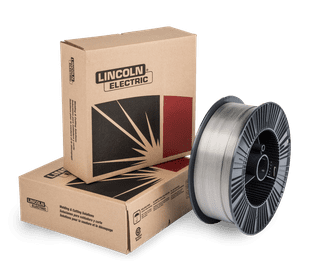
The wire is available in spools from welding supply shops and online stores. Major brands include Lincoln Electric, Hobart, and ESAB. Always check the wire’s certifications and compatibility with your machine.
Tips For Choosing The Right Wire
- Match the wire to the base metal: Using the wrong alloy can cause weld failures.
- Check for certifications: Look for AWS or ISO standards.
- Consider project size: For small repairs, use smaller spools to avoid waste.
- Ask suppliers for advice: They may know which wire works best for your project.
An often-overlooked tip: Keep unused wire dry and sealed. Moisture can cause the flux to degrade, leading to poor welds.
For more technical details, you can check the Flux-cored arc welding page on Wikipedia.
Frequently Asked Questions
What Thickness Of Metal Can I Weld With Flux Core Stainless Wire?
Flux core stainless wire works best for metals thicker than 1/8 inch (3 mm). For thin sheets, it can cause burn-through.
Do I Need Shielding Gas With Flux Core Stainless Wire?
Self-shielded wire does not need external gas. Some types, called gas-shielded, do require a gas supply. Check the wire specs.
Is Flux Core Stainless Wire Good For Outdoor Welding?
Yes, it’s excellent for outdoor jobs because the flux protects the weld from wind and contaminants.
Can I Use Flux Core Stainless Wire On Mild Steel?
No, it’s designed for stainless steel. For mild steel, use a mild steel flux core wire.
What Is The Shelf Life Of Flux Core Stainless Wire?
If stored dry and sealed, it can last over a year. Moisture reduces quality, so keep it in airtight containers.
Flux core stainless wire is a reliable choice for many stainless steel welding jobs. It delivers strong, corrosion-resistant welds, especially in tough conditions. By understanding the types, applications, and proper welding methods, you can get professional results every time. Choosing the right wire and caring for it properly will help you avoid common mistakes and save money in the long run.

Credit: www.youtube.com