
Flux core MIG wire is a popular welding material used by both professionals and hobbyists. It makes welding easier in many situations, especially where shielding gas is not practical. If you’re considering using flux core wire or want to understand its advantages and limitations, this guide will give you clear, practical information.
What Is Flux Core Mig Wire?
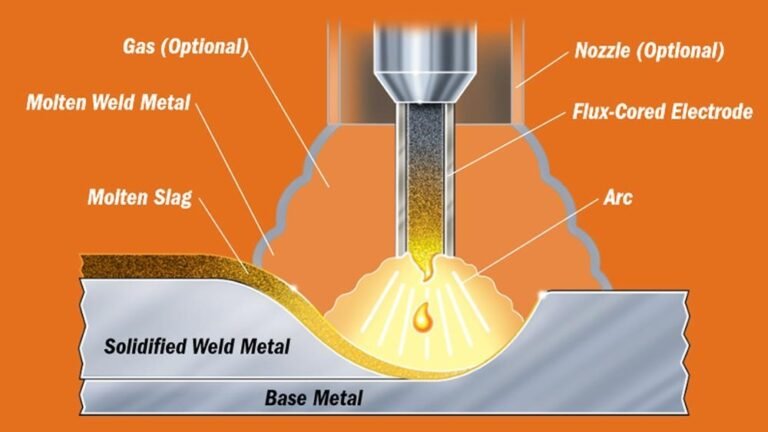
Flux core MIG wire, also known as FCAW wire, is a type of welding wire used in MIG welders. Unlike solid wire, flux core wire has a hollow center filled with flux. When heated, the flux creates a gas that shields the weld from air. This means you can weld outdoors or in windy places without needing a separate gas tank.
There are two main types:
- Self-shielded flux core wire: No extra gas is needed. The flux alone protects the weld.
- Gas-shielded flux core wire: Flux is inside the wire, but an extra shielding gas is also used for added protection.
Most hobbyists and field workers use self-shielded wire because it’s simpler and portable.
How Flux Core Mig Wire Works
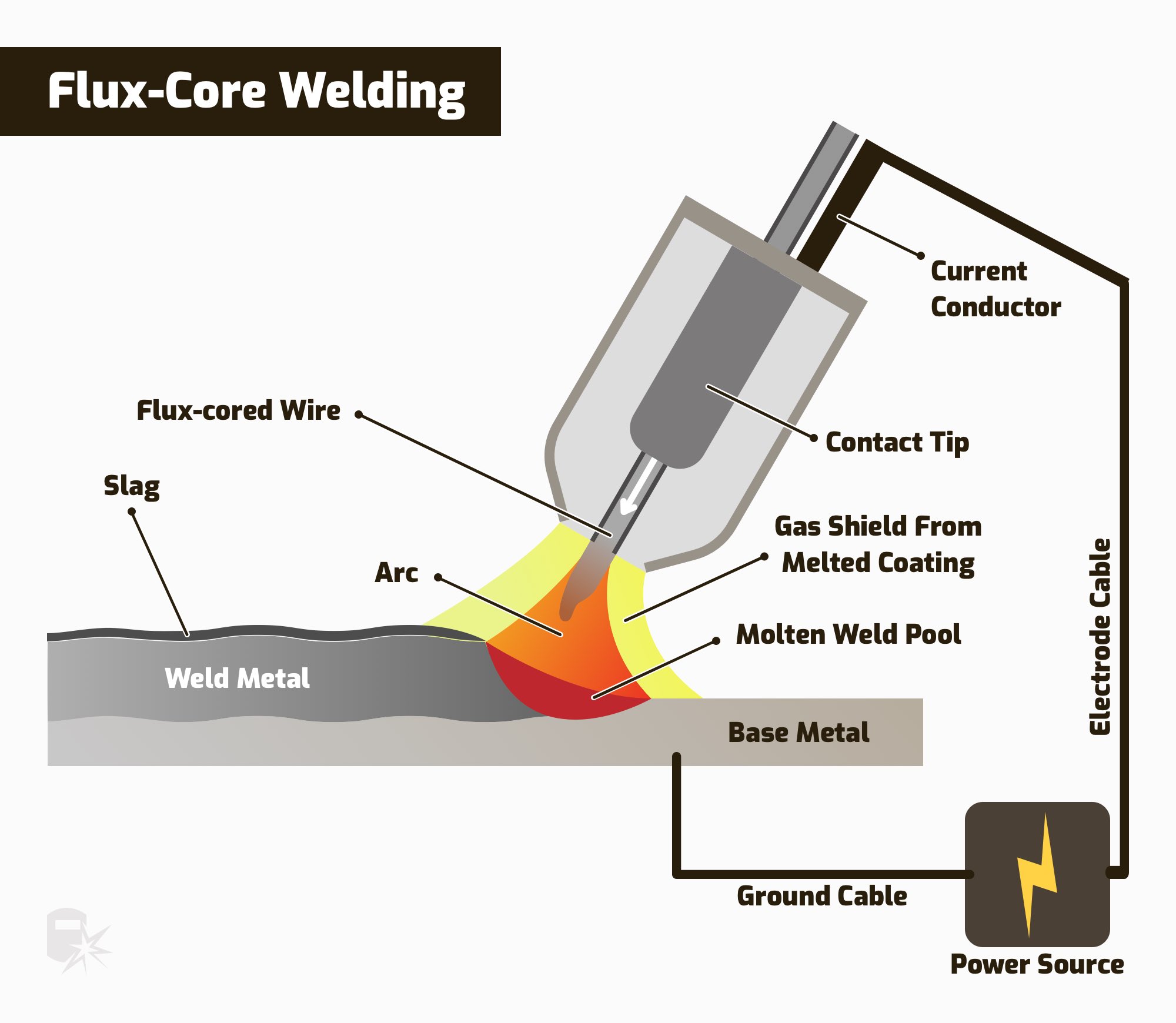
During welding, the wire feeds continuously through the MIG gun. As it melts, the flux in the core burns and makes a protective gas cloud. This gas stops oxygen and moisture from getting into the weld, which can cause problems like porosity or weak joints.
A layer of slag forms on top of the weld bead. This slag keeps the metal safe while it cools. Once the weld is done, you chip or brush off the slag to see the clean metal underneath.
Credit: weldguru.com
Flux Core Vs. Solid Mig Wire
Many welders ask if flux core wire is better than solid wire. The answer depends on your project. Here’s a quick comparison:
| Feature | Flux Core MIG Wire | Solid MIG Wire |
|---|---|---|
| Shielding Gas Needed | No (self-shielded) | Yes |
| Outdoor Use | Excellent | Poor (wind blows gas away) |
| Weld Penetration | Deep | Medium |
| Weld Appearance | Rough (needs cleaning) | Smoother |
Flux core wire is best when you need portability, strong welds, or must work outside. Solid wire is preferred for clean, indoor work and when appearance is important.
Choosing The Right Flux Core Wire
Picking the best wire depends on your project and welder. Here are the main things to look for:
1. Wire Diameter
Common sizes are 0. 030”, 0. 035”, and 0. 045”. Thicker wire gives deeper welds but needs more power. Most home machines work well with 0. 030” or 0. 035”.
2. Material Compatibility
Most flux core wire is for mild steel. For stainless steel or special metals, you’ll need a wire made for that metal.
3. Welding Position
Some wires are “all-position” (can weld flat, vertical, or overhead), while others are for flat welding only.
4. Brand And Quality
Cheap wire can cause feed issues and poor welds. Stick to trusted brands.
Here’s a quick overview of popular flux core wire types:
| Wire Type | Best Use | Notes |
|---|---|---|
| E71T-GS | Home welding, thin metal | Easy to use, all positions |
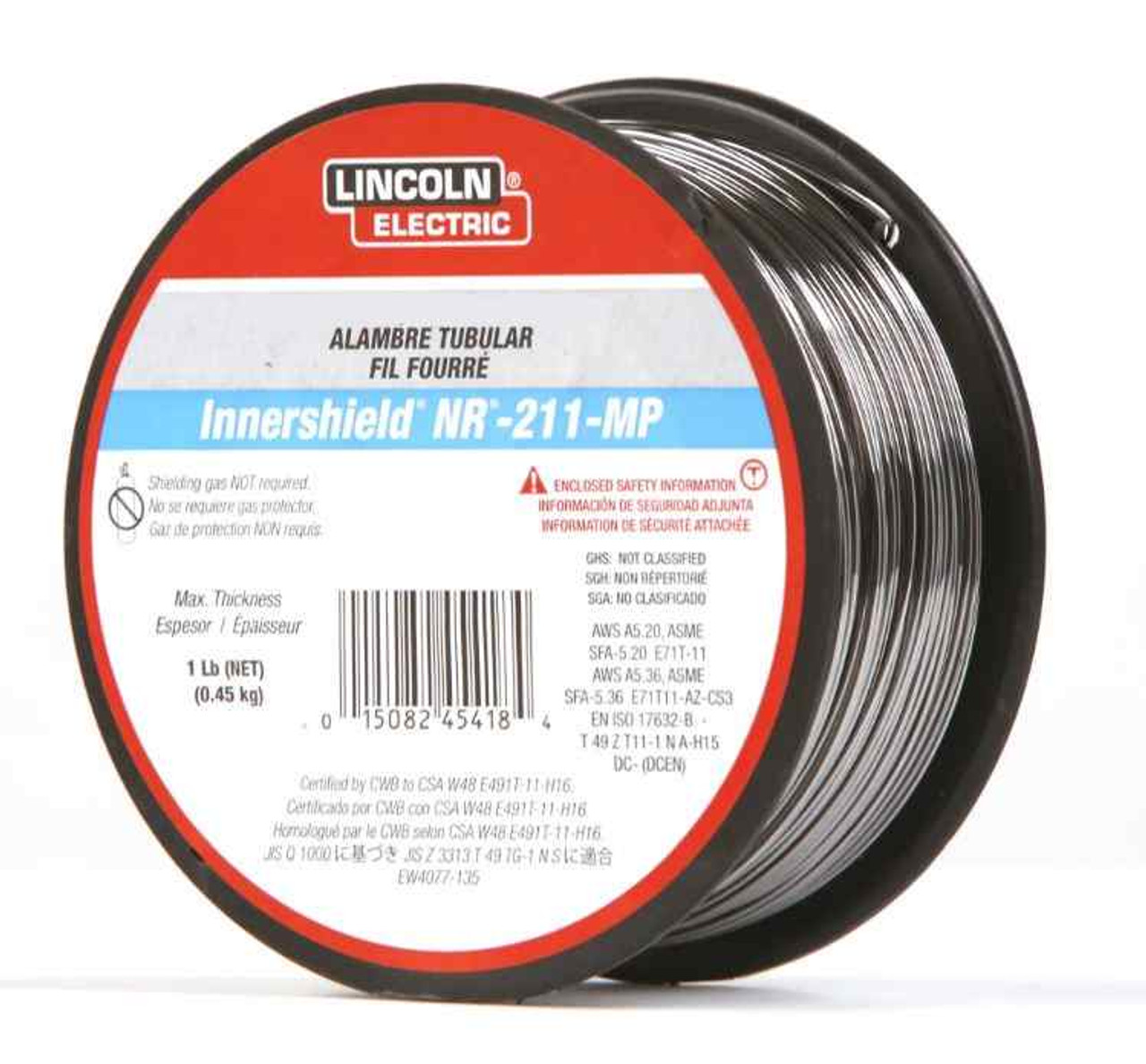
| E71T-11 | General purpose, outdoor | Deeper penetration |
| E70T-1 | Structural work | Usually needs extra gas |

Credit: www.youtube.com
Advantages Of Flux Core Mig Wire
Flux core wire has several benefits that make it popular:
- No need for shielding gas: Lower cost, easier setup.
- Welds dirty or rusty metal: More forgiving than solid wire.
- Works in wind: Great for outdoor jobs.
- Deep penetration: Stronger welds on thick steel.
One thing many beginners miss: flux core wire is often the only choice for farm repairs or construction sites where wind and dirt are common.
Common Problems And Solutions
While flux core wire is user-friendly, it can have issues:
- Excess spatter: Cheap wire or wrong settings can cause spatter. Use quality wire and fine-tune your voltage and wire speed.
- Porosity (holes in weld): Usually from wet or rusty metal. Clean your workpiece before welding.
- Wire feed problems: Can happen if the gun liner is dirty or the wire is kinked. Check and replace as needed.
A non-obvious tip: store your wire in a dry place. Flux core wire can absorb moisture, leading to bad welds.
Credit: harrisweldingsupplies.com
Safety Tips For Flux Core Welding
Welding with flux core wire creates smoke and fumes. Always use a welding helmet, gloves, and work in a well-ventilated area. The slag can also be hot and sharp, so wear long sleeves and eye protection when cleaning the weld.
Practical Applications
Flux core MIG wire is common in:
- Automotive repair
- Farm equipment maintenance
- Fencing and outdoor metalwork
- Construction and structural steel
It’s not usually used for aluminum or thin sheet metal because the weld can be too hot and burn through.
Real-world Example
Imagine fixing a rusted gate hinge in your backyard. You don’t have gas bottles, and it’s a windy day. A small MIG welder with flux core wire lets you make a solid repair right there, saving time and money.
Many construction workers rely on flux core wire for field repairs because it’s tough, portable, and works even if the metal isn’t perfectly clean.
For more details on welding techniques, check the Flux-cored arc welding Wikipedia page.
Frequently Asked Questions
What Is The Main Advantage Of Flux Core Mig Wire?
The biggest advantage is no need for external shielding gas, making it easy and portable for outdoor and field work.
Can I Use Flux Core Wire In My Regular Mig Welder?
Yes, most MIG welders can use flux core wire. You may need to switch the polarity (usually to DCEN) for best results.
Is Flux Core Mig Wire Good For Beginners?
It’s a good option because it’s forgiving and works on dirty metal. Just remember to clean off the slag after welding.
Why Does My Weld Look Rough With Flux Core Wire?
The flux creates slag and spatter. Clean the weld with a wire brush or chipping hammer to see the finished bead.
How Long Does Flux Core Wire Last?
If kept dry, it can last for years. Moisture is the main enemy, so store leftover wire in a sealed bag or dry place.
Flux core MIG wire offers flexibility and reliability for many welding jobs. With the right wire and a few practical tips, you can get strong, clean welds almost anywhere.