
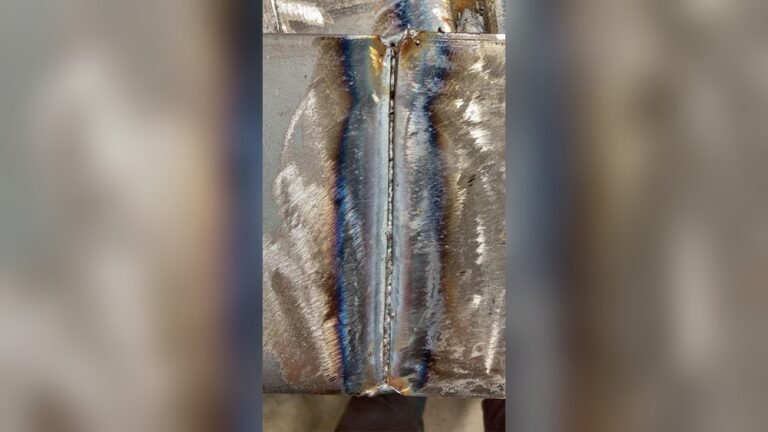
When you finish welding and notice your weld isn’t penetrating deep into the base metal, it can be frustrating. Proper weld penetration is essential for strength, durability, and safety. Whether you’re a hobbyist or a professional, understanding why your welds lack penetration can help you fix the issue and create better joints.
Let’s explore the main causes, how to spot them, and what you can do to achieve strong, reliable welds every time.
What Is Weld Penetration?
Weld penetration describes how deep the weld goes into the base metal. Good penetration means the weld melts and fuses both the filler and the base metal, creating a strong bond. Poor penetration results in a weak joint that can break under stress.
You can often see penetration in the cross-section of a weld. In practice, it’s important because insufficient penetration increases the risk of cracks, failures, and unsafe structures.
Common Causes Of Poor Weld Penetration
Several factors can cause weak weld penetration. Here are the most frequent reasons:
1. Low Welding Current
If the amperage is too low, the arc doesn’t generate enough heat. The metal surface melts, but the weld doesn’t go deep. Always check the recommended current for your material and process.
2. Incorrect Travel Speed
Moving the torch too quickly doesn’t allow enough heat to build up. The result is a shallow weld. If you move too slowly, you might overheat and burn through.
3. Improper Electrode Angle
Using the wrong angle can direct heat away from the joint. For most processes, a 10–15° tilt is best for penetration.
4. Wrong Electrode Size
Thin electrodes don’t carry enough current for thick materials. Choose the right diameter for your base metal.
5. Dirty Or Rusty Base Metal
Contaminants like oil, paint, or rust prevent proper fusion. Clean your metal before welding.
6. Incorrect Joint Preparation
If the joint isn’t beveled or the gap is too tight, the weld can’t penetrate. Proper preparation is vital, especially for thick materials.
7. Insufficient Shielding Gas
In MIG or TIG welding, low gas flow or poor coverage can cause porosity and prevent penetration.

Credit: www.mig-welding.co.uk
How To Improve Weld Penetration
Making a strong weld starts with controlling the key factors above. Here’s how to fix poor penetration:
- Increase Amperage:
Boost the current setting as recommended for your process. Higher heat promotes deeper penetration.
- Adjust Travel Speed:
Slow down slightly to allow the arc time to melt the base metal. Watch the puddle; it should be consistent and not too thin.
- Use Correct Electrode Angle:
Hold the torch at the right angle (about 10–15° off vertical). This focuses heat into the joint.
- Select Proper Electrode Size:
Use a thicker electrode for thicker materials. For example, in stick welding, a 1/8″ rod is often better for 1/4″ steel than a 3/32″ rod.
- Clean Base Metal:
Remove rust, paint, oil, and dirt before welding. Use a wire brush or grinder.
- Prepare Joints Properly:
Bevel edges on thick plates, and leave a small gap for full penetration. This is especially important for butt joints.
- Check Shielding Gas:
Make sure gas flow is correct and coverage is good. For MIG, typical flow rates are 20–25 cubic feet per hour.
Comparing Welding Parameters
The following table shows how changing key welding parameters affects penetration:
| Parameter | Low Setting | Optimal Setting | High Setting |
|---|---|---|---|
| Amperage | Shallow weld | Deep weld | Risk of burn-through |
| Travel Speed | Too deep/burn-through | Good penetration | Shallow weld |
| Electrode Angle | Heat away from joint | Focus on joint | Heat away from joint |
Joint Preparation: Why It Matters
Proper joint preparation is one of the most overlooked steps. For thick materials, a beveled edge is often needed. This allows the weld to reach the root of the joint.
Here’s a comparison of different joint types:
| Joint Type | Preparation Needed | Penetration Potential |
|---|---|---|
| Butt Joint (unbeveled) | Minimal | Low |
| Butt Joint (beveled) | Bevel edges | High |
| Fillet Joint | Clean edges | Medium |
Real-world Examples
A beginner might weld two pieces of 1/4″ steel using a 3/32″ electrode at low amperage. The result is a bead sitting on top of the plate with little penetration. After increasing the amperage and switching to a beveled joint, the weld fuses both plates fully.
In another case, a welder uses MIG on aluminum but doesn’t clean off oxidation first. The weld looks fine at first, but breaks easily because the penetration is poor.
Mistakes Beginners Often Make
1. Not Checking Settings:
Many new welders forget to adjust current for different materials.
2. Skipping Joint Preparation:
Thick metals need beveled edges. Beginners often skip this step.
3. Ignoring Base Metal Cleanliness:
Even small amounts of rust or oil can ruin penetration.
4. Rushing The Weld:
Moving too fast creates weak, shallow welds.
5. Using Wrong Gas Flow:
Too little shielding gas causes porosity and poor fusion.
Data: Weld Failure Rates
Studies show that welds with poor penetration fail up to 4 times more often than properly penetrated welds. According to the American Welding Society, improper parameter settings are responsible for over 60% of weld failures in structural applications (American Welding Society).

Credit: www.reddit.com
Comparing Electrode Sizes And Penetration Depth
| Electrode Size | Recommended Material Thickness | Typical Penetration |
|---|---|---|
| 3/32″ | Up to 1/8″ | Shallow |
| 1/8″ | 1/8″–1/4″ | Medium |
| 5/32″ | Over 1/4″ | Deep |
Final Thoughts
Achieving strong weld penetration isn’t just about turning up the power. It’s about balancing heat, speed, angle, electrode choice, and preparation. Small changes can make a big difference. Always check your settings, clean your base metal, and prepare your joints carefully.
By understanding these factors, you can make safer, more reliable welds and avoid costly mistakes.
Credit: www.mig-welding.co.uk
Frequently Asked Questions
Why Is Weld Penetration Important?
Weld penetration ensures the weld fuses deeply into the base metal, creating a strong joint. Shallow welds can break easily, leading to unsafe structures.
Can I Fix Poor Penetration After Welding?
It’s difficult. Usually, you must grind out the bad weld and redo it with better settings and preparation.
Does Material Thickness Affect Penetration?
Yes. Thicker materials need more heat, proper electrode size, and beveled joints for full penetration.
How Can I Tell If My Weld Penetrated Properly?
Look for a visible melt on the backside of the joint, or use destructive testing to check the cross-section.
What’s The Most Common Cause Of Poor Penetration?
Low amperage and improper joint preparation are the biggest reasons for weak welds. Always match your settings to your material and process.