
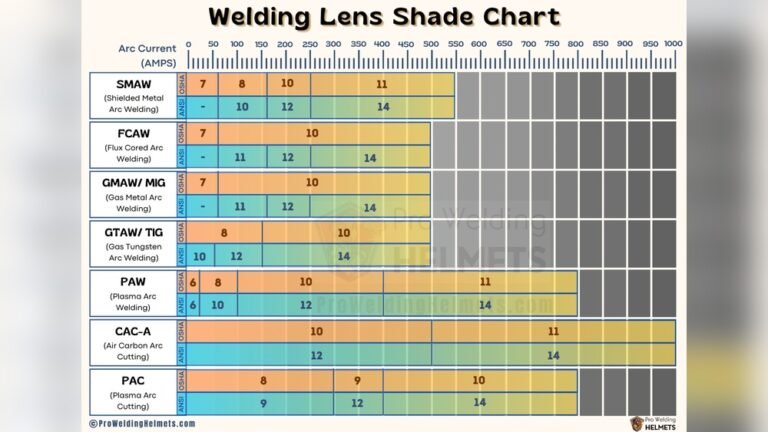
Welding can be tough on your eyes. When you use MIG welding (Metal Inert Gas welding), a bright arc is created. This arc gives off intense light and ultraviolet (UV) radiation. If you don’t protect your eyes with the right shade lens, you can get eye injuries, fatigue, or even long-term vision problems. Picking the best shade lens is not just about comfort—it’s about safety and getting a clear view while you work.
Why Shade Lens Matters In Mig Welding
The welding arc is much brighter than most people realize. MIG welding can reach temperatures of 3,000°F or more, and the arc is strong enough to damage your eyes in seconds. The right shade lens filters out harmful light, letting you see your work clearly without risk.
Welders who use the wrong lens shade often report eye strain, headaches, and sometimes “arc eye”—a painful condition caused by UV burns. A proper lens helps you:
- See the weld pool and joint easily
- Reduce glare and eye fatigue
- Protect against UV and infrared radiation
Mig Welding Shade Lens Numbers Explained
Shade lenses are rated by numbers. The shade number tells you how dark the lens is. Higher numbers mean darker lenses. For MIG welding, the shade you need depends on the current (amps) you use and the type of material.
Here’s a quick guide:
| Amperage (A) | Recommended Shade |
|---|---|
| 30-100 | 10 |
| 100-175 | 11 |
| 175-300 | 12 |
| 300-500 | 13 |
Most home and beginner MIG welders use between 90-200 amps. For this range, a shade 10 or 11 lens is usually enough.
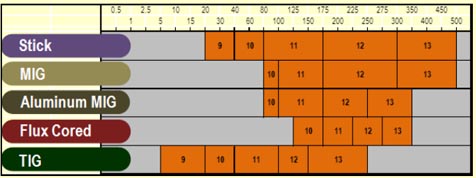
Credit: weldguru.com
How To Choose The Right Shade Lens
Picking the right lens is not just about following a chart. You need to think about your welding style, your eyes, and the environment. Here are the main things to consider:
- Welding Current: Higher amps = brighter arc = darker lens needed.
- Material Type: Steel needs less shade than aluminum or stainless.
- Duration: Long welding sessions can cause more eye strain.
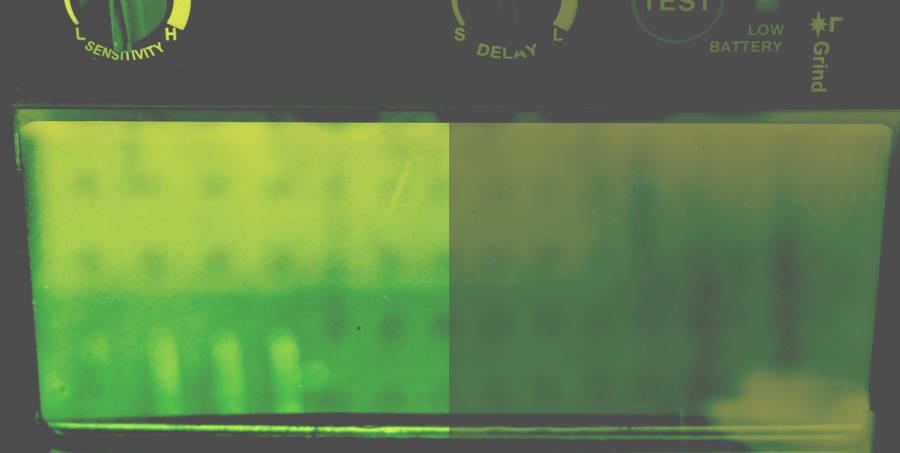
- Auto-Darkening Helmets: These can change shade automatically, but you must set the range.
Here’s a comparison of common lens types:
| Lens Type | Shade Range | Best For |
|---|---|---|
| Fixed Shade | 10, 11, 12, 13 | Consistent jobs, simple tasks |
| Auto-Darkening | Variable (9-13) | Changing tasks, beginner-friendly |
If you use an auto-darkening lens, make sure it covers the recommended shade range for your amps. Some helmets let you adjust from shade 9 to 13, which is useful if you switch between materials or welding types.
Common Mistakes When Choosing Shade Lens
Many beginners make mistakes when picking a lens. Here are some you should avoid:
- Too light lens: This does not protect your eyes enough. It can cause burns and strain.
- Too dark lens: Makes it hard to see the weld pool. You may miss defects or make mistakes.
- Ignoring helmet quality: A cheap helmet might have a poor lens, slow switching, or bad clarity.
- Not adjusting for environment: Bright workshop lights or outdoor sun can affect how dark your lens feels.
A non-obvious insight: Some welders use a lighter lens for tack welding (short, quick welds) and switch to a darker lens for longer, continuous runs. This helps them see better while staying safe.
Credit: welditu.com
Practical Tips For Better Welding Vision
Getting the right shade lens is just the first step. Here are some tips to improve your welding experience:
- Clean your lens regularly. Dust, spatter, and fingerprints reduce clarity.
- Check helmet fit. A snug helmet keeps light from leaking in.
- Wear safety glasses underneath. This gives extra protection from stray sparks.
- Test before you start. Do a quick arc test to see if your lens is comfortable.
Another tip beginners often miss: If your eyes feel tired after welding, it could mean your lens is too light. Try a higher shade next time.
Data On Lens Shade And Eye Protection
Studies show that using the recommended lens shade can reduce eye injuries by over 90% compared to unprotected welding. The American Welding Society (AWS) sets standards for lens shades, and most helmets follow these guidelines.
| Lens Shade | Protection Level (%) |
|---|---|
| Shade 10 | 85 |
| Shade 11 | 90 |
| Shade 12 | 95 |
| Shade 13 | 98 |
Always check your helmet for ANSI Z87. 1 certification. This means the lens meets US standards for eye protection.
Credit: www.tws.edu
Frequently Asked Questions
What Happens If I Use The Wrong Shade Lens For Mig Welding?
Using a lens that is too light can cause arc eye, headaches, and long-term vision damage. If it’s too dark, you may not see your weld clearly, leading to poor results.
Can I Use The Same Shade Lens For Different Welding Types?
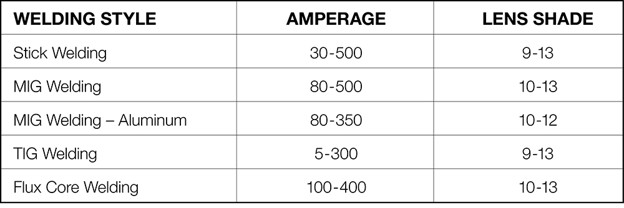
No, each welding type needs a different shade. MIG welding usually needs shade 10-13, while TIG or Stick welding might use other shades. Check the guidelines for each process.
Are Auto-darkening Helmets Safe For Mig Welding?
Yes, if they are ANSI certified and cover the right shade range. Auto-darkening helmets are popular because they adjust quickly and make welding easier for beginners.
How Do I Know If My Lens Is Worn Out?
If your lens has scratches, cracks, or doesn’t darken fast enough, it’s time to replace it. A worn lens can let harmful light reach your eyes.
Where Can I Find Official Lens Shade Recommendations?
You can check the American Welding Society’s guidelines or visit OSHA Welding Safety for official standards.
Getting the right shade lens for MIG welding keeps your eyes safe and helps you see your work clearly. Take your time to choose a quality helmet and lens, and adjust as needed for your welding setup. Your eyes are worth it—protect them every time you weld.