
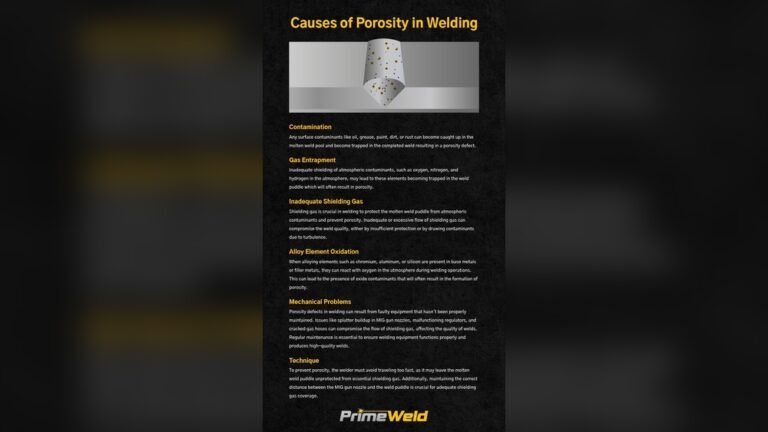
Welding is a critical skill in construction, manufacturing, and repair work. But even experienced welders face challenges like porosity, which can weaken joints and cause failures. If you’ve ever noticed small holes, bubbles, or voids in your welds, you’re seeing porosity. Understanding the causes of welding porosity is essential for making strong, reliable welds. In this article, you’ll discover what creates porosity, how to recognize it, and practical ways to prevent it.
What Is Welding Porosity?
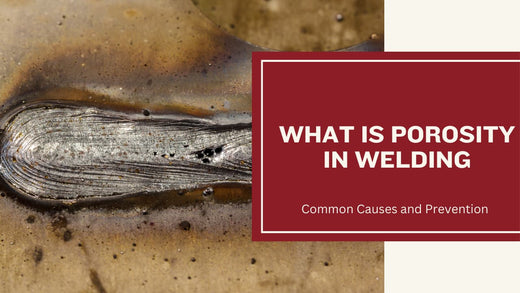
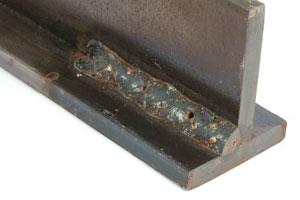
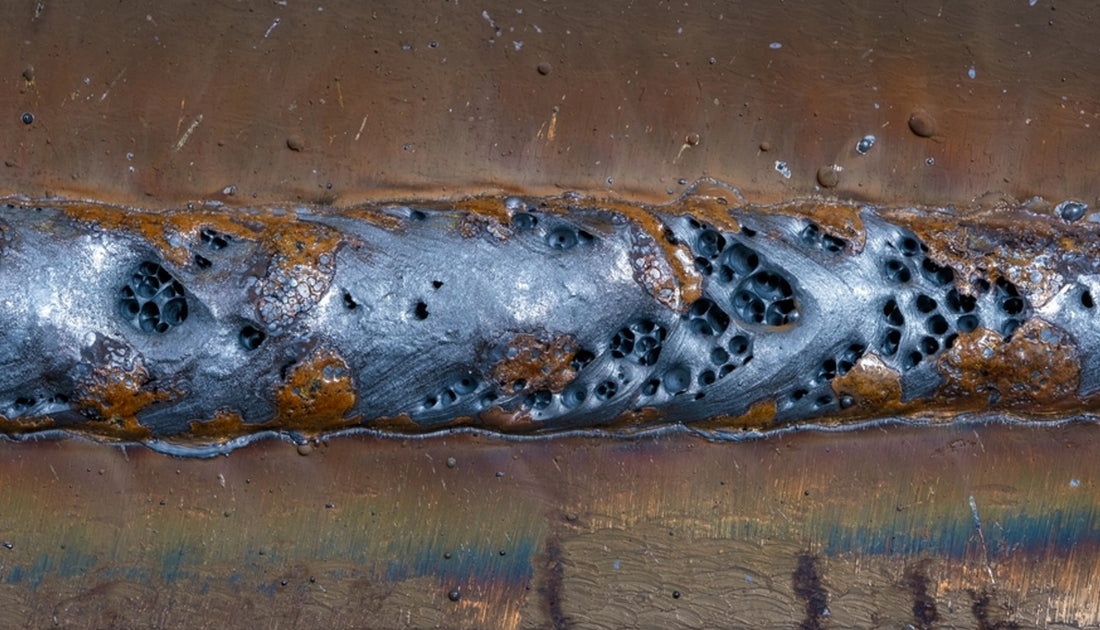
Porosity occurs when gas pockets become trapped in the solidifying weld metal. These pockets create holes or cavities, which can lower the weld’s strength and durability. Porosity is easy to spot: look for small craters, bubbles, or pinholes along the surface or inside the weld bead.
Porosity is not just a cosmetic issue. It can lead to:
- Cracks in the weld
- Lower load capacity
- Corrosion inside holes
- Possible rejection of welds in quality inspections
Main Causes Of Welding Porosity
Many factors contribute to porosity. Here are the most common causes, explained simply:
1. Contaminated Base Metal
Dirty surfaces are a major source of porosity. If the metal has oil, paint, rust, or moisture, these can turn into gas when heated.
- Always clean the metal before welding.
- Use a wire brush or grinding tool to remove contaminants.
2. Improper Shielding Gas
Shielding gas protects the weld area from air, which contains oxygen and nitrogen. If you use the wrong gas or have poor gas coverage, air can mix in and cause porosity.
- Check for leaks or damaged hoses.
- Use the right gas for your welding process (e.g., argon for MIG welding).
3. High Welding Current
Too much current can cause the weld pool to agitate, pulling air into the metal.
- Stick to recommended current levels for your wire and base metal.
- Adjust settings based on the thickness of the material.
4. Incorrect Electrode Handling
Electrodes can absorb moisture if stored incorrectly. Wet electrodes release hydrogen during welding, causing porosity.
- Store electrodes in a dry place.
- Use electrode ovens for special rods like low-hydrogen types.
5. Environmental Factors
Wind, humidity, or poor ventilation can disrupt shielding gas flow. Even a light breeze can blow gas away from the weld zone.
- Try to weld indoors or use wind screens.
- Avoid welding in damp conditions.
6. Welding Technique
Inconsistent speed or angle can expose the weld to air. A shaky hand or wrong torch angle breaks the protective gas shield.
- Practice steady, even motion.
- Keep the torch at the recommended angle (usually 10–15 degrees).
7. Base Metal Composition
Some metals, like aluminum alloys, are more prone to porosity due to their chemical makeup. They react quickly with air, forming gas bubbles.
- Use proper filler material for such metals.
- Preheat the base metal if recommended.
Credit: www.arccaptain.com
Data: Porosity Vs. Weld Strength
Porosity directly affects weld strength. Here’s a comparison of welds with different porosity levels:
| Porosity Level | Weld Tensile Strength (psi) | Typical Failure Rate (%) |
|---|---|---|
| None | 70,000 | 2 |
| Low | 60,000 | 10 |
| Moderate | 45,000 | 25 |
| High | 30,000 | 55 |
As porosity increases, strength drops and failures rise. Even low porosity can significantly weaken a weld.
Shielding Gas Comparison
Choosing the right shielding gas is key. Here’s a quick comparison:
| Gas Type | Common Uses | Porosity Risk |
|---|---|---|
| Argon | MIG, TIG welding | Low |
| CO2 | MIG welding | Moderate |
| Mixed (Argon/CO2) | MIG welding | Low |
Argon provides better protection against porosity than pure CO2.
Credit: www.thefabricator.com
Practical Tips To Prevent Welding Porosity
You can avoid porosity with a few simple actions:
- Clean the metal thoroughly before welding.
- Check gas flow and hoses for leaks.
- Store electrodes in dry, sealed containers.
- Adjust welding settings to recommended values.
- Shield the weld area from wind.
- Practice steady technique for consistent coverage.
Two advanced tips many beginners miss:
- Purge the weld area with extra shielding gas before starting. This helps remove air.
- Use a preheat for metals like aluminum and high-carbon steel. Preheating reduces moisture and gas formation.
Porosity Detection Methods
Detecting porosity early can prevent bigger problems. Some common methods are:
- Visual inspection: Look for surface holes.
- X-ray testing: Finds internal porosity not visible from outside.
- Ultrasonic testing: Detects deep cavities in thick welds.
Here’s how detection methods compare:
| Method | Detects Surface Porosity | Detects Internal Porosity | Cost |
|---|---|---|---|
| Visual | Yes | No | Low |
| X-ray | Yes | Yes | High |
| Ultrasonic | No | Yes | Medium |
For critical welds, combine methods for best results.
Credit: simpleweld.com
Final Thoughts
Porosity is a hidden enemy in welding. It weakens your work and can cost time and money. By understanding the main causes—contaminated materials, shielding gas problems, and technique—you can greatly reduce porosity. Always clean your materials, use proper gas coverage, and check your settings. If you want to dive deeper, the TWI Weld Porosity Guide offers expert insights. Master these basics, and your welds will be stronger, safer, and more reliable.
Frequently Asked Questions
What Is Welding Porosity?
Porosity means gas pockets trapped in the weld metal. These cause holes or bubbles, making the weld weaker and less reliable.
How Can I Detect Porosity In My Welds?
You can find porosity by visual inspection for surface holes or use X-ray/ultrasonic testing for internal cavities.
Does Porosity Affect Weld Strength?
Yes. Even small amounts of porosity lower tensile strength and increase the risk of cracks or failure.
Can Shielding Gas Leaks Cause Porosity?
Absolutely. Leaks or wrong gas flow let air mix with the weld, creating gas pockets and porosity.
What Metals Are Most Prone To Porosity?
Metals like aluminum alloys and high-carbon steels are more prone, especially if not cleaned or preheated properly.