Stick Welding Electrode Chart: Your Complete Guide
Choosing the right stick welding electrode can be confusing, especially with so many types and numbers. If you want strong, clean welds, you must pick the correct rod for the job. This guide breaks down the stick welding electrode chart in simple language, so you can find the right match every time.
What Is A Stick Welding Electrode?
A stick welding electrode is a metal rod coated with a special material. As you weld, the rod melts and becomes part of your weld bead. The coating helps protect the molten metal from air and makes the weld stronger.
Each electrode has a code like E6013 or E7018. These numbers tell you the rod’s strength, position, and special features. Understanding these codes is the first step to better welding.
Decoding Electrode Numbers
The numbers on a stick welding electrode are not random. They give you key information:
- The first two (or three) digits: Show the tensile strength of the weld in thousands of pounds per square inch (psi).
- The next digit: Tells you the position you can use the rod in (all positions, flat only, etc. ).
- The last digit: Explains the coating type and current (AC or DC) you can use.
Here’s a quick summary for popular rods:
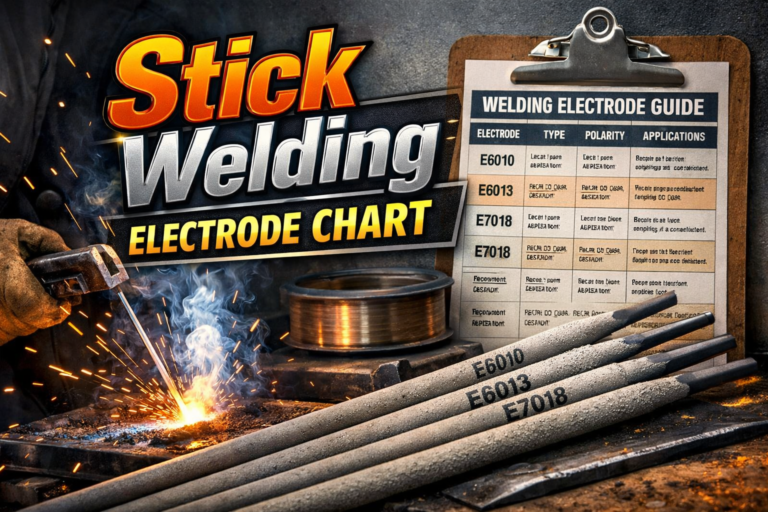
| Electrode | Tensile Strength (psi) | Welding Position | Coating / Current |
|---|---|---|---|
| E6010 | 60,000 | All | Cellulose, DC only |
| E6011 | 60,000 | All | Cellulose, AC/DC |
| E6013 | 60,000 | All | Rutile, AC/DC |
| E7018 | 70,000 | All | Low Hydrogen, AC/DC |
Common Stick Welding Electrodes And Their Uses
Each electrode type has its own strengths and best uses. Here are the most popular rods and what makes them special:
- E6010: Known for deep penetration and fast freezing. Good for pipe and dirty or rusty steel. Only works with DC.
- E6011: Similar to E6010 but works with both AC and DC. Handles poor fit-up and rust. Good for repair work.
- E6013: Provides a smooth, medium-penetration weld. Easy to use and clean. Perfect for thin sheets and beginners.
- E7014: High iron powder rod, faster deposition, good for production work.
- E7018: Offers strong, ductile welds with low hydrogen. Best for structural jobs and critical work.
Here’s a comparison of their main features:
| Electrode | Penetration | Arc Stability | Best For |
|---|---|---|---|
| E6010 | Deep | Good | Pipe, dirty steel |
| E6011 | Deep | Good | Repairs, farm work |
| E6013 | Medium | Very Good | Sheet metal, art |
| E7018 | Medium-Deep | Excellent | Structures, bridges |
How To Read A Stick Welding Electrode Chart
A typical electrode chart shows which rods fit different situations. Here’s what to look for:
- Base Metal: Match the rod to the steel type. For mild steel, E6013 or E7018 are common.
- Welding Position: “1” means all positions (flat, vertical, overhead). “2” means flat and horizontal only.
- Current Type: Some rods require DC only, others work with AC or DC.
- Coating: Impacts arc type, penetration, and cleanup.
Below is a summary table for quick reference:
| Electrode | Base Metal | Position | Current |
|---|---|---|---|
| E6010 | Mild Steel | All | DC |
| E6011 | Mild Steel | All | AC/DC |
| E6013 | Mild Steel | All | AC/DC |
| E7018 | Low Alloy Steel | All | AC/DC |
Non-obvious Tips For Beginners
Most charts give you the basics, but here are two crucial insights:
- Moisture can ruin E7018 rods. They absorb water easily, causing weld defects. Always store them in a rod oven or airtight container.
- Rod diameter affects your settings. Thicker rods need higher amperage and are better for thick steel. If you use a large rod on thin steel, you’ll burn through.
Many new welders overlook rod storage and diameter, leading to weak or ugly welds. Pay attention to both, and you’ll improve fast.
Choosing The Right Electrode For Your Project
Think about these factors before picking a rod:
- Material thickness: Thin steel (under 1/8”) welds best with smaller diameter rods like 3/32” E6013.
- Welding position: Overhead or vertical welds require all-position rods (ending with “1”).
- Required strength: Structural work needs high-strength rods like E7018.
- Power source: If your welder only does AC, avoid DC-only rods like E6010.
If you’re unsure, E6013 is a safe, easy-to-use choice for most simple projects.
Safety And Quality Tips
Stick welding can create fumes and sparks. Always:
- Wear a welding helmet and gloves.
- Work in a well-ventilated area.
- Keep flammable objects away.
For best results, clean your base metal with a wire brush before welding. Dirty surfaces lead to weak welds, even with the right rod.
Where To Find Reliable Electrode Charts
Many manufacturers offer downloadable charts with amperage ranges, metal thickness, and more. The American Welding Society provides detailed information and standards for all electrode types. For more technical details, visit the Wikipedia: Shielded Metal Arc Welding page.
Frequently Asked Questions
What Does The “e” Mean In Electrode Codes?
The “E” stands for electrode. It shows the rod is made for welding and will carry electric current.
How Do I Choose The Right Amperage For My Rod?
Check the rod’s diameter. Most manufacturers print the recommended amperage on the box. For 1/8” E6013, 90-130 amps is common.
Can I Weld Stainless Steel With These Rods?
Standard E6010, E6011, E6013, and E7018 rods are for carbon steel. For stainless, use rods like E308L.
Why Do My E7018 Rods Keep Cracking?
Cracking usually means moisture in the rods or base metal. Store rods in a dry place and preheat thick steel if needed.
Is It Safe To Weld Outside With Stick Electrodes?
Yes, stick welding works well outdoors. The flux coating protects the weld from wind and contamination.
Stick welding gets easier with the right electrode. Use this guide and chart to pick confidently, and you’ll see your welds improve in strength and appearance.