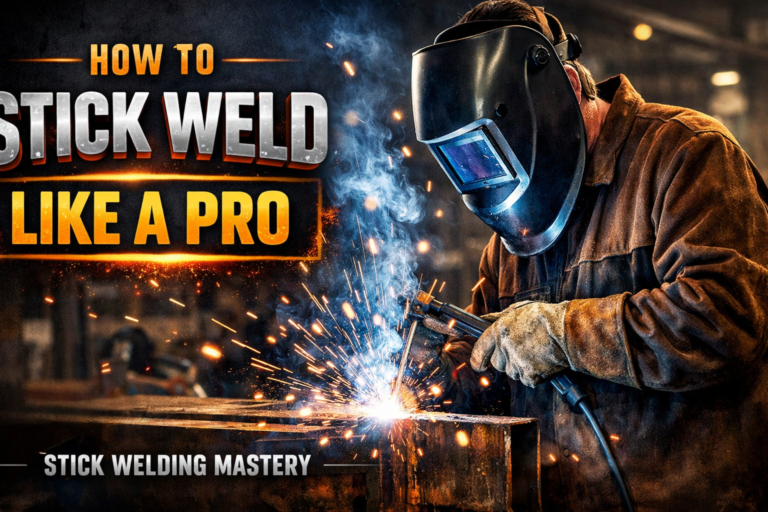
Stick welding, also known as Shielded Metal Arc Welding (SMAW), is a popular method for joining metal. It’s used in construction, repair, and even art. Many beginners choose stick welding because it’s affordable and works well outdoors. If you want to learn how to stick weld, this guide will help you understand the basics, set up your equipment, and avoid common mistakes.
What Is Stick Welding?
Stick welding uses a welding rod (or electrode) and an electric arc to join metals. The rod is coated with a flux that protects the weld from air. When you strike the arc, the rod melts and fuses metal pieces together. It’s used for steel, stainless steel, and cast iron. Stick welding is strong, reliable, and works even if surfaces are dirty or rusty.
Here’s a quick comparison of stick welding vs other popular welding methods:
| Method | Best For | Portability | Ease of Use |
|---|---|---|---|
| Stick Welding (SMAW) | Outdoor, thick metals | High | Medium |
| MIG Welding | Indoor, thin metals | Low | Easy |
| TIG Welding | Precise, clean welds | Low | Hard |
Setting Up For Stick Welding
Before you start, you need the right equipment and safety gear.
- Welding machine – Choose AC or DC. DC is easier for beginners.
- Electrodes – Popular types are E6010, E6011, E7018. Each is made for different tasks.
- Safety gear – Wear a welding helmet, gloves, jacket, and boots.
- Brush and hammer – For cleaning and removing slag after welding.
A typical stick welding setup looks like this:
| Item | Purpose | Estimated Cost (USD) |
|---|---|---|
| Welding machine | Provides power | $150-$500 |
| Electrodes | Creates weld | $10-$25/box |
| Helmet & gear | Protects user | $75-$200 |
| Brush & hammer | Clean weld | $15-$30 |
Tip: Always check your power source and cables before starting. Faulty wires can cause accidents.
Step-by-step: How To Stick Weld
Follow these steps to get good results:
1. Prepare The Metal
Clean the metal using a wire brush. Remove rust, paint, or oil. This helps the arc start smoothly and makes the weld stronger. Rough surfaces might cause the arc to “stick” to the metal.
2. Select The Right Electrode
Choose an electrode based on the metal type and job. For example, E6010 is good for deep penetration and dirty surfaces, while E7018 is better for clean, structural welds. Check the amperage range printed on the box.
3. Set The Machine
Adjust the amperage based on the electrode diameter:
| Electrode Size | Amperage Range | Common Uses |
|---|---|---|
| 1/16″ (1.6 mm) | 20-40A | Thin sheet metal |
| 3/32″ (2.4 mm) | 40-90A | General repairs |
| 1/8″ (3.2 mm) | 80-160A | Heavy steel |
Tip: If the rod sticks, lower the amperage. If it burns too fast, increase it.
4. Strike The Arc
Hold the electrode at a 20-30 degree angle. Tap or scratch the tip against the metal to create an arc. Don’t press too hard or you’ll stick the rod. Once the arc starts, keep it steady.
5. Move Steadily
Keep the rod close to the metal, about 1/8 inch (3 mm) away. Move slowly and evenly. The weld bead should look smooth and shiny. If you move too fast, the weld will be thin and weak.
6. Remove Slag
After each pass, use the chipping hammer and brush to remove slag. Slag covers the weld and must be cleaned for the next layer.
Common Mistakes And How To Avoid Them
Beginners often run into these problems:
- Rod sticking – Usually from low amperage or dirty metal. Clean and increase amperage.
- Porosity – Holes in the weld caused by moisture or oil. Dry electrodes before use.
- Uneven bead – Move the rod too fast or slow. Practice keeping a steady speed.
- Too much spatter – Wrong amperage or angle. Adjust settings and hold steady.
A less obvious mistake is using the wrong electrode for the job. For example, E6011 is better for vertical welds, while E7018 gives cleaner results for flat welds. Also, many beginners forget to dry E7018 rods, which can cause weak welds.
Practical Tips For Better Results
- Practice on scrap metal before real projects.
- Keep electrodes dry. Store them in a sealed container.
- Check ground clamp. Bad grounding leads to weak welds.
- Use short rods for better control, especially when learning.
Another insight: Don’t weld in windy areas unless you have a wind shield. The flux can’t protect the weld properly if the wind blows it away.
Safety Considerations
Stick welding produces intense heat, light, and fumes. Protect yourself:
- Always wear a welding helmet with a proper shade.
- Use flame-resistant clothing and gloves.
- Work in a well-ventilated area to avoid fumes.
- Keep a fire extinguisher nearby.
For more safety information, visit OSHA Welding Safety.
Frequently Asked Questions
What Metals Can I Stick Weld?
You can stick weld steel, stainless steel, and cast iron. It’s not suitable for aluminum or thin sheet metal.
How Long Does It Take To Learn Stick Welding?
Most people can learn basic stick welding in a few hours with practice. Mastery takes longer, usually weeks to months.
Why Does My Electrode Keep Sticking?
This is often caused by low amperage or dirty metal. Try cleaning the surface and increasing amperage.
What’s The Best Electrode For Beginners?
E6013 is a good choice. It’s easy to use, works on clean metal, and creates smooth beads.
Can I Weld Outdoors With Stick Welding?
Yes, stick welding works well outdoors. The flux protects the weld from wind and contaminants.
Stick welding is a skill that takes practice but offers reliable results. With the right setup, proper technique, and attention to safety, you can create strong welds for many projects. Start with small tasks, keep learning, and your confidence will grow quickly.