
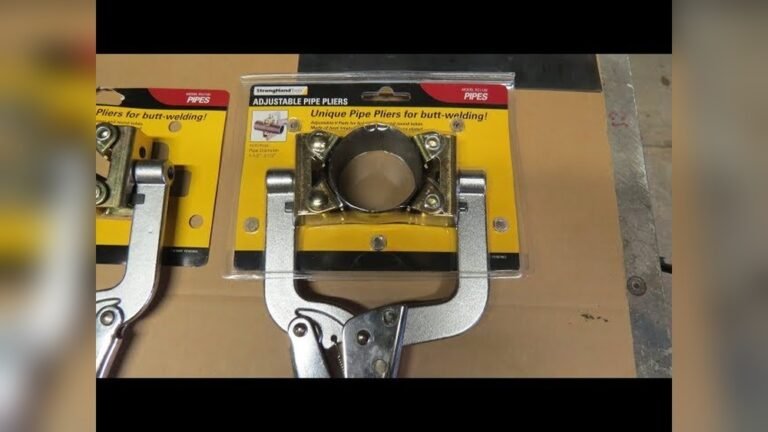
The Essential Guide To Pipe Welding Pliers
Pipe welding often requires specialized tools to handle the unique challenges of working with cylindrical materials. Among these, pipe welding pliers, also known as pipeline welding pliers or torch tip pliers, are indispensable. These versatile tools combine several functions into one, making them a favorite for welders working on pipes, especially in industries like oil and gas, construction, and manufacturing. Understanding their features, benefits, and best practices can significantly improve efficiency and safety on the job.
These pliers are designed to assist welders with tasks directly related to their torch and the pipe they are working on. They are not just simple pliers; they are multi-functional tools that can help with everything from adjusting torch settings to cleaning the nozzle.
Their robust construction ensures they can withstand the harsh conditions of a welding environment, including heat, sparks, and potential impacts.
What Exactly Are Pipe Welding Pliers?
Pipe welding pliers are a compact, multi-purpose tool designed specifically for welders. Their primary purpose is to provide quick and easy access to common adjustments and maintenance tasks for welding torches, particularly MIG (Metal Inert Gas) and sometimes TIG (Tungsten Inert Gas) torches.
The jaws are typically shaped to grip and manipulate torch tips, nozzles, and other components.
The design integrates several tools into one unit. This means a welder can carry fewer individual tools, saving time and reducing clutter in their tool belt or welding cart. This consolidation is a major reason for their popularity in demanding work environments where every second counts and easy access to tools is crucial.
Key Features And Functions
The strength of pipe welding pliers lies in their array of integrated functions. While designs can vary slightly between brands, most include a combination of the following:
Torch Tip And Nozzle Management
The most prominent feature is the jaw design, which is specifically shaped to grip and remove welding torch tips and nozzles. These parts can become stuck due to heat and spatter. The pliers offer a secure grip to loosen or tighten them.
- Tip Removal/Installation: The jaws are designed to fit around standard torch tips, allowing for easy removal for cleaning or replacement.
- Nozzle Adjustment: They can also grip the torch nozzle to reposition it or tighten it if it becomes loose.
Wire Cutting And Adjustment
Many pipe welding pliers include a wire cutter integrated into the design. This is incredibly useful for trimming excess welding wire that protrudes from the torch tip.
- Wire Trimming: A sharp cutting edge allows welders to snip off excess wire cleanly, preventing issues with arc starting or wire feed problems.
- Wire Feed Adjustment: Some models may offer a way to adjust the tension on the wire feed mechanism, although this is less common than the cutting function.
Spatter Removal And Cleaning
Spatter, the small droplets of molten metal that fly from the weld pool, can accumulate on the torch tip and nozzle. This buildup can interfere with the gas flow and affect weld quality.
- Nozzle Cleaning: A small pin or reamer is often built into the pliers to clean out the inside of the torch nozzle, removing hardened spatter.
- Tip Cleaning: The jaws themselves can sometimes be used to scrape off spatter from the outside of the tip.
Hammer And Mallet Function
A surprising but highly practical feature found on many pipe welding pliers is a small, hammer-like head. This is useful for light-duty tasks.
- Tapping Down Spatter: Welders can use the hammer end to gently tap cooled spatter off the workpiece or torch components.
- Light Adjustments: It can also be used for minor adjustments or to seat components firmly.
Insulation And Grip
The handles of pipe welding pliers are typically insulated to protect the welder from electrical shock and heat. They are also often ergonomically designed for a comfortable and secure grip, even when wearing welding gloves.
Benefits Of Using Pipe Welding Pliers
Integrating these functions into a single tool offers significant advantages for welders:
- Efficiency and Time Saving: Having multiple tools in one means less time spent searching for the right tool. Adjustments, cleaning, and cutting can be done quickly at the torch.
- Convenience and Portability: Reducing the number of individual tools carried simplifies a welder’s kit. This is especially important for those working in confined spaces or moving frequently.
- Improved Weld Quality: By allowing for quick tip and nozzle maintenance, these pliers help ensure proper gas flow and electrode protection, leading to cleaner and more consistent welds.
- Safety: Insulated handles protect against electrical shock. Having tools readily available also reduces the need to reach for potentially hazardous items or compromise safety procedures.
- Cost-Effectiveness: While a good pair of pipe welding pliers is an investment, they often replace the need to buy several individual tools like wire cutters, nozzle cleaners, and tip wrenches.

Credit: www.youtube.com
Choosing The Right Pipe Welding Pliers
When selecting pipe welding pliers, consider these factors:
- Durability and Material: Look for tools made from high-quality steel that can withstand heat and heavy use. A chrome-plated finish can offer corrosion resistance.
- Grip Strength: Ensure the jaws provide a firm grip on tips and nozzles.
- Integrated Functions: Decide which functions are most important for your specific welding tasks. Do you need a strong wire cutter? A robust nozzle cleaner?
- Handle Comfort and Insulation: Good ergonomics and effective insulation are crucial for safety and ease of use.
- Brand Reputation: Reputable tool manufacturers often produce more reliable and longer-lasting welding tools.
Here’s a quick comparison of some common features found in pipe welding pliers:
| Feature | Common Integration | Importance for Welders |
|---|---|---|
| Tip Gripper | Standard | Essential for replacing or tightening torch tips. |
| Nozzle Gripper | Standard | Useful for adjusting or removing the torch nozzle. |
| Wire Cutter | Very Common | Crucial for trimming welding wire cleanly. |
| Spatter Reamer/Pin | Common | Helps maintain clean nozzle openings for proper gas flow. |
| Hammer Head | Common | For light tapping and dislodging spatter. |
| Insulated Handles | Standard | Vital for electrical safety. |
Best Practices For Using Pipe Welding Pliers
To get the most out of your pipe welding pliers and ensure safety, follow these practices:
- Always Ensure the Welder is Off: Before performing any maintenance on the torch, ensure the welding machine is turned off and disconnected from the power source to prevent electrical shock.
- Allow Components to Cool: While the pliers offer some heat protection, it’s best to let the torch tip and nozzle cool down before attempting to remove or adjust them.
- Use the Right Tool for the Job: While versatile, these pliers are not meant for heavy-duty prying or hammering. Use them for their intended purpose to avoid damage.
- Regular Cleaning: Keep the pliers themselves clean. Remove spatter and debris from the jaws and other components to maintain their functionality.
- Inspect for Damage: Periodically check the pliers for signs of wear, such as worn jaws, dull cutters, or damaged insulation. Replace them if they are compromised.
Pro Tip: For MIG welding, maintaining a clean torch tip is crucial for consistent wire feed and arc stability. Small amounts of spatter can quickly build up, affecting gas coverage and leading to porosity in the weld. Use the reamer function regularly.

Credit: www.youtube.com
Common Mistakes To Avoid
Welders new to pipe welding pliers might make a few common errors:
- Forcing Components: If a tip or nozzle is extremely stuck, don’t force it excessively, as this can damage the torch body or the pliers. Try