
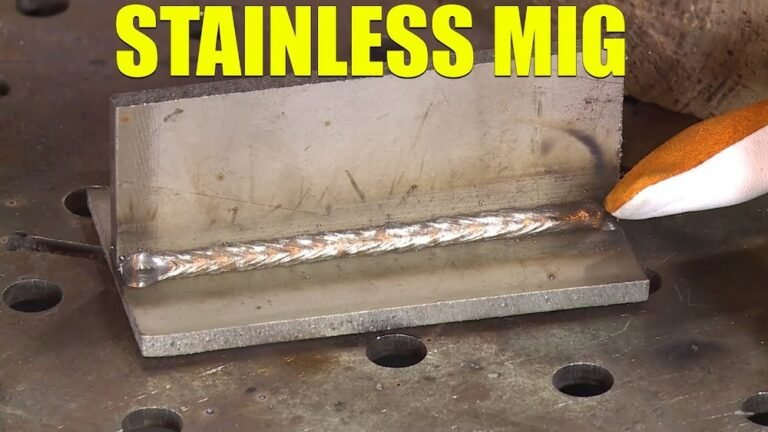
Welding stainless steel with MIG (Metal Inert Gas) welding combines strength, speed, and versatility. Many industries—from food processing to architecture—choose stainless steel for its rust resistance and clean appearance. But MIG welding stainless steel is not as simple as welding mild steel.
It needs the right settings, materials, and careful technique to get strong, attractive results. This guide covers the essentials, common challenges, and insider tips to help you weld stainless steel confidently.
What Makes Stainless Steel Different?
Stainless steel is unique because of its chromium content (at least 10.5%). This makes it resistant to rust and staining. However, it also means stainless steel reacts differently to heat compared to mild steel.
When welding, stainless steel:
- Holds heat longer, increasing the risk of warping.
- Forms a thin oxide layer that protects it, but improper welding can damage this layer.
- Can become weak or discolored if overheated.
These differences mean you need special care with MIG welding, from gas choice to technique.
Choosing The Right Equipment And Materials
Getting good welds starts with the right setup. Here’s what you need for MIG welding stainless steel:
Welding Machine
A standard MIG welder (with a DC output) works for most stainless projects. For thin sheets, a lower amp welder is enough. For thicker pieces, a more powerful machine is required.
Shielding Gas
Gas protects the weld from air. For stainless steel, the best option is a tri-mix gas:
- 90% helium
- 7.5% argon
- 2.5% carbon dioxide
This mix gives a smooth, clean weld and keeps discoloration low. Some welders use 98% argon/2% CO₂ for thinner materials.
Filler Wire
Choose ER308L wire for most common grades (304, 304L stainless). For 316 stainless, use ER316L wire. The “L” stands for low carbon, which reduces the chance of carbide precipitation and rust.
Other Essentials
- Stainless steel brush (never use a carbon steel brush; it contaminates the weld)
- Clean gloves
- Proper safety gear

Credit: www.youtube.com
Mig Welding Stainless Steel: Step-by-step Process
1. Clean The Metal
Remove all dirt, oil, and markings with a stainless steel brush or acetone. Stainless steel must be spotless for quality welds.
2. Set The Machine
Adjust voltage and wire feed according to the metal thickness. For 1/8” (3 mm) steel, start with 18–20 volts and medium wire speed.
3. Select The Right Gas Flow
Set the gas flow rate to 25–35 cubic feet per hour (CFH). Too little gas causes porosity; too much can swirl air into the weld.
4. Position The Workpiece
Clamp the pieces tightly. Stainless steel moves when heated, so secure it well.
5. Welding Technique
Hold the torch at a 10–15° angle. Move steadily, keeping the arc at the front of the weld pool. For thin sheets, use short bursts (“stitch welding”) to reduce warping.
6. Cooling
Avoid quenching with water; let the metal cool slowly to prevent cracking.
7. Post-weld Cleaning
Remove discoloration using a stainless steel brush or a dedicated chemical cleaner called pickling paste.
Common Challenges And How To Solve Them
Even experienced welders can struggle with stainless steel. Here are two common issues and how to avoid them.
Warping
Because stainless steel holds heat, it warps easily. Minimize this by:
- Using short welds (1–2 inches) then letting it cool
- Clamping the workpiece tightly
- Using a heat sink (like a copper bar) under the weld area
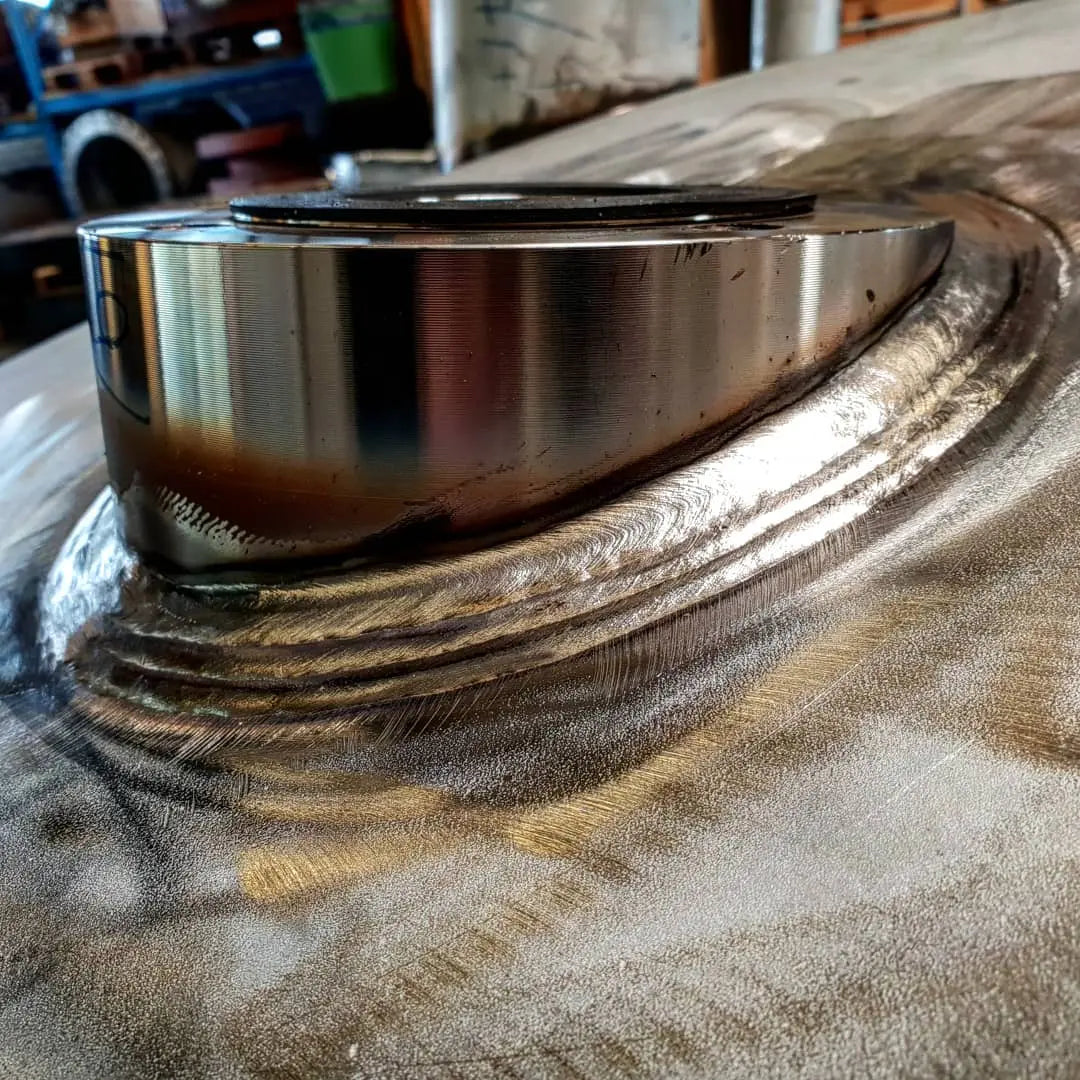
Discoloration (heat Tint)
Overheating causes rainbow colors or brown stains. While not always a problem, it looks bad and can reduce corrosion resistance. Fix this by:
- Lowering voltage and wire speed if the weld is too hot
- Using the correct gas flow
- Cleaning the weld area immediately after welding
Credit: tooliom.com
Mig Vs. Tig For Stainless Steel
MIG welding is fast and easier for beginners, but TIG welding is often used for high-quality stainless work. Here’s a side-by-side look:
| Feature | MIG Welding | TIG Welding |
|---|---|---|
| Speed | High | Low |
| Skill Needed | Beginner-friendly | Advanced |
| Weld Appearance | Good | Excellent |
| Best Use | Large jobs, thick metal | Thin metal, fine work |
Selecting Gas For Mig Welding Stainless Steel
The shielding gas mix changes the final weld’s appearance and corrosion resistance. Here’s how the common options compare:
| Gas Mix | Weld Quality | Best For |
|---|---|---|
| 90% He / 7.5% Ar / 2.5% CO₂ | Best appearance, low spatter | Most stainless jobs |
| 98% Ar / 2% CO₂ | Good, less penetration | Thin sheets |
| 100% CO₂ | Poor, high spatter | Not recommended |
Practical Tips For Better Results
- Keep all tools and surfaces dedicated to stainless steel. Even a small carbon steel particle can cause rust spots.
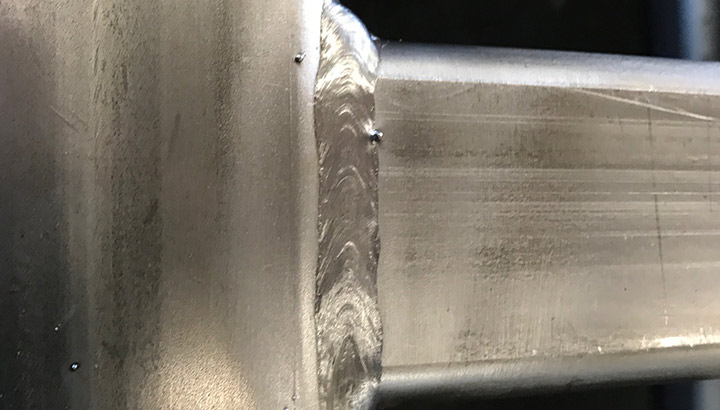
- Always check the backside of the weld. Good penetration means a smooth bead on both sides.
- Store filler wire in a dry place. Moisture causes porosity in your welds.
A surprising fact: Some beginners use standard MIG wire and gas for stainless steel. This creates weak joints and rust over time. Always use the right filler and shielding gas for stainless.
Cost Comparison: Mig Welding Stainless Vs. Mild Steel
Welding stainless steel costs more due to special wire and gas. Here’s a quick comparison:
| Material | Wire Cost (per lb) | Gas Cost (per 80cf) |
|---|---|---|
| Stainless Steel | $10–$15 | $55–$80 (Tri-mix) |
| Mild Steel | $2–$5 | $25–$40 (CO₂/Argon) |
Credit: www.millerwelds.com
Frequently Asked Questions
What Are The Most Common Mistakes When Mig Welding Stainless Steel?
The biggest mistakes are using the wrong filler wire, improper cleaning, and incorrect shielding gas. These lead to weak welds and rust.
Can I Use A Regular Mig Welder For Stainless Steel?
Yes, but you must use the correct wire and gas. Also, fine-tune your settings for best results.
How Do I Prevent Warping In Thin Stainless Steel?
Use lower heat, short welds, and let the metal cool between passes. Clamping and backing bars also help.
Why Does My Weld Turn Colors?
Discoloration happens from overheating or not enough shielding gas. Clean the area and adjust your settings.
Where Can I Find Official Welding Guides?
The American Welding Society (AWS) offers trusted resources. See their site at AWS for in-depth guides and standards.
Getting good at MIG welding stainless steel takes practice, attention to detail, and the right materials. With these tips, you can make strong, clean welds and avoid common pitfalls. Stainless steel might be less forgiving than mild steel, but with patience, you’ll master it and create long-lasting, beautiful results.