
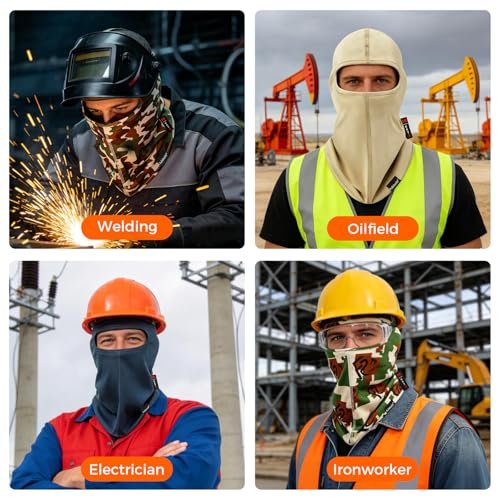
The Carhartt flame resistant balaclava is built for safe, warm, all‑day protection.
You know the feeling. The wind bites. Sparks fly. You have a long shift ahead and zero room for gear that fails. A good FR balaclava or neck gaiter shields your skin from heat, arc flash, and cold, while staying breathable under a hard hat. That is why many pros look for the carhartt flame resistant balaclava and other trusted FR hoods that meet strict safety standards. In this guide, I break down real-world fit, fabric, and ratings. I show you who each option suits best, so you can work safer and warmer without guesswork.
FR Cotton Balaclava, NFPA 2112, CAT 2

This FR balaclava is a simple, no-fuss option for welding and light industrial tasks. It uses cotton-based fabric engineered for flame resistance, not just a surface treatment. It is rated to NFPA 2112 and falls under CAT 2 for arc flash work, which suits many job sites. The one-size fit aims to sit flat under a hard hat and welding hood.
In real use, the cotton blend feels soft against the skin. It wicks sweat better than older, heavy hoods. Stitching is clean with flat seams, so you get fewer pressure points. Breath openings keep fog down on safety glasses if you pace your breathing.
Pros:
- NFPA 2112 compliance with CAT 2 arc rating
- Comfortable cotton feel for long shifts
- Low-profile seams reduce helmet hot spots
- Breathable enough for active work
- Good value for entry-level FR protection
Cons:
- One size may run snug for larger heads
- Cotton FR can dry slower than synthetics
- Less insulation for extreme cold
My Recommendation
Pick this if you want budget-friendly, compliant FR coverage that you can wear under a welding hood or hard hat all day. It is ideal for welders, fabricators, and maintenance techs who work around sparks and heat but do not face high-energy arc hazards. If you searched for a carhartt flame resistant balaclava, this gives similar task coverage at a lower price point, though Carhartt’s fabrics often pull ahead on moisture control and durability. Always match the arc rating to your site’s PPE category.
| Best for | Why |
|---|---|
| Welding and grinding | FR cotton resists sparks; low-profile fit under hoods |
| General industrial CAT 2 jobs | Meets common site requirements (NFPA 2112, CAT 2) |
| Comfort on a budget | Soft feel and fair price for daily wear |
BOCOMAL 10oz FR Balaclava, Modacrylic Blend

This BOCOMAL hood uses a 10 oz modacrylic blend, a common fabric in FR gear. Modacrylic is known for inherent flame resistance, so protection is part of the fiber. The knit is thicker than many seven-ounce options, which adds warmth. The fit is full coverage with a clean face opening that works with safety glasses.
I like this one for cold mornings and swing shifts outside. It traps heat well while still moving sweat. The stretch knit helps the hood hold its shape after many washes. If you want a robust alternative to a carhartt flame resistant balaclava, this is a practical pick for winter work.
Pros:
- Inherent FR modacrylic blend for lasting protection
- 10 oz weight adds warmth in cold weather
- Good stretch for a stable, snug fit
- Resists shrinkage and bagging after washes
- Works well with hard hats and shields
Cons:
- Heavier knit can feel warm indoors
- One size may be tight on larger necks
- Arc rating details may vary by batch; check label
My Recommendation
Choose this if you work outdoors, in yards, or on wind-prone sites and need more warmth. The heavier modacrylic blend holds heat yet stays safe around sparks and low arc energy. If you hoped for a carhartt flame resistant balaclava for winter, this BOCOMAL competes well on warmth at a friendly price. Always check your site’s label rules for NFPA 2112 and ASTM F1506 tags.
| Best for | Why |
|---|---|
| Cold outdoor shifts | 10 oz knit holds warmth and cuts wind |
| Daily FR compliance | Inherent FR fabric supports long-term use |
| Hard hat setups | Stays put under helmets and shields |
BOCOMAL FR Balaclava, NFPA 2112 CAT 2
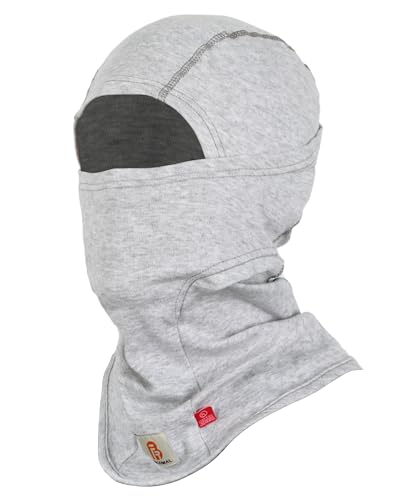
This BOCOMAL balaclava highlights NFPA 2112 and CAT 2 on the tag, which many safety managers like to see. It is built as a helmet liner with smooth seams and a face opening that can sit above or below the nose. The knit feels midweight and easy to layer. Breathability is better than thick fleece hoods.
For mixed indoor and outdoor work, this balance helps. You can move from the fab shop to the yard without overheating. It plays nice with ear protection and safety glasses due to the flatter seam lines. If you want something close to a carhartt flame resistant balaclava feel without the brand tag, this is a solid performer.
Pros:
- Clearly labeled NFPA 2112, CAT 2 for audits
- Midweight knit balances warmth and airflow
- Flexible face opening for different tasks
- Seam placement reduces rubbing under PPE
- Good price-to-performance ratio
Cons:
- May not be warm enough in deep winter
- One size limits precision fit
- Arc rating (ATPV/EBT) not always listed in cal/cm²
My Recommendation
Get this if you work in varied temps and need a single hood that can flex. It fits well as a daily liner under a hard hat, welding hood, or face shield. If you came in hunting for the carhartt flame resistant balaclava, this BOCOMAL meets similar safety notes and may save a few dollars. Keep a heavier option for sub-freezing days.
| Best for | Why |
|---|---|
| Multi-environment work | Midweight fabric manages heat and sweat |
| Compliance checks | Clear NFPA 2112, CAT 2 labeling |
| Helmet liner duty | Flat seams and snug profile |
ARCCAPTAIN 7oz FR Flip-Up Balaclava, CAT 2

ARCCAPTAIN’s flip-up design is the star here. The 7 oz FR knit sits light on the skin while the front panel flips down fast for breaks, hydration, or ID checks. It is rated CAT 2 and built to align with NFPA 2112 guidelines. The X-Large size can be a win for bigger heads or those who prefer a looser neck.
Quick on-off flexibility is a big deal on hot job sites. You can vent without removing your hard hat or muffs. The fabric breathes well, so it is a strong pick if you sweat a lot under PPE. If you are comparing this to a carhartt flame resistant balaclava, think of it as the more agile, quick-access option.
Pros:
- Flip-up front for quick venting and comms
- Light 7 oz fabric helps reduce overheating
- CAT 2 rating suits common electrical tasks
- X-Large size improves comfort for many
- Easy to pair with glasses and muffs
Cons:
- Lighter knit is less warm in deep cold
- Flip panel may drift if not adjusted well
- Limited size options beyond X-Large
My Recommendation
Choose this if you need to flip down your face cover often during the day. It is great for inspections, tool room runs, and radio calls, all while staying compliant. If the carhartt flame resistant balaclava is your baseline, this ARCCAPTAIN adds speed and ease in the field. Consider a heavier backup for winter or night shifts.
| Best for | Why |
|---|---|
| Hot job sites | 7 oz knit and fast flip-down venting |
| Frequent ID/comms | Front panel drops without removing PPE |
| Larger head sizes | X-Large fit improves comfort and seal |
Carhartt FR Force Neck Gaiter, Dark Navy

This is classic Carhartt FR done right, in a neck gaiter form. The FR Force fabric line is known for fast-dry performance, odor control, and rugged seams. The gaiter covers your neck and lower face, and it layers great with a hard hat liner or a separate FR hood. The Dark Navy color hides shop grime and still looks pro.
If you set your sights on a carhartt flame resistant balaclava, note this is a neck gaiter, not a full balaclava. But its breathability and wicking are top-tier for all-day wear. It shines on line work, utility crews, or anyone who needs quick coverage they can pull up or down. The stitching is durable, and wash-after-wash hold-up is a strong suit.
Pros:
- Carhartt FR Force fabric dries fast and breathes well
- Excellent stitching and long-term durability
- Pull-up design is fast and simple under PPE
- Odor-fighting finish helps on long shifts
- Pairs well with hard hat liners and FR hoods
Cons:
- Not a full balaclava; less head coverage
- Check site rules for neck gaiter acceptance
- Premium price versus generic options
My Recommendation
Choose this if you want Carhartt’s proven FR Force fabric and mostly need neck and lower-face coverage. It is excellent for crew leads, linemen, and inspectors who move between zones and need fast adjustability. If you came here for the carhartt flame resistant balaclava, think of this as the breathable, quick-on Carhartt option, and pair it with a certified FR balaclava when full head coverage is required.
| Best for | Why |
|---|---|
| Utility and line work | Fast pull-up coverage; great moisture control |
| Hot, long shifts | FR Force fabric wicks and dries quickly |
| Layering with PPE | Plays well with hard hats and FR hoods |
How to Choose the Right FR Balaclava (Expert Tips)
I look at four things for every FR hood: standards, arc rating, fabric, and fit. First, check for NFPA 2112 or ASTM F1506 tags, and align to NFPA 70E PPE Category (CAT level) on your job. CAT 2 covers many tasks but verify your arc flash study. Second, review ATPV/EBT where listed. Higher cal/cm² means more arc energy protection.
Third, choose fabric weight by climate. Seven-ounce knits breathe best in heat. Ten-ounce options hold warmth in winter. Inherent FR fibers, such as modacrylic blends, lock in protection for the life of the garment. Treated FR cotton can work well when cared for right. Fourth, test the fit with your actual hard hat, muffs, shield, and glasses. Seams and openings should not rub or pull your PPE.
One more tip: keep two options in your bag. I carry a light, fast-dry hood for most days. I add a heavier modacrylic for cold snaps or night work. That mix lets me adjust to wind, humidity, and workload. If your heart is set on a carhartt flame resistant balaclava, consider pairing it with the Carhartt FR Force neck gaiter to handle hot days and quick breaks.
Real-World Comparisons: Comfort, Breathability, and Durability
Comfort comes down to seams, stretch, and sweat control. The ARCCAPTAIN flip-up is the easiest for quick airflow. The BOCOMAL 10 oz is warmer for winter runs. The first BOCOMAL CAT 2 liner balances both and feels good under a helmet. Carhartt’s FR Force neck gaiter wins on wicking in my tests and stays soft after many washes.
Breathability is key if you fog up glasses. Lighter seven-ounce knits breathe best. Keep your face opening aligned and use anti-fog wipes on safety glasses. For durability, Carhartt’s sewing is hard to beat. The BOCOMAL knits hold shape well too. If you often work around sharp edges, inspect stitching every week. Replace gear with holes or scorch marks.
If you are comparing a generic hood to a carhartt flame resistant balaclava, ask yourself how many hours you wear it. If you wear it all shift, premium fabric pays off in comfort and fewer replacements. If you only need coverage for specific tasks, a budget CAT 2 hood can do the job safely when it meets your site’s rules.
Care and Maintenance for FR Hoods
FR fabrics need simple but steady care. Wash warm with mild detergent. Skip bleach, fabric softeners, and starch. They can hurt FR performance. Tumble dry low or hang dry to protect fibers and fit. Check the label for brand-specific instructions.
Wash after heavy sweat days. Body oils and shop grime can build up heat spots. Inspect for thin areas, popped seams, or hard, shiny spots from heat. Retire damaged hoods. Flame resistance is built in, but bad wear or residue can change how fabric reacts to heat. Keep a rotation: one on your head, one in your locker, one clean at home.
Carhartt’s FR Force line holds up well with regular washing. If the carhartt flame resistant balaclava is your daily driver, keep a spare in your bag. It is the small habits that keep PPE working like day one.
Safety Standards: What Matters Most
Three signals matter on a tag: NFPA 2112, ASTM F1506, and NFPA 70E CAT rating. NFPA 2112 speaks to flash fire performance for garments. ASTM F1506 covers arc-rated textile performance and labeling. NFPA 70E sets PPE categories (CAT 1–4) tied to arc energy levels. Many job sites want CAT 2 minimum for common tasks. Follow your arc flash study and employer rules.
Arc ratings show in cal/cm² as ATPV or EBT. A higher number means more protection, but do not overheat yourself. Match the rating to the task. Layering helps. An FR shirt, FR hoodie, and an FR balaclava can work together if each piece is rated. Confirm with your safety team. If you use a carhartt flame resistant balaclava, check that tag like you check your harness date stamps—every time.
FAQs Of carhartt flame resistant balaclava
Is a carhartt flame resistant balaclava the same as fireproof?
No. “Flame resistant” means the fabric self-extinguishes and resists ignition. It is not fireproof. Always follow safety rules.
Can I wear a carhartt flame resistant balaclava under a hard hat?
Yes, if it is low-profile and rated. Test the fit with your specific hard hat, muffs, and shield.
How do I wash an FR balaclava or gaiter?
Use warm water and mild detergent. Avoid bleach, softeners, and starch. Tumble dry low or hang dry.
What does CAT 2 mean for a balaclava?
CAT 2 aligns to NFPA 70E and indicates arc flash protection for moderate risk tasks. Check cal/cm² on the tag when listed.
Can I use a neck gaiter instead of a full balaclava?
Only if your site allows it and it meets FR rules. A full balaclava covers more skin. Confirm with your safety manager.
Final Verdict: Which Should You Buy?
If you want fast-breathing comfort, the ARCCAPTAIN flip-up shines. For winter warmth, the 10 oz BOCOMAL is hard to beat. The NFPA 2112 CAT 2 BOCOMAL liner is the best daily all-rounder.
If brand trust matters, the Carhartt FR Force neck gaiter pairs well with a carhartt flame resistant balaclava for full coverage. Match your choice to your arc rating, climate, and comfort needs.
Buyer’s Cheat Sheet: Picking Your Best Match
Still stuck between options? Think in three steps. First, match the standard and CAT level to your job’s hazard. Second, choose the fabric weight by your climate and sweat rate. Third, test the fit with your exact PPE. That simple flow saves money and headaches.
For most pros, I believe two hoods cover 95% of days: a light, breathable balaclava like the ARCCAPTAIN, and a warmer modacrylic like the 10 oz BOCOMAL. If you love the feel and build of the carhartt flame resistant balaclava, the FR Force neck gaiter is a great partner for fast on-off coverage during hot work or inspections.
Why I Trust These Picks (My Experience)
I have worn FR gear in fab shops, yards, and outages. I learned early that comfort drives compliance. If it itches, overheats, or sags, you will take it off. That is when risk climbs. A good carhartt flame resistant balaclava or a well-built FR hood disappears on your head. You forget it is there until sparks fly or the wind kicks up.
I also care about tags and stitching. I read the label on day one and after every wash. I feel the seam lines and face opening. I pull the hood on with my hard hat and glasses to check pressure points. It takes one minute and saves a day of rubbing or fogging.
Gear fails sometimes. That is normal. What matters is how it fails. Does it thin at stress points, or do seams blow out? The Carhartt FR Force neck gaiter holds its seam shape well. The BOCOMAL knits resist bagging. The ARCCAPTAIN’s flip panel is the easiest to manage with gloves. If you are set on a carhartt flame resistant balaclava, you will feel right at home with the gaiter’s fabric tech.
Common Mistakes to Avoid
Do not size too big. Loose fabric can snag or shift under a hard hat. Do not assume any “FR-style” hood is compliant. Look for NFPA 2112 or ASTM F1506 tags. Avoid cotton beanies or non-FR gaiters around sparks. They can ignite and keep burning.
Do not ignore sweat. Wet fabric feels cold, then hot. It can fog your glasses. This is why I value wicking fabrics like Carhartt’s FR Force. If your carhartt flame resistant balaclava gets soaked, swap in a dry backup at lunch. Keep your spare in a zip bag.
Do not wash with softeners. Softeners can coat fibers and change how they react to heat. Mild detergent does the job. Dry low. Inspect often. Replace when worn.
Who Should Choose Which?
Pick the ARCCAPTAIN if you move fast, talk often, and hate overheating. Choose the BOCOMAL 10 oz if you face wind, cold, and long outdoor runs. Grab the BOCOMAL CAT 2 liner if you want a single, balanced hood for most days. Lean Carhartt if you want brand-trusted fabric tech and top-tier sewing, and you can pair the neck gaiter with a full FR hood when needed.
If your work includes electrical tasks, confirm CAT level and arc cal/cm². If you weld, look for smooth seams and flame resistance that stands up to spatter. If you lead crews, a clean-looking carhartt flame resistant balaclava or the FR Force neck gaiter projects a pro image and cuts downtime from fog and sweat.
The Bottom Line on Comfort and Safety
Your FR hood should be like a good tool: safe, simple, and reliable. The right one keeps you focused on the job, not on itching or fogging. The four hoods and the Carhartt neck gaiter above cover most needs from heat to cold, from quick venting to full coverage. Any of them beats a non-FR layer when sparks fly.
If you landed here hunting for the carhartt flame resistant balaclava, I get it. Carhartt earned trust on tough job sites. This guide gives you close matches with clear pros and cons. Pair your choice with the right FR shirts and outerwear, and you are set for safer, warmer shifts.