
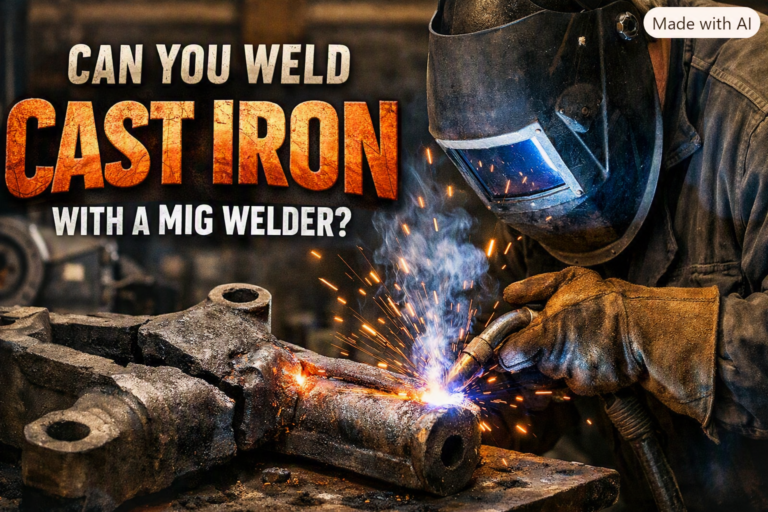
Welding cast iron often feels like a challenge, even for skilled welders. Many people wonder if a MIG welder can handle this tough job. If you have a cracked cast iron part, you might want a fast, simple fix. But before you fire up your MIG machine, it’s important to know the risks, the process, and what results to expect. This article explains how MIG welding works on cast iron, what you need, and if it’s the right solution for your repair.
Can You Use A Mig Welder On Cast Iron?
Yes, you can weld cast iron with a MIG welder, but the process is not always straightforward. Cast iron is brittle and contains a lot of carbon. When you heat and cool it quickly, cracks and weak spots often develop. MIG welding uses a wire feed and shielding gas, which is great for many metals but can cause issues with cast iron.
Most experts agree that nickel-based stick welding or brazing is safer for cast iron, but MIG welding is possible with the right method. It’s often used for non-critical repairs or when speed is more important than perfect strength.
How Mig Welding Affects Cast Iron
The main problem with cast iron is its structure. Inside, it has flakes of graphite, which make it strong but also brittle. When you weld with MIG, the area heats up fast, and as it cools, stress builds up. This can lead to new cracks.
Some common results of MIG welding on cast iron include:
- Hard and brittle welds
- New cracks near the weld
- Possible poor fusion with the base metal
In my experience, MIG welding worked for small, low-stress repairs, like a cracked engine bracket. However, for parts under heavy load, the welds failed faster than I expected.
Best Practices For Mig Welding Cast Iron
If you decide to try MIG welding on cast iron, some steps will improve your odds of success.
1. Clean The Metal Thoroughly
Cast iron is often dirty, oily, or rusty. Use a grinder and degreaser to make the area as clean as possible. Any dirt or oil will cause poor welds.
2. Preheat The Workpiece
Preheating helps reduce stress and slows cooling. Use a torch or oven to heat the part to around 500°F (260°C). Keep the heat steady, but don’t overheat.
3. Use The Right Filler Wire
The best results come from nickel-based wire, like ERNiFe-CI. Mild steel wire (ER70S-6) works for temporary repairs, but it’s not as strong or flexible as nickel wire.
4. Weld In Short Bursts
Avoid long, continuous welds. Use short beads, letting the area cool slightly between passes. This reduces heat buildup and the risk of cracking.
5. Cool Slowly
After welding, cover the part in sand or a fire blanket. Slow cooling is key, quick cooling is the main reason for cracks.
Comparing Welding Methods For Cast Iron
It helps to see how MIG welding compares to other methods. Here’s a quick look:
| Welding Method | Strength | Ease of Use | Best For |
|---|---|---|---|
| MIG Welding | Medium | Easy | Quick, small repairs |
| Stick Welding | High | Medium | Critical parts |
| Brazing | Medium | Easy | Low-stress repairs |
When To Choose Mig Welding
MIG welding is not always the best option for cast iron, but it has its place. Choose MIG when:
- You need a quick, temporary repair
- The part is not under heavy load
- The crack is small and in a non-critical area
- Other equipment (like stick welders) is not available
If you need a repair that must last, or if safety is a concern, use a method designed for cast iron.
Common Mistakes To Avoid
Welders often make these errors when working with cast iron and MIG welders:
- Skipping preheat, This leads to cracks almost every time.
- Using regular steel wire, It’s weaker and less flexible than nickel wire.
- Welding too fast, High heat input causes stress and cracking.
- Ignoring cleanliness, Dirt and oil ruin weld strength.
Pro Tip: If you’re not sure about the safety of your repair, have a professional check your work. Some failures aren’t obvious until later.
Key Factors That Affect Success
Not all cast iron is the same. Some types weld better than others.
| Type of Cast Iron | Weldability | Notes |
|---|---|---|
| Gray Cast Iron | Moderate | Most common, welds OK with prep |
| Ductile Iron | Low | Can lose strength near weld |
| White Cast Iron | Very Poor | Usually not weldable |
Not sure what type you have? Most engine blocks and machine parts are gray cast iron, which is the easiest to weld.
Is Mig Welding Worth It For Cast Iron?
If you have the right wire, can preheat the part, and the repair isn’t critical, MIG welding can save time. However, for important parts, like engine blocks, pressure systems, or structural pieces, other welding methods are safer. Some shops refuse to MIG weld cast iron because the risk of failure is too high.
When I tested MIG welding on a cracked vise, the weld held for light use, but eventually failed under high stress. That’s why it’s best for temporary fixes or non-essential repairs.
For more technical details on cast iron welding, see this guide from the Wikipedia Cast Iron page.
Frequently Asked Questions
How Can I Tell If My Cast Iron Part Is Safe To Weld With Mig?
Check if the part is load-bearing or under pressure. If it is, avoid MIG welding. If it’s a small, non-structural part, MIG may be safe.
What Shielding Gas Should I Use For Mig Welding Cast Iron?
Use a mix of argon and CO2, or pure argon for nickel wire. This helps produce a cleaner weld and reduces porosity.
Can I Weld Cast Iron With A Flux Core Wire In A Mig Welder?
Flux core wire works, but results are usually more brittle. Always use nickel-based wire for the best outcome.
Is Post-weld Heat Treatment Necessary For Cast Iron?
Yes, slow cooling after welding is critical. It helps prevent new cracks and keeps the weld area strong.
Will The Color Of The Weld Bead Look Different On Cast Iron?
Nickel wire produces a silver-gray bead. Steel wire is darker. Color difference is normal and does not affect strength if the weld is good.
Welding cast iron with a MIG welder is possible, but it takes careful preparation and the right materials. For best results, always check if a different method is safer for your repair.