
Welding Chrome Moly Tubing: Complete Guide For Strong, Safe Joints
Welding chrome moly tubing can look simple from the outside, but it’s one of those jobs where small mistakes lead to big problems. Chrome moly—short for chromium-molybdenum steel, often called 4130 or 4140—gets used in roll cages, aircraft parts, and race car frames because of its high strength-to-weight ratio. However, welding it is not the same as welding mild steel. This guide explains what makes chrome moly special, how to weld it correctly, and the key points you must know to avoid cracks and failures.
What Is Chrome Moly Tubing?
Chrome moly tubing is an alloy steel that combines chromium and molybdenum for extra strength, toughness, and resistance to heat. The most common type is 4130 steel, which contains about 0.3% carbon, 1% chromium, and 0.2% molybdenum.
This mix gives the tubing:
- Higher tensile strength (up to 97,200 psi for normalized 4130)
- Good ductility (it bends without breaking)
- Excellent weldability when handled properly
You’ll find chrome moly tubing in:
- Aircraft fuselages
- Motorsport chassis
- Roll cages and safety structures
- High-performance bicycle frames
Unlike mild steel, chrome moly can become brittle if not welded with care. That’s why it’s important to understand its properties before starting the welding process.
Preparing For Welding
Good welding starts before you strike an arc. Preparation is where many beginners make mistakes.
- Cutting and Cleaning
- Use a sharp, abrasive saw or tube notcher for clean cuts.
- Remove all grease, oil, and rust from the joint. Wipe with acetone and use a stainless steel wire brush.
- Fit-Up
- Joints should have a tight, even gap—no more than 1/16 inch.
- Poor fit-up can cause burn-through or lack of penetration.
- Preheating
- Preheating is not always required for thin-wall tubing (under 0.120”), but it helps prevent cracks for thicker sections.
- Heat the area to 300–400°F (150–200°C) for sections 0.120” and above.
- Filler Material Selection
- Use ER80S-D2 or ER70S-2 TIG filler rods for most chrome moly jobs.
- For critical parts, match filler metal to the base metal’s strength.
Welding Methods Compared
Which welding process is best for chrome moly tubing? Here’s a quick comparison.
| Method | Pros | Cons |
|---|---|---|
| TIG (GTAW) | Precise, clean, low spatter | Slower, requires skill |
| MIG (GMAW) | Faster, easier for long welds | More heat input, less control |
| Oxy-acetylene | Good for old-school aircraft work | Less common, slow |
TIG welding is the most popular choice for chrome moly tubing because it gives full control and creates strong, neat welds.
Step-by-step Welding Process
- Joint Tacking
- Tack weld the tubing at several points to hold alignment.
- Make sure tacks are small and even.
- Weld Pass
- Start the weld with a tight arc (1/16” or less).
- Move steadily to avoid overheating.
- Add filler rod smoothly for even bead.
- Heat Control
- Keep heat input low. Too much heat weakens the tubing and can create brittle zones.
- For thin tubing, use 60–90 amps on TIG.
- Post-Weld Treatment
- For thicker sections, slow cooling is important. Cover with a welding blanket or bury in sand.
- Stress-relieve if required: Heat to 1100°F (600°C), hold for 1 hour per inch of thickness, then cool slowly.
- Inspection
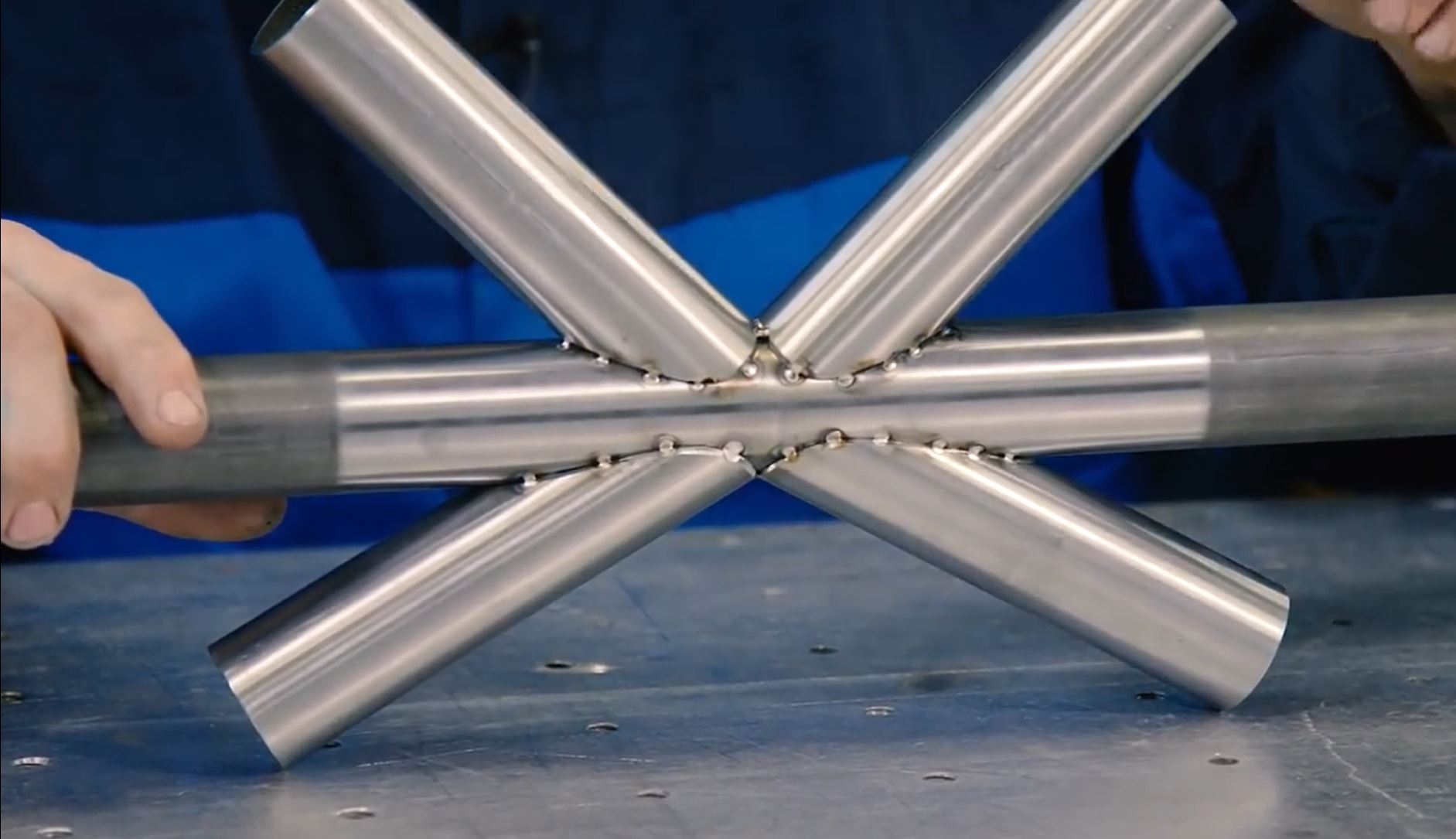
- Look for cracks, undercut, or incomplete fusion.
- Use a magnifying glass or dye penetrant test for critical parts.
Credit: bangshift.com
Common Mistakes And How To Avoid Them
Many welders ruin chrome moly tubing by repeating common errors. Here are some you should watch out for:
- No Preheat on Thick Sections: Skipping preheat leads to cracks, especially on 0.120” wall or thicker.
- Too Much Heat: Overheating burns out chromium and molybdenum, making the area weak.
- Wrong Filler Rod: Using mild steel filler causes soft welds with weak joints.
- Poor Cleaning: Any oil, paint, or rust can cause porosity and weak welds.
One non-obvious insight: Even a small tack weld can crack if you don’t preheat thick tubing. Always treat tacks with the same care as the final weld.
Another tip: Letting the tubing cool too quickly (like with a fan or water) is a sure way to get brittle, cracked joints.
Applications And Safety Notes
Chrome moly’s combination of strength and weight makes it ideal for high-stress structures. But welded joints are only as good as the welder’s technique. In motorsport, a failed joint could mean a roll cage collapses in a crash. In aviation, it’s a direct safety risk.
Always follow these safety basics:
- Wear a proper welding helmet and gloves
- Ventilate your work area
- Double-check every weld for cracks before use

Credit: www.lincolnelectric.com
Welding Chrome Moly Vs. Mild Steel
People often wonder if welding chrome moly is similar to welding mild steel. Here’s a side-by-side look.
| Property | Chrome Moly | Mild Steel |
|---|---|---|
| Strength | High (up to 97,200 psi) | Lower (up to 60,000 psi) |
| Weldability | Good, but needs care | Very good |
| Preheat Needed | Sometimes | Rarely |
| Common Uses | Aircraft, race cars | General fabrication |
The key difference: chrome moly needs more preparation and care, but it delivers much higher performance.
Practical Tips For Success
- Always use the right filler rod for the job.
- For thin-wall tubing, TIG welding without preheat is often okay—but preheat for anything thicker.
- Weld in a sequence that minimizes distortion. Move around the joint rather than welding all at once.
- Never quench or cool welds quickly. Let them cool in still air or under insulation.
- Store tubing indoors to avoid rust, which can ruin weld quality.
For more technical data about chrome moly steels, see Wikipedia.

Credit: www.youtube.com
Frequently Asked Questions
What Does “4130” Mean In Chrome Moly Tubing?
“4130” is an AISI/SAE grade number. The “41” stands for chromium-molybdenum steel, and “30” means 0.30% carbon content.
Can You Mig Weld Chrome Moly Tubing?
Yes, but TIG welding is better for thin wall and critical joints. MIG can work if you use the right filler and settings, but heat control is harder.
Is Preheating Always Necessary?
Preheating is recommended for thicker tubing (0.120” wall or more). For thin wall, many welders skip preheat, but it reduces the chance of cracks.
How Do You Stress-relieve Welded Chrome Moly Tubing?
Heat the welded area to 1100°F (600°C), hold for 1 hour per inch of thickness, then cool slowly. This reduces internal stresses and helps prevent cracks.
What Gas Should I Use For Tig Welding Chrome Moly?
Use 100% argon shielding gas for TIG welding chrome moly tubing. It gives a clean, strong weld.
Welding chrome moly tubing is a skill that pays off with safe, strong results—if you give attention to detail at every step. With good preparation and careful technique, your welds will stand up to the toughest jobs.