
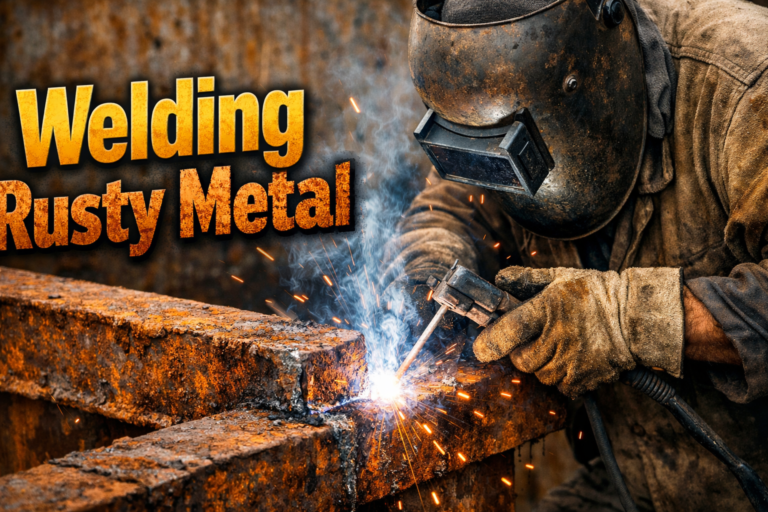
Welding rusty metal is a common challenge in construction, repair, and fabrication. Many beginners think welding is impossible on rust, but with the right techniques, you can achieve strong results. If you ignore rust, welds may fail or become weak.
This guide will show you how to prepare rusty metal, what equipment works best, and which mistakes to avoid. You’ll also learn why rust affects welding and how to handle different levels of corrosion. Whether you’re fixing a fence or building a project, understanding these basics can save time and prevent costly errors.
Why Rust Matters In Welding
Rust is more than just surface dirt—it’s oxidized iron that weakens the metal. When you weld on rust, the arc can become unstable, and the weld may not bond well. This causes porosity, cracks, and low strength. Studies show that even light rust can reduce weld quality by up to 30%. For safety-critical structures, this can be dangerous.
Metal that is heavily rusted often contains pits and flakes. These can trap moisture, leading to more defects in the weld. Even if the weld looks good outside, hidden weakness may exist inside.
Preparing Rusty Metal For Welding
Proper preparation is the most important step. It improves weld quality and prevents problems.
- Remove loose rust: Use a wire brush or grinder. For small jobs, a hand wire brush works. For larger areas, angle grinders are faster.
- Clean the surface: Wipe the metal with acetone or alcohol. This removes oil and dust that can cause contamination.
- Check thickness: Heavily rusted areas may be thin. Use calipers to measure. If the metal is too thin, replace it.
- Dry thoroughly: Moisture causes hydrogen cracking. Let the metal dry after cleaning.
Here’s a quick look at common tools for rust removal:
| Tool | Best For | Speed | Cost |
|---|---|---|---|
| Wire Brush | Small areas | Slow | Low |
| Angle Grinder | Large areas | Fast | Medium |
| Sandblaster | Heavy rust | Very Fast | High |
Choosing The Right Welding Method
Different welding methods handle rust differently. Some are more forgiving than others.
| Welding Method | Rust Tolerance | Common Use |
|---|---|---|
| SMAW (Stick) | High | Repair, outdoor |
| MIG | Medium | Fabrication |
| TIG | Low | Precision |
Stick welding is best for rusty metal. The flux coating on the electrode can help burn off some rust. MIG welding works if you clean the surface well. TIG welding needs very clean metal, so it’s not ideal for rusted pieces.
Welding Techniques For Rusty Metal
- Use proper electrodes: For stick welding, choose 6010 or 6011 rods. These can penetrate rust better than other types.
- Adjust amperage: Increase current by 5–10% to help burn through surface contamination.
- Make short welds: Weld in small sections. This lets you see if the metal is holding up and prevents overheating.
- Watch for porosity: If you see bubbles in the weld, stop and clean again.
A practical tip: If you’re unsure about the metal’s thickness, start with a test weld. This shows if the metal can handle the heat.

Credit: www.youtube.com
Common Mistakes When Welding Rusty Metal
Even experienced welders make mistakes. Here are some to avoid:
- Skipping surface cleaning: Even small amounts of rust can cause weak welds.
- Using the wrong electrode: Not all rods can handle rust. 6013, for example, is less effective.
- Ignoring moisture: Wet metal leads to cracking.
- Welding too fast: Quick welds may miss flaws. Take your time to inspect each section.
- Assuming all rust is equal: Deep pitting is worse than light surface rust.
Practical Tips For Better Results
- Preheat thick or very rusty metal: Use a torch to warm the area. This reduces cracking and helps dry the surface.
- Clamp metal tightly: Loose parts cause vibration, leading to bad welds.
- Use anti-spatter spray: This keeps the welder tip clean and prevents buildup.
Here’s a comparison of weld quality on different surfaces:
| Surface Condition | Weld Strength (%) | Defect Rate |
|---|---|---|
| Clean metal | 100 | Low |
| Light rust | 70 | Medium |
| Heavy rust | 40 | High |

Credit: yeswelder.com
Safety Considerations
Welding rusty metal can produce toxic fumes. Always wear a respirator and use proper ventilation. Rust particles can irritate lungs and eyes. Wear gloves and safety glasses to prevent injury.
If you’re welding outside, make sure the area is dry. Wet ground increases the risk of electric shock. Always check cables and connections before starting.
Frequently Asked Questions
Can I Weld Directly On Rusty Metal?
You can weld on light rust, but heavy rust should be removed first. Stick welding works best for surface rust.
Which Electrode Is Best For Rusty Metal?
6010 and 6011 electrodes are ideal. They penetrate rust and provide strong welds.
Is It Safe To Weld Rusty Metal?
Yes, but always use a respirator and eye protection. Rust can produce harmful fumes.
How Does Rust Affect Weld Quality?
Rust causes porosity, cracks, and weak welds. Clean metal always gives stronger results.
Do I Need To Use Special Equipment For Rusty Metal?
No special equipment is needed, but using an angle grinder or wire brush helps. Stick welders are more forgiving.
Welding rusty metal is possible if you follow the right steps. Clean and prepare your surfaces, choose the best welding method, and use proper electrodes. Avoid common mistakes and pay attention to safety. By understanding the effect of rust and using these tips, you’ll get stronger welds and safer results. For more technical details, visit Wikipedia.

Credit: www.reddit.com