
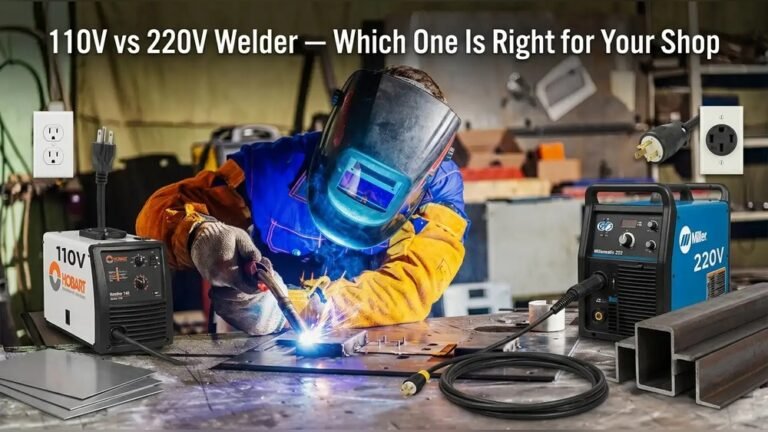
Choosing between a 110V welder and a 220V welder is one of the first decisions a beginner faces when starting with welding. This choice affects the kind of projects you can handle, your safety, and even your electricity bills. It’s not just about the numbers on the label—each type has its pros and cons. Understanding these differences helps you pick the best welder for your needs and avoid costly mistakes.
What Do 110v And 220v Mean?
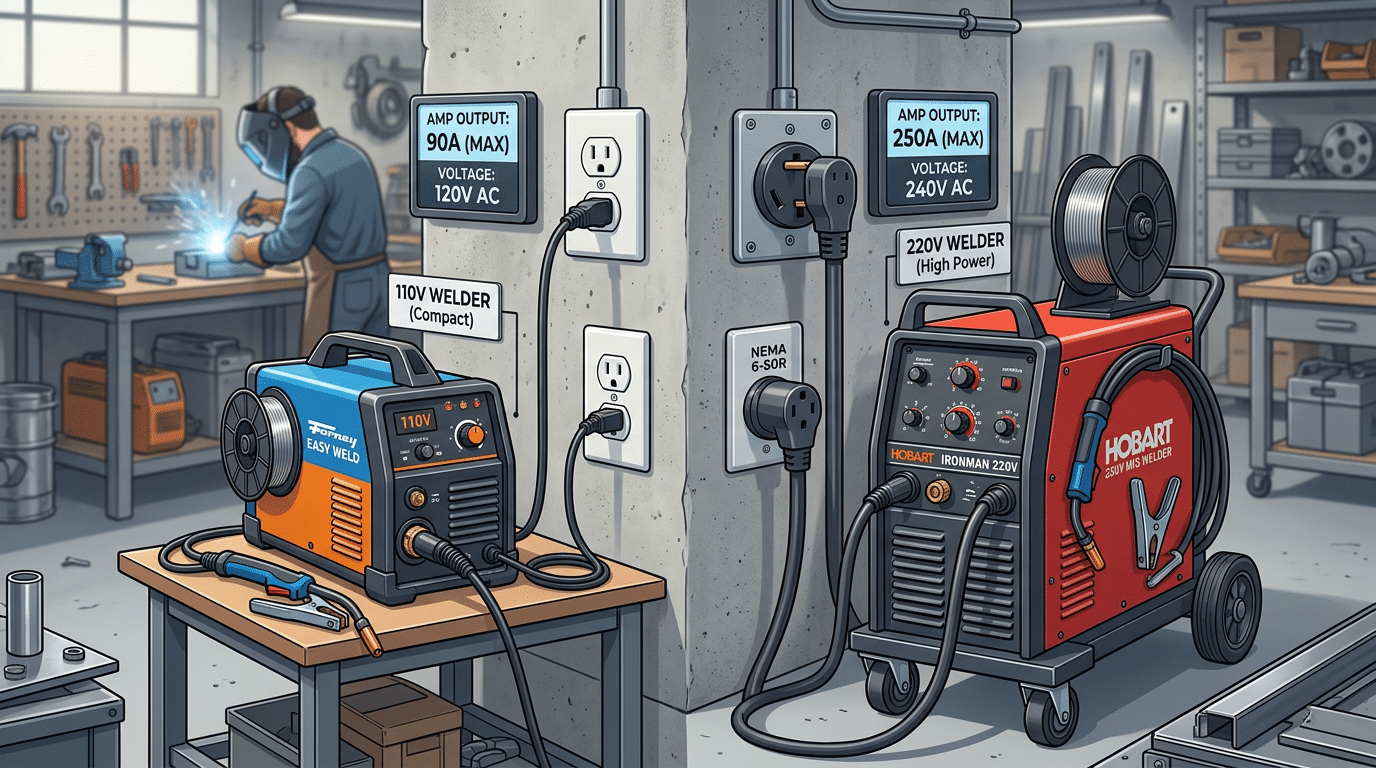
The “V” in 110V and 220V stands for volts, which measures the electric potential. In the US, most homes have 110V outlets—these are the regular wall sockets you use for lamps and gadgets. A 220V outlet is larger and used for heavy appliances like dryers or ovens.
110V welders plug into standard household outlets, making them easy to use anywhere. 220V welders need a special socket, often found in garages or workshops. This voltage difference changes how much power a welder can deliver.
Key Differences Between 110v And 220v Welders
Let’s break down the main differences in a way that’s easy to compare:
| Feature | 110V Welder | 220V Welder |
|---|---|---|
| Power Supply | Standard household outlet | Dedicated 220V outlet |
| Max Output | Usually up to 140 amps | Up to 250+ amps |
| Material Thickness | Best for thin metals (up to 1/8″) | Handles thick metals (1/4″ or more) |
| Portability | Lightweight, portable | Usually heavier, less portable |
| Setup | Plug-and-play | May need electrician |
| Price | Lower | Higher |
Credit: oceanplayer.com
Pros And Cons For Beginners
Both 110V and 220V welders have clear strengths and weaknesses, especially for someone new to welding.
110v Welder: Why Choose It?
- Easy to Start: You can plug it in anywhere—no special wiring needed.
- Safe for Beginners: Lower power means less risk of dangerous mistakes.
- Affordable: Both the welder and installation costs are lower.
- Portable: Most models are light and easy to carry.
But you should know:
- Limited Power: Struggles with thick metal. Not ideal for auto frames or heavy repairs.
- Duty Cycle: Can overheat if used continuously for long periods.
220v Welder: Why Choose It?
- Handles Heavy Jobs: Welds thick metal easily. Good for trailers, frames, or farm equipment.
- Faster Welding: Higher power means faster, deeper welds.
- More Professional: The choice for workshops or serious hobbyists.
However:
- Needs Special Outlet: You might need an electrician to install a 220V socket.
- Less Portable: Often heavier and bulkier.
- Higher Price: Both the welder and upgrades to your workspace cost more.
Real-life Examples
Imagine you want to fix a garden gate or build a small metal shelf. A 110V welder is perfect—just plug it in and start. But if you need to repair a car chassis or build a steel trailer, you’ll need the extra power of a 220V welder.
Here’s another way to compare:
| Project Type | Best Voltage |
|---|---|
| DIY home repairs (thin metal) | 110V |
| Automotive frames | 220V |
| Art sculptures (thin pieces) | 110V |
| Industrial gates, trailers | 220V |

Credit: www.amazon.com
Costs To Consider
Besides the welder price, think about other costs:
- Electrical Upgrades: Installing a 220V outlet can cost $150–$400.
- Accessories: Both need safety gear (helmet, gloves, jacket) and consumables.
- Energy Use: 220V welders may use more electricity per hour, but finish jobs quicker.
A 110V welder is cheaper to start, but a 220V welder may save time and effort on bigger projects.
Safety Considerations
Welding always carries risks, but voltage level changes what you need to watch out for.
- 110V welders are less likely to trip breakers or cause overloads in home wiring.
- 220V welders can deliver a dangerous shock if not installed correctly. Always check wiring and ground connections before use.
No matter what you choose, always wear proper safety gear and keep your work area dry and clean.
Which Welder Is Best For Beginners?
The best choice depends on your projects, space, and budget.
- If you want to do small repairs, hobby work, or learn at home, a 110V welder is usually best. It’s simple, portable, and affordable.
- If you plan to work on thick steel, vehicles, or larger builds, and can install a 220V outlet, consider a 220V welder. It gives you more room to grow.
Some modern welders offer dual-voltage (110V/220V) capability, letting you switch as needed. These models cost more, but offer the most flexibility if you see yourself advancing.
Common Mistakes Beginners Make
Many new welders choose based on price alone, not power or project type. Others try to use a 110V welder for heavy jobs, leading to poor welds or equipment damage. Always match your welder to your needs—not just your wallet.
Also, some forget about the cost and hassle of installing a 220V outlet. If you rent your home or apartment, this may not be allowed.

Credit: www.amazon.com
Frequently Asked Questions
What Is The Main Difference Between 110v And 220v Welders?
The main difference is power output. 220V welders can handle thicker metals and heavier jobs, while 110V welders are for lighter, smaller projects.
Can I Use A 220v Welder At Home?
Yes, but you’ll need a 220V outlet. Most US homes do not have these in regular rooms, but they are common in garages or laundry rooms. You may need an electrician to add one.
Are 110v Welders Good For Learning?
Absolutely. They are easy to use, safe, and perfect for small practice projects. Many beginners start with 110V and upgrade later.
Is There A Welder That Works With Both Voltages?
Yes, some welders are dual-voltage. They can switch between 110V and 220V. These are great for flexibility, but cost more.
Where Can I Learn More About Welding Safety And Setup?
For detailed safety guidelines and setup help, visit the Welding Wikipedia page.
Picking between a 110V and 220V welder shapes your welding journey from the start. Consider your projects, budget, and space. If you start simple and learn the basics, you can always upgrade as your skills and needs grow.