
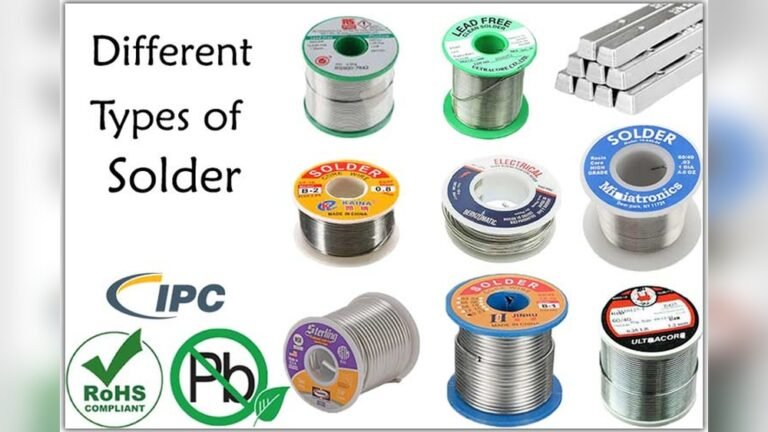
Choosing the right solder for your electrical projects is crucial for creating strong, reliable connections. Using the wrong type can lead to poor conductivity, weak joints, or even damage to your components. The best solder for electrical wires is typically a tin-lead alloy or a lead-free alloy specifically designed for electronics, often with a rosin core to help with fluxing.
Many hobbyists and professionals prefer tin-lead solder because it melts at a lower temperature and creates a shinier, easier-to-inspect joint. However, due to environmental and health concerns, lead-free solder is becoming the standard. Lead-free options are available and work well, though they often require slightly higher temperatures and can be a bit trickier to work with initially. Always ensure the solder you choose is intended for electronics, not plumbing or other industrial uses.
Understanding Solder Composition
Solder is a metal alloy used to join two metal surfaces together. For electrical work, the most common alloys are based on tin and lead, or various combinations of tin, silver, and copper for lead-free options. The composition significantly impacts the solder’s melting point, flow characteristics, and the strength of the resulting joint.
Tin-lead (sn-pb) Solder
For decades, 60/40 tin-lead solder was the go-to for electronics. This means it contains 60% tin and 40% lead. It has a relatively low melting point, making it easy to work with and less likely to damage sensitive electronic components. Another common ratio is 63/37 tin-lead, which has a slightly lower melting point and is a “eutectic” alloy. Eutectic means it melts and solidifies at a single temperature, rather than having a melting range, which results in very strong, reliable joints.
- Pros: Melts at lower temperatures, flows well, creates shiny joints that are easy to inspect, generally more forgiving for beginners.
- Cons: Contains lead, which is toxic and poses environmental risks. Many regions now restrict its use.
Lead-free Solder
Environmental regulations have driven the widespread adoption of lead-free solder. These alloys typically use tin as the base metal, mixed with other elements like copper, silver, and bismuth. Common lead-free alloys include SAC305 (96.5% tin, 3% silver, 0.5% copper) and various tin-copper or tin-bismuth combinations.
- Pros: Environmentally friendly, safer to handle (though still requires precautions), meets regulatory requirements.
- Cons: Generally requires higher soldering temperatures, can be more brittle, joints may appear duller (making inspection harder), can be more challenging for beginners to achieve perfect results.
A common misconception is that lead-free solder is inherently inferior. While it has different characteristics, modern lead-free solders are highly effective when used with the correct techniques and equipment.
The Importance Of Flux
Flux is a chemical cleaning agent that is essential for good soldering. It removes oxidation from the metal surfaces and the solder itself, allowing the molten solder to wet the surfaces properly and form a strong bond. Without flux, solder will bead up and refuse to stick, resulting in a cold, weak joint.
Rosin Core Solder
For electrical wires, rosin core solder is almost always the preferred choice. This means the solder wire has a hollow core filled with flux. As the solder melts, the flux is released, performing its cleaning action. There are different types of rosin flux:
- Rosin Mildly Activated (RMA): This is the most common type for electronics. It’s generally safe and leaves a residue that is usually non-corrosive and can be left on the joint.
- Rosin Activated (RA): This flux is more aggressive and effective at cleaning oxidized surfaces. However, its residue is more corrosive and should be cleaned off after soldering to prevent long-term damage to the circuit or wires.
- No-Clean Flux: As the name suggests, this flux is designed to be left on the joint without needing cleaning. It’s convenient but may not be as effective on heavily oxidized surfaces as RMA or RA flux.
Pro Tip: Always check if your solder has a flux core. If you are using solid core wire solder (without flux inside), you will need to apply liquid flux or flux paste separately to the connection point before soldering.
/SPR-how-to-solder-wires-4689914-hero-b1636e480c9d4554837432635dc33a53.jpg)
Credit: www.thespruce.com
Solder Wire Diameter
The diameter of your solder wire also plays a role, especially for intricate work. For general electrical wiring, a diameter between 0.031 inches (0.8mm) and 0.047 inches (1.2mm) is typically suitable. Thinner wires are better for delicate electronics and small components, allowing for precise application of solder. Thicker wires are good for larger wires or ground connections where a more substantial amount of solder is needed quickly.
Specific Solder Types For Different Applications
While most electronic soldering uses tin-based alloys, some specialized applications might call for different materials.
Silver Solder
Silver solder is a type of brazing alloy that contains a significant amount of silver. It has a much higher melting point than typical electronic solder (often above 600°C or 1100°F). It’s used for joining metals like brass, copper, and steel, and creates extremely strong joints. However, it is not suitable for general electronics due to the high temperatures required, which will damage most components.
Solder Paste
Solder paste is a mixture of tiny solder balls suspended in a flux medium. It’s commonly used in surface-mount technology (SMT) assembly with automated processes. For hand-soldering wires, solder paste is generally not the best choice, though it can be used in some repair situations.

Credit: www.youtube.com
Choosing The Right Solder For Your Wires
When soldering electrical wires, you’re typically dealing with stranded or solid copper wires that need to be connected to terminals, connectors, or other wires. The goal is a mechanically strong and electrically conductive joint.
- For most general electrical wiring and repairs: A 60/40 or 63/37 tin-lead solder with an RMA flux core is excellent if lead is permissible. It’s forgiving and produces reliable joints.
- For RoHS-compliant or environmentally sensitive work: A lead-free SAC305 solder or a tin-copper alloy with a suitable flux core is the modern standard. Be prepared to use a higher temperature setting on your soldering iron and practice your technique.
- For automotive or appliance wiring: Often, tin-lead solder is still used for its ease of use and reliability. However, check local regulations. If lead-free is required, ensure it’s rated for the operating temperatures and vibration the connection might experience.
Key Factors To Consider
- Melting Point: Lower melting points are easier on components and the user. Lead-free solders generally have higher melting points.
- Flow Characteristics: How well the solder spreads over the heated surfaces. Tin-lead solders typically flow better.
- Joint Appearance: Shiny joints usually indicate a good solder job. Dull or grainy joints can signify a cold solder joint or issues with the alloy.
- Mechanical Strength: The joint needs to withstand physical stress. Some lead-free alloys can be more brittle than traditional tin-lead.
- Corrosivity: The flux residue should not corrode the wires or components over time. RMA flux is generally safe to leave on.
:max_bytes(150000):strip_icc()/SPR-how-to-solder-wires-4689914-hero-b1636e480c9d4554837432635dc33a53.jpg)
Credit: www.thespruce.com
Solder Alternatives For Wires
While soldering is the most common method, other ways exist to join electrical wires, each with its pros and cons:
Wire Connectors (e.g., Wago, Wire Nuts)
These are mechanical connectors that allow you to join wires without soldering. They are fast, easy to use, and often provide a reliable connection. Wago connectors, in particular, offer a secure, tool-less connection that is very popular. Wire nuts are common in household electrical wiring.