
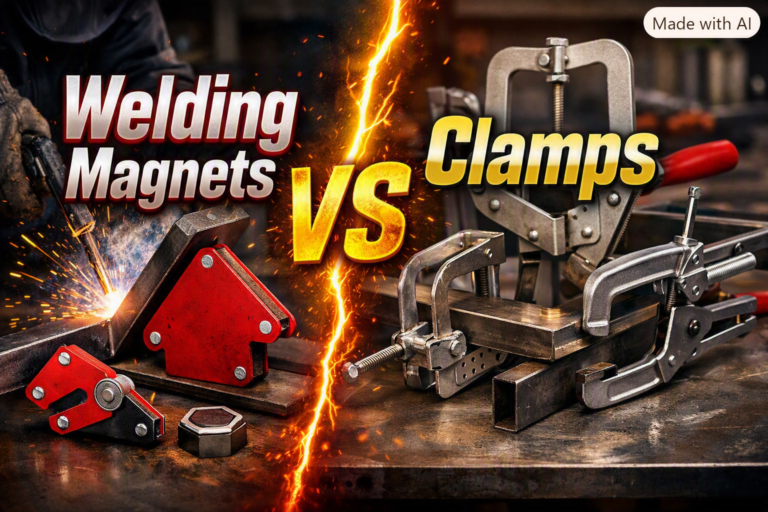
Welding Magnets Vs Clamps: Which Is Better?
Choosing the right tool can make or break your welding project. Many welders ask, “Should I use welding magnets or clamps?” Both tools hold metal pieces in place, but they work in very different ways. If you want stronger welds, faster setups, and less stress, understanding these options is important. This article explains how magnets and clamps compare, when each is best, and what beginners often miss.
How Welding Magnets Work
Welding magnets use powerful magnetic fields to hold metal pieces together while you weld. They come in many shapes, like arrows, squares, and adjustable angles. Magnets attract steel and iron, allowing you to quickly set up 45°, 90°, or even 135° angles.
Benefits:
- Fast setup: Place the magnet, and your workpiece is secure in seconds.
- Hands-free: Your hands stay free for positioning and welding.
- Consistent angles: Especially useful for repetitive or complex joints.
Drawbacks:
- Not for all metals: They only work with ferrous metals (steel, iron).
- Magnetized weld area: Sometimes, the magnetic field can interfere with the arc or attract metal dust, affecting weld quality.
How Welding Clamps Work
Welding clamps are mechanical devices. They use pressure to grip metal pieces together. Common types include C-clamps, locking pliers, and quick-release clamps.
Benefits:
- Strong hold: Clamps apply a lot of force, keeping even heavy pieces stable.
- Versatile: They work with all types of metals—steel, aluminum, copper, and more.
- No magnetization: There’s no risk of magnetic interference or attracting metal shavings.
Drawbacks:
- Slower setup: Adjusting clamps for the perfect fit can take time.
- Limited angles: Some clamps are less flexible for odd shapes or angles.
- Obstructed weld area: The clamp itself can get in the way of your torch or filler rod.
Side-by-side Comparison
To see the differences clearly, look at this comparison:
| Feature | Welding Magnets | Welding Clamps |
|---|---|---|
| Speed of Setup | Very Fast | Slower |
| Holding Power | Moderate | High |
| Angle Flexibility | High (fixed angles) | Moderate |
| Workpiece Obstruction | Low | High |
| Material Compatibility | Ferrous only | All metals |
When To Use Welding Magnets
Welding magnets shine in specific situations:
- Tack welding: For quick tacks, magnets save time and hold pieces steady.
- Repetitive work: If you need to make many identical joints, magnets set angles consistently.
- Complex angles: Magnets can secure tricky shapes like T-joints or angled frames.
However, avoid magnets if:
- You’re welding stainless steel or aluminum (non-magnetic metals).
- You need maximum holding force for heavy pieces.
- The magnetic field interferes with your welding arc (common with TIG).
When To Use Welding Clamps
Welding clamps are better when:
- Heavy pieces: Large or thick metal parts need the strong grip only clamps provide.
- Non-magnetic metals: Clamps work with aluminum, copper, and stainless steel.
- Critical joints: For projects where safety matters (like structural welds), clamps ensure nothing moves.
- Long welds: When welding long seams, clamps hold everything tight from start to finish.
Clamps are less ideal if you need to set many angles quickly, or if they block your welding path.
Real-world Examples
Imagine building a metal frame table. For initial assembly, welding magnets help you set perfect corners fast. But when you’re ready to fully weld and the pieces are heavy, clamps prevent movement during heat expansion.
Another example: If you’re making a custom exhaust system from stainless steel pipes, only clamps will work because magnets don’t stick to stainless steel.
Common Mistakes And What Beginners Miss
Many beginners think magnets are always easier. But strong magnets can attract metal dust, which can get trapped in the weld and cause defects. Always clean your magnets before each use.
Some new welders use clamps that are too small or weak. If the clamp slips, your joint will shift, leading to crooked or weak welds. Invest in clamps that match your workpiece size.
Also, don’t forget to check the polarity when using magnets with TIG welding. The magnetic field can cause arc blow, which ruins the weld bead.
Cost And Maintenance
Both tools are affordable, but prices rise with quality and size. Entry-level magnets cost $10–$20; heavy-duty ones can exceed $40 each. Basic C-clamps start around $5, but specialty clamps are $30 or more.
Magnets require cleaning—metal dust reduces their grip. Clamps need occasional oiling and checking for bent parts.
Here’s a simple cost breakdown:
| Tool Type | Entry Price | Maintenance |
|---|---|---|
| Welding Magnets | $10–$20 | Clean regularly |
| Welding Clamps | $5–$30 | Oil and inspect |
Professional Insights
Experienced welders often keep both tools on hand. For repetitive tasks, magnets save hours. But for final welds or heavy loads, clamps are the safer choice. Some even use both: magnets for setup, then clamps for the main weld.
One detail beginners miss: the magnet’s strength drops with heat. If you’re welding close to the magnet, it may lose grip as metal heats up. Move the magnet away for final welds.
Which Is Better For You?
There’s no single answer—the best tool depends on your metal, joint type, and project size. If you want speed and easy angles, magnets are unbeatable on small steel parts. For raw holding power and all-metal use, clamps win.
If you weld often, invest in both. You’ll switch between them as your skill grows. For more in-depth tips and safety info, check the Welding Wikipedia page.
Frequently Asked Questions
Are Welding Magnets Safe For All Welding Types?
No. While welding magnets work for most MIG and stick welding, they can cause arc blow in TIG welding. Always test first, and keep magnets away from the direct weld area.
Can I Use Magnets And Clamps Together?
Yes. Many welders use magnets for setup and clamps for final welding. This combines speed with holding strength.
How Do I Clean Welding Magnets?
Use a dry cloth or compressed air to remove metal dust. Avoid water, as it can rust the magnets and reduce their power.
Do Magnets Affect Weld Quality?
Sometimes. If metal filings stick to the magnet and fall into the weld, they can cause weak spots. Also, the magnetic field can disturb the arc. Clean magnets and test your setup.
Which Tool Is Best For Beginners?
Start with clamps. They are more forgiving and work on all metals. As you gain experience, add magnets for faster setups and complex angles.