
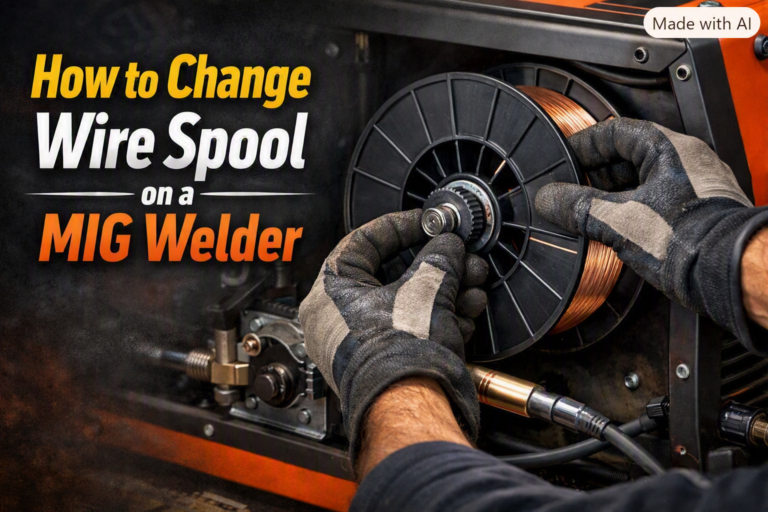
Changing the wire spool on a MIG welder is a task every welder needs to master. If you’re new to welding, the idea may seem a bit intimidating, but with the right steps, it’s straightforward and safe. This guide will walk you through the process, highlight common mistakes, and help you avoid issues that could lead to poor welds or equipment damage.
Why Changing The Wire Spool Matters
A MIG welder uses a spool of wire as the electrode that feeds into the welding gun. Over time, you’ll run out of wire and need to replace the spool. Using the right wire and installing it properly is essential for:
- Consistent weld quality
- Preventing jams in the wire feed system
- Reducing downtime in your projects
Many beginners overlook how much spool size, tension, and wire type affect their welding results. Also, not all wire spools fit every welder, so knowing your machine’s specs is key.
What You Need Before Starting
Before changing the spool, gather these items:
- New wire spool (matching type and diameter)
- Wire cutters or pliers
- Gloves for safety
- Owner’s manual for your specific MIG welder
Never switch spools without unplugging the machine. This prevents accidental starts and electrical hazards.
Step-by-step: How To Change Wire Spool On A Mig Welder
Follow these steps to change the wire spool safely and correctly.
1. Turn Off And Unplug The Welder
Always start by switching off your MIG welder and unplugging it from the outlet. This step protects you from accidental shock or motor movement.
2. Open The Spool Compartment
On most MIG welders, the wire spool compartment is on the side. Lift the cover to expose the old spool and drive assembly.
3. Remove The Old Wire Spool
- Release tension: Turn the tension knob or lever to loosen the spool.
- Cut the wire: Use wire cutters to snip the wire close to the feed tube. Hold the wire so it doesn’t unspool rapidly.
- Lift out the old spool: Slide it off the spindle carefully.
4. Prepare The New Spool
- Check wire type and size: Make sure the new spool matches your welder and project needs. Common sizes include 0.023″, 0.030″, and 0.035″.
- Secure the wire end: Prevent unraveling by keeping the wire in the factory hole or using a small piece of tape.
5. Install The New Spool
- Place spool on spindle: Ensure it sits firmly and spins smoothly.
- Thread the wire: Guide the wire through the inlet guide and into the drive rolls. This part can feel tricky—don’t rush.
- Set tension: Adjust the tension knob so the spool turns easily but doesn’t spin freely when you stop feeding wire.
6. Feed The Wire
- Advance wire: With the drive roller lever open, push 2–3 inches of wire into the liner.
- Close drive lever: This clamps the wire in place.
- Plug in and turn on the welder: Press the trigger on your gun to feed the wire through the gun until it comes out the tip.
7. Trim And Check
- Cut excess wire: Leave about 1/2 inch sticking out from the gun tip.
- Test feed: Pull the trigger briefly to check for smooth feeding. If the wire binds or birds-nests, recheck your alignment and tension.
Here’s a quick comparison of common wire sizes and their uses:
| Wire Size | Best For | Typical Amperage |
|---|---|---|
| 0.023″ | Thin sheet metal | 30–90 A |
| 0.030″ | General purpose | 40–150 A |
| 0.035″ | Thicker materials | 50–180 A |
Common Mistakes To Avoid
Even experienced welders sometimes run into problems. Watch out for these issues:
- Wrong wire size: This causes poor arc stability or too much spatter.
- Incorrect tension: Too tight and the wire won’t feed; too loose and it unravels or jams.
- Skipping cleaning: Dust or rust on your spool can contaminate the weld or clog the liner.
- Not checking drive roll type: There are knurled rolls for flux-cored wire and smooth rolls for solid wire.
If you’re switching between solid and flux-cored wire, remember to change polarity. Solid wire uses DCEP (electrode positive), while flux-cored usually uses DCEN (electrode negative).
A quick look at drive roll types:
| Drive Roll Type | Wire Type | Best For |
|---|---|---|
| Smooth (V-groove) | Solid wire | Clean feeding, less crushing |
| Knurled (V-knurled) | Flux-cored wire | Extra grip, less slipping |
Troubleshooting Wire Feed Problems
If your wire won’t feed smoothly, check these areas:
- Liner: Dirt or kinks can block wire. Replace if needed.
- Tension: Adjust until the wire feeds without slipping or tangling.
- Spool orientation: Some spools have a direction arrow. Make sure it matches your welder’s requirements.
If you hear a chattering sound or the wire “birds-nests” (gets tangled before entering the liner), stop and rethread the wire.
Practical Tips From Experience
- Always wear gloves when handling wire—sharp edges can cut skin.
- Store unused wire spools in a dry place to avoid rust.
- Mark the date on new spools so you use older wire first.
- If you weld often, keep spare liners and tips on hand.
Many welders overlook the value of cleaning the wire feed path. A quick wipe with a clean rag reduces jams and improves feed consistency.
Frequently Asked Questions
How Often Should I Change The Wire Spool On A Mig Welder?
Change the spool when the wire runs out or if you need a different wire type or size for a new project. Frequency depends on usage; heavy users may change spools weekly, while hobbyists might do so every few months.
Can I Use Any Brand Of Wire Spool With My Mig Welder?
No, always check your welder’s manual for compatible spool sizes and wire types. Using the wrong spool can cause feeding issues or even damage your machine.
What Happens If The Wire Spool Is Installed Backwards?
Installing the spool backwards can cause the wire to feed unevenly or jam. Always follow the direction arrows on the spool and your welder’s instructions.
Why Does My Wire Keep Tangling When I Change Spools?
Tangling often happens from loose tension or not securing the wire end before installation. Hold the wire firmly and keep tension steady as you feed it into the drive rolls.
Where Can I Learn More About Mig Welding Safety And Tips?
Reliable information is available at the Wikipedia Gas Metal Arc Welding page.
Changing the wire spool on a MIG welder is a basic skill that improves with practice. By following these steps and tips, you’ll keep