
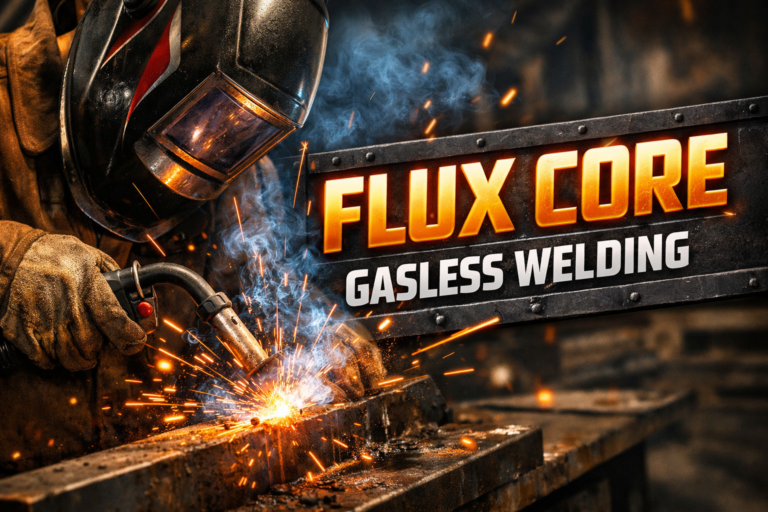
Flux core gasless welding is a practical solution for many home and professional welders. Instead of using an external gas tank, this method relies on a special wire with flux at its core. The flux creates a protective shield around the weld, making it easier and safer to use in outdoor or windy conditions.
With its unique benefits and limitations, flux core gasless welding is often the first choice for beginners, DIY projects, and even some construction jobs.
What Is Flux Core Gasless Welding?
Flux core gasless welding uses a hollow wire filled with flux. As the wire melts, the flux forms a cloud that protects the molten metal from air. This process is also known as self-shielded flux core arc welding (FCAW-S). It does not require a gas cylinder, which makes the setup simpler and more portable.
Many people confuse flux core welding with MIG welding, but there are differences. MIG welding uses solid wire and a gas cylinder, while flux core gasless welding uses flux-filled wire and no gas. This distinction is important when selecting equipment or planning a project.
Key Advantages Of Flux Core Gasless Welding
- Portability: Without a gas tank, the welder is lighter and easier to carry.
- Wind Resistance: The flux shield protects the weld from wind, unlike gas-shielded methods.
- Simple Setup: No need to worry about gas flow or regulators.
- Thicker Materials: It can weld thicker metals with a small machine.
- Lower Cost: No ongoing gas expenses.
These benefits make flux core gasless welding popular for fence repair, farm equipment, and outdoor jobs. Some professionals use it for quick fixes on construction sites.
Main Limitations And Challenges
While useful, flux core gasless welding has limitations:
- More Spatter: The flux creates small metal splashes around the weld.
- Slag Removal: After welding, you must chip away the hardened flux (slag).
- Less Clean Finish: Welds are rougher compared to MIG or TIG.
- Limited Metal Types: Best for mild steel; not ideal for aluminum or stainless steel.
Beginners often miss that cleaning the weld area and removing slag are essential steps for strong, neat results.
Equipment And Materials Needed
You do not need a complex setup. Here’s what you need:
- Flux core wire: Usually sizes .030” or .035” for home use.
- Welding machine: Must support flux core welding (most basic machines do).
- Protective gear: Helmet, gloves, jacket.
- Wire brush or chipping hammer: For removing slag after each weld.
A common mistake is using the wrong wire type. Always check that your wire matches your machine’s polarity settings. Most flux core gasless wires require DCEN (Direct Current Electrode Negative).
Step-by-step Process
- Prepare the metal: Clean off rust, paint, or oil.
- Set up the welder: Use correct wire and polarity.
- Adjust settings: Start with 17-19 volts and 120-140 amps for 1/8” thick steel.
- Weld in short bursts: Move slowly for deep penetration.
- Let the slag cool: Wait before removing slag to avoid damaging the weld.
- Clean the weld: Use a wire brush or hammer.
Many beginners forget to adjust voltage and wire speed. Always test on scrap metal before starting your main project.
Comparing Flux Core Gasless Vs Mig Welding
Let’s look at the main differences between flux core gasless and MIG welding.
| Feature | Flux Core Gasless | MIG Welding |
|---|---|---|
| Shielding | Flux from wire | External gas |
| Wind Resistance | Good | Poor |
| Portability | High | Low (needs gas tank) |
| Finish Quality | Rougher | Smoother |
| Slag | Yes | No |
Typical Applications
Flux core gasless welding is widely used for:
- Outdoor repairs: Gates, fences, trailers.
- Farm equipment: Tractors, implements.
- Construction: Quick fixes on site.
- DIY projects: Garden tools, metal art.
It works well on metals from 1/16” to 1/2” thick. For thinner metals, practice to avoid burn-through.
Safety Tips And Common Mistakes
Welding always involves risks. Follow these safety steps:
- Wear welding helmet with correct shade.
- Use fire-resistant gloves and jacket.
- Keep a fire extinguisher nearby.
- Ventilate the area to avoid fumes.
Common mistakes include:
- Using dirty metal (causes weak welds).
- Ignoring polarity (results in poor penetration).
- Rushing slag removal (damages welds).
- Setting too high wire speed (creates lots of spatter).
For better results, focus on steady hand movement and consistent speed.
Cost Comparison: Flux Core Gasless Vs Mig
Here’s a quick look at typical costs for a small home setup.
| Item | Flux Core Gasless | MIG Welding |
|---|---|---|
| Welding Machine | $180-$350 | $250-$400 |
| Wire | $25-$35/roll | $18-$28/roll |
| Gas Cylinder | None | $120-$180 (plus refills) |
| Accessories | $60-$100 | $60-$100 |
Flux core gasless welding is cheaper to start and maintain, especially if you work outdoors or move often.
Non-obvious Insights
Many beginners overlook two key points:
- Wire quality matters: Cheap wire creates more spatter and weak welds. Spend a bit more for reliable brands.
- Practice position control: Flux core gasless welds are sensitive to travel angle. Keep the gun at a 10–15° tilt toward the direction of movement for best penetration.
Professionals also check wire feed speed often. Too slow or too fast can ruin the weld. Adjust until the weld sounds like frying bacon.
Frequently Asked Questions
What Metals Can I Weld With Flux Core Gasless?
Mostly mild steel. It’s not suitable for aluminum or stainless steel without special wire.
Do I Need A Gas Cylinder For Flux Core Gasless Welding?
No. The flux core wire creates its own protective cloud, so no gas is required.
Is Flux Core Gasless Welding Strong Enough For Structural Jobs?
Yes, for many applications. It’s used in construction and farm repairs. However, for critical structural welds, always check local codes.
How Do I Remove Slag After Welding?
Use a chipping hammer to break the slag, then a wire brush to clean the weld. Wait until the slag cools before starting.
Where Can I Learn More About Welding Basics?
The American Welding Society offers guides and resources. Visit Wikipedia for a detailed overview.
Flux core gasless welding is a practical, reliable method for many metalworking tasks. With its easy setup and wind resistance, it suits outdoor jobs and beginners alike. By following safety steps and practicing good technique, you can achieve strong, lasting welds without a complex setup.