
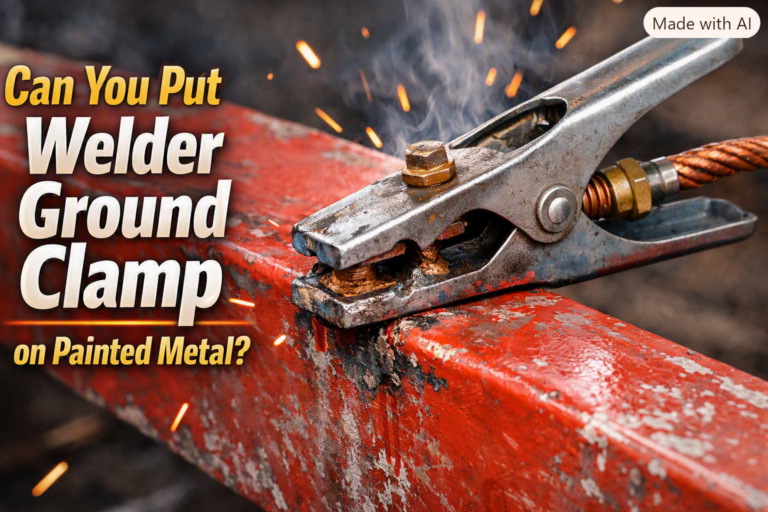
Can You Put A Welder Ground Clamp On Painted Metal?
Getting a good ground connection is crucial for successful welding. A poor ground can lead to weak welds, spatter, and even safety hazards. This brings up a common question for welders, especially those working with pre-finished materials: can you put a welder ground clamp on painted metal? The short answer is no, not directly, if you want a reliable and safe weld. The paint acts as an insulator, preventing the electrical current from flowing properly.
However, the situation is a bit more nuanced. While you can’t clamp directly onto painted metal and expect good results, there are ways to achieve a proper ground when working with painted surfaces. Understanding why paint is a problem and how to overcome it is key to ensuring strong welds and a safe working environment.
This article will explore the reasons behind this rule, the consequences of ignoring it, and the practical methods for achieving a solid ground connection on painted metal.
Why Paint Is A Problem For Welder Ground Clamps
A welder ground clamp (also called a ground connection or earth clamp) needs to make direct metal-to-metal contact with the workpiece. This contact creates an electrical path for the welding current to return to the power source. Think of it like a circuit; if a part of the circuit is broken, the electricity can’t flow.
Paint, whether it’s a thin spray paint or a thick industrial coating, is an electrical insulator. This means it resists the flow of electricity. When you clamp a ground directly onto painted metal, the paint layer between the clamp and the actual metal prevents a solid connection. This leads to a high resistance connection.
The Electrical Resistance Factor
Electrical resistance is the opposition to the flow of electric current. Materials have different levels of resistance. Metals like copper and steel have very low resistance, making them excellent conductors. Insulators like rubber, plastic, and paint have very high resistance.
When a ground clamp is placed on painted metal, the paint introduces a significant amount of resistance into the circuit. This high resistance is problematic for several reasons:
- Inconsistent Current Flow: The electricity struggles to jump across the paint layer. This can cause the current to be weak and unstable, leading to poor weld penetration and quality.
- Heat Buildup: High resistance causes heat to generate at the point of connection. This can overheat the clamp, the cable, or even the paint itself, potentially causing damage or a fire hazard.
- Arc Instability: The welding arc needs a stable current to form and maintain. A poor ground connection leads to an unstable arc, resulting in spatter, inconsistent bead width, and difficulty controlling the weld.
Consequences Of Welding With A Poor Ground On Painted Metal
Ignoring the need for a clean metal surface for your ground clamp can lead to a series of frustrating and potentially dangerous issues. These problems stem directly from the inability of the electricity to flow freely.
1. Poor Weld Quality
The most immediate consequence is inferior weld quality. You might experience:
- Lack of Fusion: The weld metal doesn’t properly bond with the base metal.
- Incomplete Penetration: The weld doesn’t go deep enough into the joint.
- Excessive Spatter: Small droplets of molten metal are thrown out of the weld pool, creating a messy finish and wasting material.
- Porosity: Small gas pockets form within the weld, weakening it.
These issues can compromise the structural integrity of your workpiece, making it unsuitable for its intended purpose.
2. Equipment Damage And Safety Hazards
A poor ground connection can also damage your welding equipment and create safety risks.
- Overheating: As mentioned, high resistance generates heat. This can melt the insulation on your ground cable, damage the clamp itself, or even overheat the welding machine’s internal components.
- Fire Risk: The excessive heat generated at the clamp connection can ignite flammable materials nearby, especially if you’re working in an environment with dust, oil, or other combustibles.
- Electric Shock: While less common, a severely compromised ground connection can increase the risk of electric shock, particularly if the welding machine’s internal components are damaged.
3. Wasted Time And Materials
Trying to weld with a bad ground is a recipe for frustration. You’ll likely find yourself re-welding areas, cleaning up excessive spatter, and troubleshooting problems that all trace back to the initial ground connection. This wastes valuable welding time and consumes more welding consumables like filler metal and shielding gas.
How To Achieve A Proper Ground On Painted Metal
Fortunately, overcoming the insulation of paint is straightforward. The goal is always to create a clean, bare metal surface for the ground clamp to attach to.
1. Prepare The Surface
The most effective method is to remove the paint in the area where you will place the ground clamp. You can do this using several tools:
- Angle Grinder with a Wire Wheel or Flap Disc: This is the most common and efficient method. A wire wheel will quickly strip paint and expose the bare metal. A flap disc can also work, especially for thicker coatings.
- Sander: A belt sander or orbital sander can also be used to remove paint from larger, flatter areas.
- Chisel or Scraper: For smaller areas or to knock off thick, flaking paint, a chisel or scraper can be a quick solution before using a grinder.
When preparing the surface, aim for a spot that is at least the size of the clamp jaws. Ensure the area is free of rust, dirt, and grease as well.
2. Clamp Directly To Bare Metal
Once you have a clean, bare metal spot, attach your ground clamp firmly. Make sure the jaws of the clamp have good contact with the exposed metal. Wiggle the clamp slightly to ensure it bites through any thin oxide layer that might have formed.
What If You Can’t Remove Paint?
There are situations where removing paint from the workpiece itself might not be feasible or desirable. For example, if you’re welding onto a large, painted structure or a piece where aesthetics are critical. In such cases, you need to find an alternative grounding point.
- Find a Different Grounding Point: Look for an unpainted, bare metal component that is electrically connected to the workpiece. This could be a structural steel beam, a metal frame, or another piece of metal that is securely bolted or welded to the main piece.
- Use a Grounding Jumper Cable: If you can’t find a suitable grounding point on the workpiece itself, you might need to run a separate grounding cable. Attach one end of this cable to a good ground on your welding machine and run the other end to a clean, bare metal spot on a stable, grounded structure near your welding area.
Pro Tip:
Always check your ground connection by giving the clamp a slight tug. It should feel secure and not easily shift. A loose clamp is almost as bad as a painted one.
Best Practices For Ground Clamp Placement
Beyond just finding bare metal, consider these best practices for optimal grounding:
- Proximity is Key: Place the ground clamp as close to the weld joint as possible. Shorter ground cables mean less resistance and a more efficient electrical path.
- Secure Connection: Ensure the clamp is firmly attached. Loose connections are a major cause of poor weld quality and overheating.
- Avoid Moving Parts: Do not place the ground clamp on parts that move, such as rotating shafts or hinges. This can disrupt the connection during welding.
- Consider the Material: For very large or thick pieces, you might need multiple ground clamps to ensure adequate current flow. Check your welding machine’s manual for recommended grounding procedures for different materials and thicknesses.
- Inspect Regularly: Make it a habit to inspect your ground clamp and cable for damage before each welding session. Frayed cables or damaged clamps should be replaced immediately.
Tools For Surface Preparation
Having the right tools makes preparing a clean surface for your ground clamp much easier.
- Wire Wheel Attachment for Drill or Grinder