
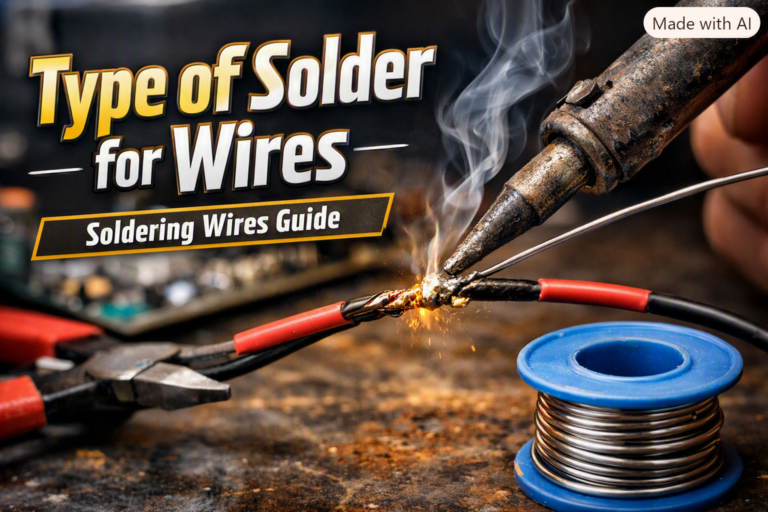
Choosing the right solder for wires is crucial for making strong, reliable electrical connections. Solder is a metal alloy that melts at a relatively low temperature, allowing it to flow between two metal surfaces and form a permanent bond when it cools. Using the wrong type of solder can lead to weak joints, poor conductivity, or even damage to your components. This guide will help you understand the different types of solder available and how to select the best one for your wiring projects.
The most common types of solder used for electrical work are tin-lead solder and lead-free solder. Each has its own advantages and disadvantages, making them suitable for different applications. Beyond the basic composition, factors like flux core and melting point also play a significant role in solder performance.
Understanding Solder Composition
Solder is typically an alloy, meaning it’s a mixture of two or more metals. For electrical wiring, the primary metals are usually tin and lead, or various metals in lead-free alternatives.
Tin-lead Solder
For many years, 60/40 tin-lead solder was the standard for electronics and wiring. This means it contains 60% tin and 40% lead. A similar common alloy is 63/37 tin-lead solder, which has a slightly higher tin content.
The main advantage of tin-lead solder is its low melting point and ease of use. It flows very well, creating smooth, shiny joints that are easy to inspect. The 63/37 alloy is particularly favored because it has a eutectic melting point. This means it solidifies almost instantly upon cooling, reducing the risk of “disturbed joints” where movement during cooling can weaken the connection.
However, the presence of lead makes this type of solder toxic. Due to environmental and health concerns, its use is now restricted in many regions and applications, especially for consumer electronics.
Lead-free Solder
Lead-free solder has become the industry standard due to regulations like RoHS (Restriction of Hazardous Substances). These solders typically use alloys of tin mixed with other metals such as silver, copper, bismuth, or antimony.
Common lead-free alloys include:
- SAC alloys: These are popular choices, such as SAC305 (96.5% tin, 3% silver, 0.5% copper). SAC alloys offer good mechanical strength and thermal fatigue resistance.
- Tin-copper alloys: These are more affordable lead-free options, often used in applications where cost is a major factor.
- Tin-bismuth alloys: These have very low melting points, similar to tin-lead solder, making them suitable for temperature-sensitive components.
The main challenge with lead-free solder is its higher melting point. This requires higher temperatures from your soldering iron, which can potentially damage delicate components or wires if not managed carefully. Lead-free solder can also be slightly harder to work with, sometimes producing duller joints that require more careful inspection.
The Role Of Flux
Flux is a chemical cleaning agent that is essential for successful soldering. It removes oxidation from the metal surfaces and the solder itself, preventing new oxides from forming during the heating process. Without flux, the solder will not properly wet the metal, leading to weak or failed connections.
Flux is typically found in two forms:
- Flux Core Solder: This is the most common type for DIY and general electrical work. The solder wire has a hollow core filled with flux. As the solder melts, the flux is released automatically.
- Rosin Core: This is the most common type of flux core. Rosin is a natural resin derived from pine trees.
- RMA (Rosin Mildly Activated): Offers good cleaning action and is generally safe to leave on the board after soldering.
- RA (Rosin Activated): Provides stronger cleaning action, suitable for heavily oxidized surfaces, but may leave corrosive residues that should be cleaned off.
- Water-Soluble Flux: These fluxes are highly active and require thorough cleaning with water after soldering to prevent corrosion. They are often used in industrial settings.
- No-Clean Flux: This type of flux is designed to be left on the joint after soldering. It has a lower activity level than water-soluble or RA fluxes, and its residues are generally non-corrosive and electrically insulating. It’s convenient as it eliminates the cleaning step, but it might not be suitable for heavily oxidized surfaces or high-reliability applications.
For general wire soldering, rosin core solder (either RMA or RA, depending on the cleanliness of the wires) is usually the best choice. If you’re working with very clean, new wires, a no-clean flux might suffice.
Solder Wire Types And Forms
Solder comes in various forms, but for connecting wires, solder wire is the most practical. It’s available in different diameters, which affects how quickly it melts and how much solder is applied.
- Diameter: Thicker wires require more heat and time to melt, while thinner wires melt quickly and are good for delicate work. For general wire splicing and connecting terminals, a diameter between 0.031 inches (0.8 mm) and 0.047 inches (1.2 mm) is often ideal.
- Stranded vs. Solid Core: While this refers to the wire itself, the solder needs to be compatible. Both can be soldered effectively.
Choosing The Right Solder For Your Project
The best solder for your wires depends on several factors:
1. Application Type
- General Electronics and Hobbyist Work: For most breadboarding, prototyping, and general electronic repairs, 60/40 or 63/37 tin-lead solder with a rosin core is excellent if lead is permissible. If not, a SAC305 solder with a no-clean or RMA flux core is a good lead-free alternative.
- Automotive and Marine Wiring: These environments can be harsh, with vibrations and exposure to moisture. A solder with good mechanical strength is important. SAC alloys are often preferred for their durability. Some specialized silver-bearing solders offer excellent corrosion resistance.
- High-Temperature Applications: If the wires will be exposed to high heat, you’ll need solder with a higher melting point and good thermal stability. Alloys containing silver, like high-silver content solders, are designed for these conditions.
- Temperature-Sensitive Components: For soldering near components that can be easily damaged by heat, a solder with a lower melting point is beneficial. Tin-bismuth or even specialized low-temperature tin-lead solders can be useful here.
2. Environmental Regulations
As mentioned, lead-free solder is often mandatory. If you are working on projects that will be sold or used in regions with strict environmental laws (like the EU), you must use lead-free solder.
3. Ease Of Use Vs. Performance
- Tin-lead solder is generally easier to use, flows better, and creates visually appealing joints. It’s forgiving for beginners.
- Lead-free solder requires more practice, higher temperatures, and careful technique to achieve good results. However, it’s the responsible choice for environmental and health reasons.
4. Wire Preparation
Regardless of the solder type, cleanliness is paramount. Always clean the ends of the wires you intend to solder. You can use fine-grit sandpaper, a wire brush, or a specialized wire cleaning tool. Ensure there is no insulation, dirt, or oxidation on the surfaces to be joined.
Pro Tip: When soldering wires, pre-tinning each wire end before joining them can significantly improve the connection. Apply a thin layer of solder to each individual wire first, then twist them together and heat the twisted joint while applying more solder.
Comparison Of Common Solder Types
Here’s a quick look at how different solder types stack up:
| Solder Type | Composition | Melting Point (Approx.) | Ease of Use | Lead Content | Best For |
| :