
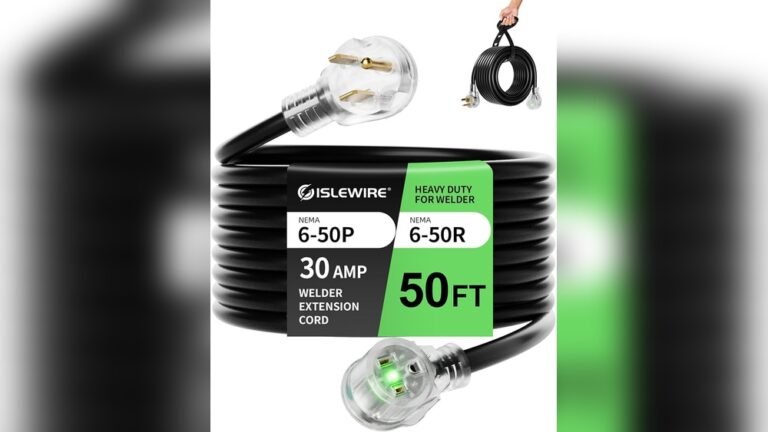
Choosing the right extension cord for a welder can be confusing, especially if you are new to welding. A wrong cord can cause power loss, overheating, or even fire hazards. Many welders simply use whatever heavy-duty cord they have, but not all cords are safe or effective for welding. This article will help you understand what gauge extension cord you need for your welder, why it matters, and how to select the best option for your needs.
Why Extension Cord Gauge Matters For Welders
The gauge of an extension cord refers to the thickness of the wire inside. Lower gauge numbers mean thicker wires that can handle more current. Welders use a lot of power, so using a cord that is too thin can lead to dangerous situations:
- Voltage drop: The longer and thinner the cord, the more voltage you lose.
- Overheating: Wires that are too thin for the current can get hot and melt.
- Fire risk: Overheated cords can spark and start fires.
For welders, picking the right gauge is not just about performance but also about safety.
How To Determine The Right Gauge
There are two main factors:
- Welder amperage (amp) rating
- Length of the extension cord
Welders can vary from small 120V hobby machines (20-30 amps) to heavy-duty 240V units (40-50 amps). The longer your cord, the thicker it needs to be, because electricity loses strength over distance.
Here is a simple table to help you see what gauge you might need for different welder sizes and cord lengths:
| Welder Amps | Cord Length (ft) | Recommended Gauge |
|---|---|---|
| 20-30A | 25 | 10 AWG |
| 20-30A | 50 | 8 AWG |
| 30-40A | 25 | 8 AWG |
| 30-40A | 50 | 6 AWG |
| 40-50A | 25 | 6 AWG |
| 40-50A | 50 | 4 AWG |
AWG stands for American Wire Gauge. The lower the number, the thicker the wire.
Credit: www.homedepot.com
Real-world Example: Mig Welder
Suppose you have a MIG welder rated at 40 amps and want to use a 40-foot extension cord. Based on the table, an 8 AWG cord would be the minimum, but for extra safety, a 6 AWG cord is better. Using a thicker cord reduces voltage drop, keeps the cord cooler, and makes your welder perform more consistently.
Key Factors When Choosing An Extension Cord
Besides gauge and length, there are other things to consider:
- Cord type: Look for cords marked “SOOW” or “SJTW.” These are made for heavy duty and outdoor use.
- Plug and socket rating: Both ends of the cord must handle the welder’s amps. A 50A welder needs a 50A plug and socket.
- Voltage rating: Match the cord to your welder’s voltage (120V or 240V).
Here’s a quick comparison of popular cord types for welders:
| Cord Type | Use Case | Flexibility | Durability |
|---|---|---|---|
| SOOW | Outdoor/Heavy-duty | High | Very High |
| SJTW | Indoor/General | Medium | High |
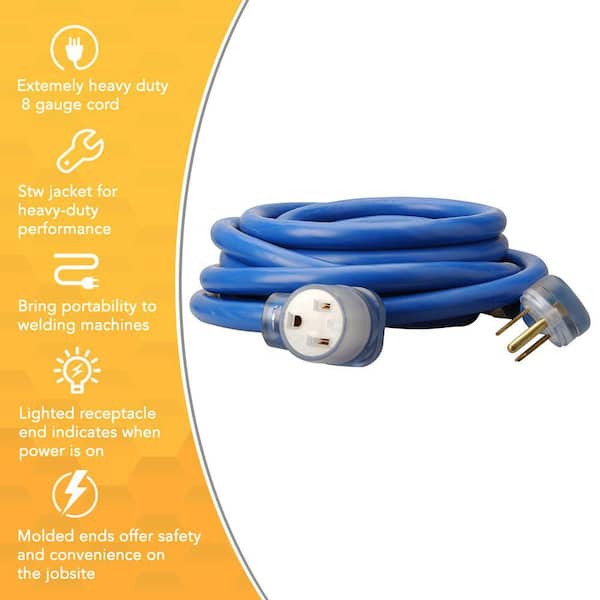
| STW | Outdoor/Medium-duty | Medium | Medium |
Practical Tips For Safe Use
- Never coil a cord during use. Coiled cords trap heat and can overheat quickly.
- Check for damage before each use, such as cracks, cuts, or melted spots.
- Keep extension cords as short as possible. The longer the cord, the more power is lost.
- Label your cords with their gauge and maximum amps to avoid confusion later.
- Store cords properly. Roll them loosely and keep them dry.
Common Mistakes To Avoid
Many beginners make the mistake of using a household extension cord for a welder. These are usually 14 AWG or 16 AWG—much too thin for a welder. Using a cord that is not rated for your welder’s amperage can cause the cord to melt, trip breakers, or damage your welder.
Another mistake is ignoring voltage drop. Even if the cord doesn’t get hot, a big voltage drop can make your welder run poorly. You may notice weak arcs or your machine shutting down. Always use the shortest, thickest cord you can.
Useful Insight: Gauge Vs. Cost
A thicker cord (lower AWG) is more expensive. For example, a 50-foot 6 AWG cord can cost over $100, while a 10 AWG cord is much cheaper. But saving money here is risky. A cheap, thin cord can ruin your welder or start a fire. Investing in the right cord pays off in safety and performance.
When To Use A Custom Extension Cord
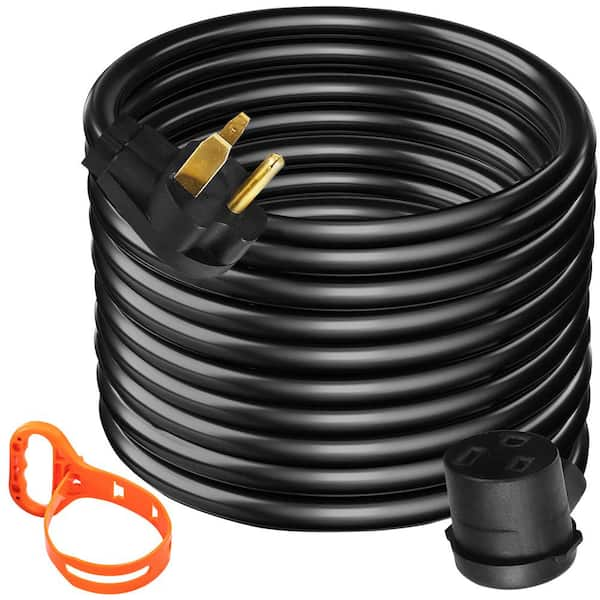
If you can’t find a ready-made cord that fits your needs, consider having one made by a licensed electrician. Always use the right connectors and never try to “upgrade” a thin cord by changing just the plug.
Credit: www.homedepot.com
Where To Find Reliable Information
For more details on wire gauge standards and amp ratings, the American Wire Gauge Wikipedia page gives official data and charts.
Frequently Asked Questions
What Gauge Extension Cord Do I Need For A 30-amp Welder?
A 10 AWG cord works for up to 25 feet. For longer cords, use 8 AWG to reduce voltage drop and heat.
Can I Use A Regular Household Extension Cord For My Welder?
No. Household cords are too thin and unsafe for welding machines. Use only cords rated for the welder’s amps and voltage.
What Happens If My Extension Cord Is Too Long Or Too Thin?
A long or thin cord causes voltage drop, making your welder weak or unstable. It can also overheat, creating a fire hazard.
Is It Better To Buy Or Build A Welder Extension Cord?
Buying a heavy-duty, correctly rated cord is safer for most users. If you build one, use proper connectors and have it checked by an electrician.
How Can I Tell If My Extension Cord Is Overheating?
If the cord feels hot to the touch or the insulation is soft, unplug it immediately. Hot cords are a sign of overload or poor connection.
Using the right extension cord gauge for your welder is critical for safe and effective welding. Take a moment to check your machine’s amp rating and choose a cord that matches. This small step protects your equipment, your work, and your safety every time you weld.

Credit: www.amazon.com