
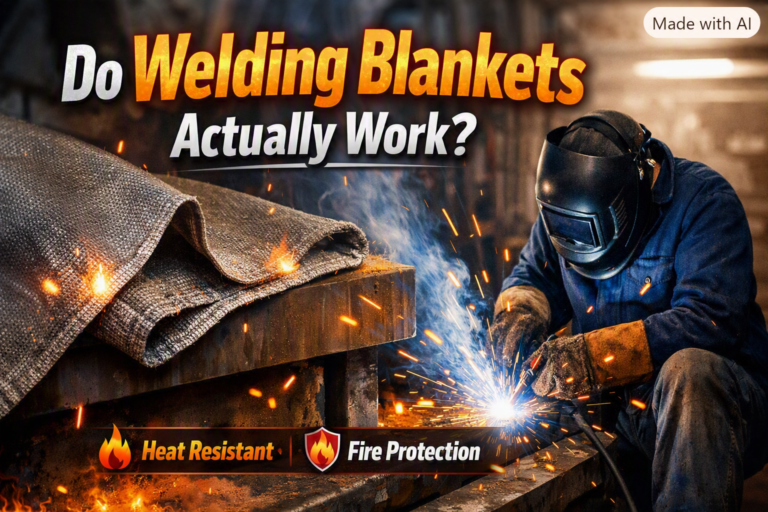
Welding creates heat, sparks, and molten metal that can easily damage nearby surfaces or cause fire. If you’ve seen welders at work, you might notice large, thick sheets placed around the area—these are welding blankets. Many wonder, do welding blankets actually work? Or are they just a safety tradition? Let’s explore how welding blankets perform, what they’re made of, and whether they truly protect as promised.
What Are Welding Blankets?
A welding blanket is a protective cover designed to shield surfaces from sparks, spatter, and intense heat during welding or cutting. They’re typically made from fire-resistant materials like fiberglass, silica, or specialty fabrics coated with heat-resistant chemicals. These blankets come in various sizes and thicknesses to fit different jobs.
Welding blankets are used by professionals and hobbyists alike. You’ll find them in auto shops, construction sites, shipyards, and even home garages.
How Do Welding Blankets Work?
The main job of a welding blanket is to block heat and sparks. When hot metal or sparks land on the blanket, the material absorbs and disperses the heat. Most welding blankets can resist temperatures between 1000°F and 2500°F (538°C to 1371°C), depending on material and thickness.
Here’s a comparison of common welding blanket materials:
| Material | Max Temperature | Pros | Cons |
|---|---|---|---|
| Fiberglass | 1000°F | Affordable, flexible | Itchy, not for heavy-duty welding |
| Silica | 1800°F | High heat resistance | More expensive |
| Ceramic | 2500°F | Extreme heat, industrial use | Heavy, costly |
Non-obvious insight: Not all welding blankets are equal. A light fiberglass blanket may protect from sparks but not from direct contact with molten metal. Always check the temperature rating and application.
Real-world Performance
Do welding blankets really work in practice? In most cases—yes, when used correctly. Here’s why:
- Fire safety: Welding blankets act as a barrier between the welding area and flammable materials like wood, plastic, or upholstery. Fire departments report fewer accidental fires in workplaces using rated blankets.
- Surface protection: They stop weld spatter from burning or staining floors, tools, or painted surfaces.
- Worker safety: In tight spots, a welding blanket can shield workers from heat or stray sparks.
A test by the American Welding Society found that properly placed welding blankets reduced the surface temperature beneath by over 80%, even after 30 seconds of direct exposure to molten metal.
Proper Usage And Placement
Even the best welding blanket won’t work if used the wrong way. Here are tips for getting the most protection:
- Cover all exposed surfaces: Make sure the blanket completely covers what you want to protect. Leave no gaps.
- Secure the blanket: Use clamps, magnets, or weights to keep the blanket from moving.
- Check for damage: Holes, tears, or thin spots reduce effectiveness.
- Keep away from water: Wet blankets may conduct electricity or let steam build up under heat.
A common mistake is using a worn-out or thin blanket for heavy welding. Always match the blanket’s rating with the job.
When Welding Blankets Fall Short
While welding blankets are highly effective, there are situations where they might not offer full protection:
- Improper placement: If the blanket slips or leaves gaps, sparks can reach flammable items.
- Extreme temperatures: Some industrial applications exceed what even the best blanket can handle.
- Chemical exposure: Some chemicals can degrade the blanket’s coating, making it less fire-resistant.
Here’s a quick look at limitations:
| Limitation | Impact | How to Avoid |
|---|---|---|
| Poor fit | Unprotected gaps | Use larger or multiple blankets |
| Overheating | Material may burn through | Pick a higher-rated blanket |
| Wear and tear | Reduced effectiveness | Inspect and replace regularly |
Another insight: Many beginners forget that welding blankets are not always waterproof or chemical-proof. Store them in dry, clean places to extend their life.
Are Welding Blankets Worth It?
For most users, investing in a quality welding blanket is a smart move. They are affordable compared to the cost of fire damage or injury. Prices start around $20 for a basic fiberglass blanket and can go up to several hundred dollars for high-grade ceramic models.
Here’s why they’re worth considering:
- Peace of mind: You can focus on welding without worrying about ruining surfaces or starting a fire.
- Flexibility: Use them for grinding, soldering, or even as emergency fire blankets.
- Easy to use: Just lay or hang them where needed.
If you weld often, especially in a garage or near valuable items, a welding blanket is a must-have.
Frequently Asked Questions
What Size Welding Blanket Should I Choose?
Select a blanket that’s larger than the area you need to protect. For small jobs, a 3×3 ft blanket is enough. For bigger projects, consider a 6×8 ft or larger. Always allow for some overlap.
Can I Use A Regular Blanket Instead?
No. Regular blankets are not fire-resistant and can catch fire or melt. Always use blankets designed for welding.
How Long Does A Welding Blanket Last?
With proper care, a welding blanket can last several years. Lifespan depends on frequency of use, exposure to heat, and storage. Replace if you notice burns, holes, or fraying.
Are Welding Blankets Safe For Indoor Use?
Yes, they are safe for indoor use when placed correctly. Just make sure they cover all surfaces and are not wet or damaged.
Where Can I Learn More About Welding Safety?
You can find detailed safety guidelines from the American Welding Society.
Welding blankets are a proven safety tool that work when used as intended. With the right choice and good care, you can weld confidently knowing your surroundings are protected.