Welding is a powerful process, but it brings risks. One of the biggest dangers is the bright arc light that can damage your eyes. That’s why welders use helmets with special shade numbers—each number shows how dark the lens is. Choosing the right shade is critical. Too light, and your eyes aren’t safe. Too dark, and you can’t see your work. Many beginners make mistakes here, so understanding the welding shade number chart will help you weld safely and confidently.
What Is A Welding Shade Number?
A welding shade number tells you how much light the helmet lens blocks. The numbers usually range from 5 to 14. The lower the number, the lighter the lens. The higher the number, the darker and safer for strong arcs.
For example, shade 5 is for low-light work like gas welding. Shade 14 is for high-amp, heavy-duty arc welding. Each welding process and power level needs a different shade.
Why Shade Numbers Matter
Welding arcs can be up to 100,000 times brighter than sunlight. Without the right shade, you risk:
- Arc eye: A painful injury caused by too much UV light
- Long-term damage: Cataracts, vision loss, or blindness
- Accidents: Poor visibility means mistakes or injuries
Even short exposure can cause problems. Always match the shade number to your welding type and amperage.

Credit: vseyewear.com
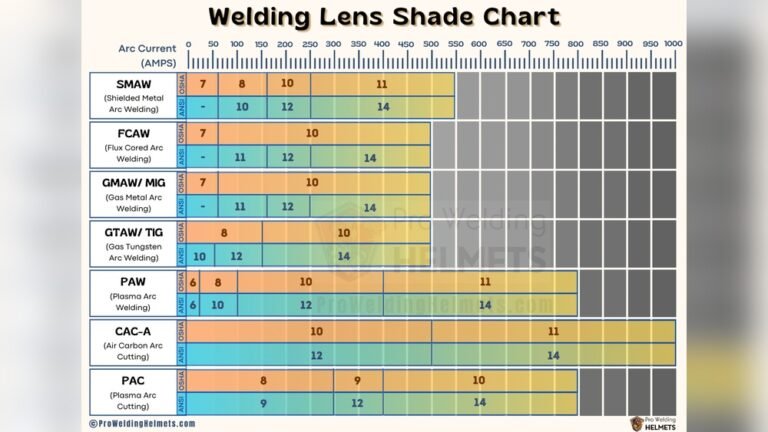
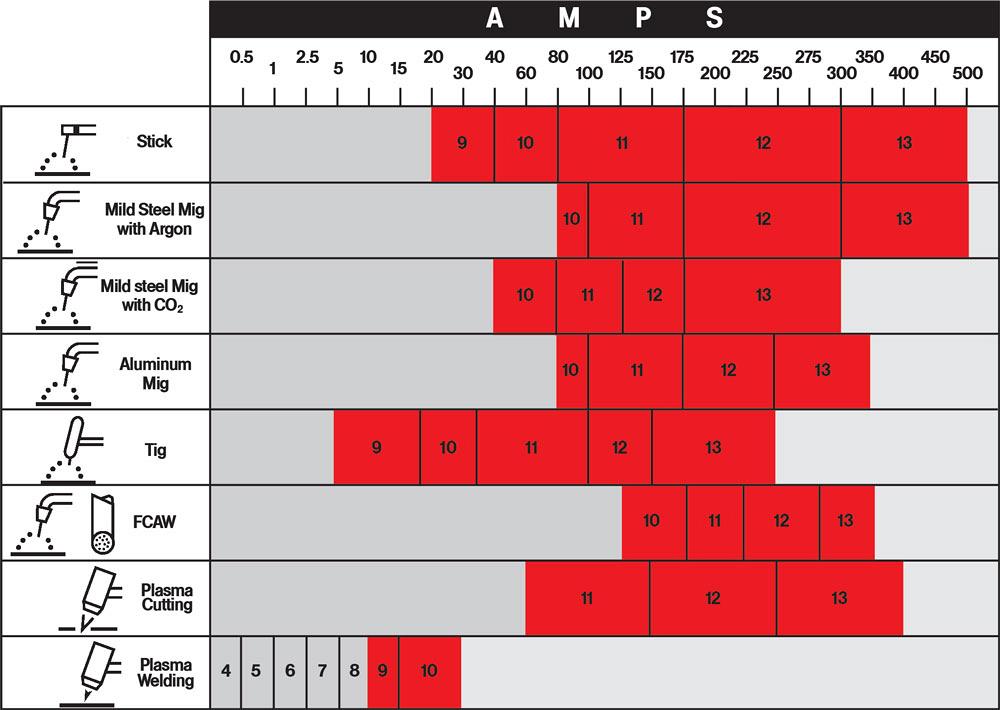
Welding Shade Number Chart
Here is a clear chart showing recommended shade numbers for different welding methods and amperage ranges:
| Welding Process | Amperage Range | Recommended Shade |
|---|---|---|
| Gas Welding | Under 60A | 5-6 |
| Gas Welding | 60–200A | 8 |
| Plasma Cutting | Under 300A | 8-10 |
| MIG Welding | 80–100A | 10 |
| MIG Welding | 100–175A | 11 |
| MIG Welding | 175–250A | 12 |
| TIG Welding | Under 50A | 8 |
| TIG Welding | 50–150A | 10 |
| TIG Welding | 150–500A | 12–14 |
| Stick Welding (SMAW) | Under 100A | 10 |
| Stick Welding (SMAW) | 100–200A | 11 |
| Stick Welding (SMAW) | 200–300A | 12 |
Many helmets have auto-darkening lenses, which change shade automatically. Still, you must set the range correctly—don’t trust default settings.
How To Choose The Right Shade Number
Picking the right shade is not just about following the chart. Consider these key points:
- Check your amperage: Always know your machine’s settings. Higher amps need darker shades.
- Consider your eyes: If you have sensitive eyes, start with a higher shade.
- Test visibility: Try different shades. You should see clearly but feel comfortable.
- Use modern helmets: Auto-darkening models are safer for switching between tasks.
- Follow OSHA guidelines: The US Occupational Safety and Health Administration recommends shade 10 or higher for arc welding.
A common beginner mistake is using a shade that is too light, especially for MIG or TIG welding. This causes eye strain and safety issues. Never guess—always check the chart and your helmet.
Comparing Shade Numbers For Different Welders
Different welders prefer different shades. Let’s compare two common scenarios:
| Welder Type | Typical Amperage | Preferred Shade |
|---|---|---|
| Professional MIG Welder | 200A | 12 |
| Hobbyist TIG Welder | 60A | 10 |
| Pipe Welder (Stick) | 250A | 12 |
| Auto Body Worker (Gas) | 80A | 8 |
Notice how professional welders often use darker shades for safety and comfort, while hobbyists sometimes use lighter shades. If you’re unsure, go darker first—your eyes will adjust.
Practical Tips For Using Shade Numbers
- Clean your lens: Dust and scratches reduce visibility.
- Check helmet fit: Poor fit lets light in and makes the shade less effective.
- Adjust for lighting: If working in a bright shop, a slightly darker shade is safer.
- Update your helmet: Older helmets may not meet current safety standards.
A non-obvious tip: If you move between welding types often, invest in a helmet with a wide shade range (like 5–14). This saves time and keeps you safe.
Credit: www.canadianmetalworking.com
The Science Behind Shade Numbers
Shade numbers are based on how much UV and IR radiation the lens blocks. For example, a shade 10 lens lets in only 0.001% of visible light. The numbers are standardized by ANSI (American National Standards Institute).
Here’s a quick view of light transmission by shade:
| Shade Number | Light Transmission (%) |
|---|---|
| 5 | 2.0 |
| 8 | 0.8 |
| 10 | 0.13 |
| 12 | 0.006 |
| 14 | 0.0003 |
Most people don’t realize how little light gets through a high-number lens—this is why you must match your shade to the task.
Frequently Asked Questions
What Happens If I Use The Wrong Shade Number?
Using the wrong shade can cause eye pain, blurred vision, or permanent damage. Too light is dangerous; too dark can make you miss details. Always use the chart and your welding machine’s settings.
Are Auto-darkening Helmets Safe?
Yes, if they meet ANSI standards and you set the correct range. They react in milliseconds, but check batteries and sensors often. Low-quality helmets may not darken fast enough.
Can I Use Sunglasses For Welding?
No. Sunglasses do not block enough UV or IR radiation. They are not rated for welding safety. Always use a certified welding helmet.
How Often Should I Replace My Welding Lens?
Replace your lens if it’s scratched, cracked, or the shade number is faded. Good practice is to check every few months, especially if you weld often.
Where Can I Find More Safety Guidelines?
The US OSHA offers detailed safety rules for welders. Visit OSHA Welding Safety for up-to-date information.
Welding is rewarding, but safety comes first. By understanding and using the welding shade number chart, you protect your vision and improve your work. Many beginners overlook shade numbers, but experienced welders know it’s the foundation of safe welding. Always check your helmet, match the shade to your job, and stay up to date with safety standards. With the right knowledge, your welding journey will be safer and more successful.

Credit: proweldinghelmets.com