
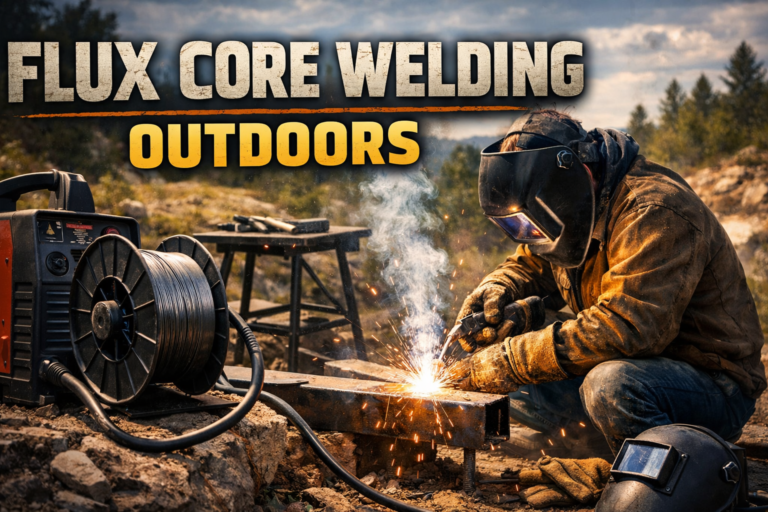
Flux core welding is a popular choice for outdoor projects. Many welders prefer it for jobs like repairing fences, building gates, or working on farm equipment. Wind, rain, and dust can make welding outside tough, but flux core welding handles these conditions better than most methods.
If you want strong welds and less hassle outdoors, this technique is worth learning.
Why Flux Core Welding Works Well Outdoors
One main advantage of flux core welding is its resistance to wind. Unlike MIG welding, which uses a shielding gas that can blow away, flux core wires contain a special flux that produces a protective gas and slag. This shield forms right at the weld, protecting it from contamination.
Flux core welding is also portable. Machines are often lighter, and you don’t need to carry heavy gas cylinders. This is useful on farms, construction sites, or anywhere power outlets are scarce.
Outdoor Welding Comparison
Here’s how flux core welding compares to other common welding methods in outdoor conditions:
| Welding Method | Wind Resistance | Portability | Ease of Use |
|---|---|---|---|
| Flux Core | Excellent | High | Moderate |
| MIG | Poor | Medium | Easy |
| Stick | Good | High | Moderate |
| TIG | Poor | Low | Difficult |
Flux core welding stands out for its wind resistance and portability, making it a reliable option for outdoor jobs.
Choosing The Right Equipment And Wire
When welding outdoors, selecting the right tools is important. The most common flux core machines run on 110V or 220V power. For outdoor work, a machine that runs on 110V is usually easier to use with portable generators.
The wire type matters too. There are two main types:
- Self-shielded flux core wire (FCAW-S): No gas needed. Perfect for outdoor jobs.
- Gas-shielded flux core wire (FCAW-G): Needs external gas. Not ideal for windy areas.
Most outdoor welders use FCAW-S wire because it works without shielding gas.
Typical Wire Sizes
Different projects need different wire sizes. Here’s a simple guide:
| Wire Diameter | Common Use | Recommended Machine Output |
|---|---|---|
| 0.030″ | Light repairs, thin metal | 80-120A |
| 0.035″ | General outdoor welding | 120-180A |
| 0.045″ | Heavy steel, farm equipment | 180-250A |
Choosing the right wire size helps you avoid mistakes like weak welds or burning through metal.
Setting Up For Success Outdoors
Outdoor welding has unique challenges. Wind is the biggest problem. Even with flux core, strong gusts can blow away part of the protection. Try to position yourself so the wind is behind you, blowing the fumes away from your face and the weld.
If possible, use barriers like plywood or tarps to block wind. Make sure your work area is dry and clean. Moisture on metal can cause porosity (tiny holes) in the weld.
Power Considerations
Outdoor sites often lack reliable power. A generator is helpful. Choose one with enough output for your machine—most small welders need at least 4000 watts. Double-check the generator’s rating before starting.
Practical Tips For Strong Welds Outdoors
Follow these tips to get the best results:
- Clean the metal before welding. Remove rust, paint, and dirt with a wire brush or grinder.
- Adjust your settings. Use higher voltage and wire feed speed for thicker metal.
- Keep your stick-out short. The stick-out is the distance between the tip of the wire and the metal. A short stick-out (about ½ inch) ensures a stable arc.
- Weld in a single pass for thin metal. For thicker metal, use multiple passes.
- Watch your travel angle. Keep the gun tilted about 15 degrees away from vertical.
- Check for slag. After welding, chip away the slag to reveal the weld. Slag protects the weld as it cools, but you must remove it for a strong bond.
Common Mistakes
Beginners often forget to clean the metal or use the wrong wire. Another mistake is welding too fast, which can cause weak joints. Slow down and watch the weld pool as you work.
One overlooked tip: always let the metal cool naturally. Spraying water or blowing air on it can cause cracks.
Safety Precautions When Welding Outdoors
Safety is always important, especially outside. Wear protective gear: a welding helmet, gloves, and long sleeves. Outdoor welding exposes you to UV rays and flying sparks.
Never weld in wet conditions. Water increases the risk of electric shock.
Be careful with generators. Position them away from flammable materials and check fuel levels before starting. Keep a fire extinguisher nearby.
Key Safety Gear
| Gear | Purpose | Outdoor Benefit |
|---|---|---|
| Auto-darkening helmet | Protects eyes/face | Adjusts to changing light |
| Leather gloves | Protects hands | Blocks sparks/wind |
| Fire-resistant jacket | Protects arms/body | Prevents burns |
Real-world Example
A farm worker needs to repair a steel gate. Using a flux core welder, he cleans the area, sets up a wind barrier, and uses 0.035″ wire. He adjusts his machine to 150A and makes short, steady passes. The weld holds strong, even after heavy use. Flux core welding made the job possible, even on a windy day.
Frequently Asked Questions
What Is Flux Core Welding?
Flux core welding is a method that uses a wire filled with flux. The flux creates a gas and slag, which protect the weld from contaminants.
Is Flux Core Welding Better Than Stick Welding Outdoors?
Both are good, but flux core is faster and produces less spatter. Stick welding can be more forgiving on dirty metal.
Can I Use Flux Core Welding On Aluminum?
No. Flux core welding works best on steel. For aluminum, use MIG or TIG welding.
How Much Wind Is Too Much For Flux Core Welding?
Up to 15 mph wind is usually okay with self-shielded wire. Stronger wind can affect weld quality, so use wind barriers if possible.
Is Flux Core Welding Safe For Beginners?
Yes, but follow safety rules. Wear protective gear and read your machine’s manual before starting.
Flux core welding is a practical solution for outdoor projects. With the right equipment and preparation, you can create strong, reliable welds even in tough weather. Remember to clean your metal, use proper settings, and stay safe. If you want to learn more about welding techniques and safety, visit Wikipedia for detailed information.