Welding with a 7018 rod is popular because it gives strong, clean welds. But getting the right amperage is not always easy. Choosing the correct setting is key for safety, quality, and efficiency. Many beginners struggle with finding the right balance, leading to weak welds or burned metal. If the amperage is off, you can spend more time fixing mistakes than actually welding. Even experienced welders sometimes need to adjust their settings when working with new materials or different positions. Let’s dive into how to select the best amperage for your 7018 welding rod, understand the variables, and explore practical tips to avoid common mistakes.
What Is A 7018 Welding Rod?
The 7018 welding rod is a low-hydrogen, iron powder electrode. It works well for structural steel, pipe, and other heavy-duty projects. Its “7018” name stands for:
- 70: Tensile strength (70,000 psi)
- 1: All position use (flat, vertical, overhead)
- 8: Low hydrogen coating
This rod is known for easy slag removal and smooth welds. It’s used in construction, fabrication, and repairs. Because of its low-hydrogen coating, the 7018 is less likely to cause cracks in the weld, which is important for high-stress structures like bridges or frames.
The iron powder in the coating also helps increase deposition rates, so you can fill joints faster and with less effort compared to some other rods.
Ideal Amperage Range For 7018 Welding Rod
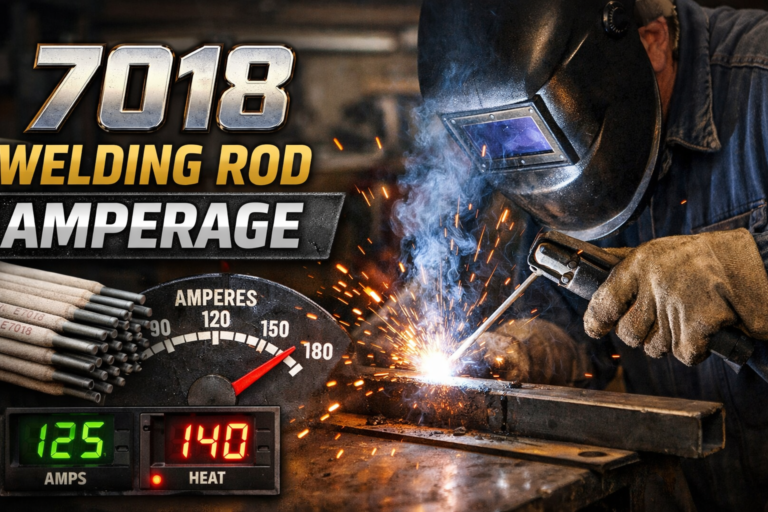
Setting the right amperage depends on the rod’s diameter. If your amperage is too low, the rod sticks. Too high, and you risk burning through the metal. Here’s a quick overview:
| Rod Diameter | Recommended Amperage | Common Uses |
|---|---|---|
| 3/32″ (2.4 mm) | 80–100 amps | Thin steel, small repairs |
| 1/8″ (3.2 mm) | 110–150 amps | General fabrication |
| 5/32″ (4.0 mm) | 150–190 amps | Heavy steel, structural work |
| 3/16″ (4.8 mm) | 180–260 amps | Thick plates, industrial jobs |
Always check the rod package and your machine’s manual. Some brands give more precise ranges. If you are working with a new brand or a different batch, amperage needs may shift slightly. Even temperature in your workshop can affect how smoothly the rod runs at a set amperage.
For thin metals, starting at the lower end of the range avoids warping, while thicker steel may need you to push the amps higher to get good penetration.
Factors That Affect 7018 Amperage Choice
Several elements impact your amperage selection:
- Rod diameter: Larger rods need more amps.
- Base metal thickness: Thicker metal requires higher amperage.
- Welding position: Overhead or vertical welding often needs lower amperage to control the puddle.
- Power source: AC or DC machines perform differently. DC is preferred for 7018 rods.
Other factors can also come into play. The type of joint (butt, lap, T-joint) can affect heat requirements. Environmental conditions, like welding outside in cold weather, may require a slight amperage increase to compensate for heat loss. If you’re welding rusty or painted steel, clean your work area first, as contaminants can cause arc instability and may tempt you to increase amperage unnecessarily.
Example: Welding 1/4″ Steel With 1/8″ Rod
You’ll likely use 120–140 amps, adjusting slightly for vertical or overhead positions. For vertical welds, reducing the amperage by about 10 amps can help prevent the molten metal from sagging or running. In contrast, welding flat allows for slightly higher amperage, promoting faster work and deeper penetration.
How To Set Your Welding Machine For 7018 Rods
Follow these steps for the best results:
- Select rod diameter for your job.
- Set amperage within the recommended range.
- Test on scrap metal before starting the real weld.
- Adjust as needed: If the rod sticks, increase amperage. If the weld is too hot or spatter is excessive, lower amperage.
When testing, pay close attention to the arc’s sound and the feel of the rod. A healthy arc produces a steady, soft “buzz” or “crackle,” not a loud roar. If you see the rod sticking often or the arc stuttering, your amps are too low.
On the other hand, if the puddle splashes and the bead looks very flat or has undercut edges, back off the amperage a bit.
| Symptom | Possible Cause | Adjustment |
|---|---|---|
| Rod sticks | Amperage too low | Increase amps |
| Burn-through | Amperage too high | Lower amps |
| Excess spatter | Wrong settings | Fine-tune amps |
Don’t forget to adjust your travel speed, too. Even with perfect amperage, moving too slow or too fast will affect bead shape and penetration.
Common Mistakes When Choosing 7018 Amperage
Many beginners make the following errors:
- Ignoring rod diameter: Using the same amps for all sizes leads to poor welds.
- Not testing on scrap: Always check settings before welding on the real piece.
- Welding with wrong polarity: 7018 rods work best with DC positive.
- Skipping preheat for thick steel: For plates over 1/2″, preheat helps avoid cracking.
Another frequent mistake is forgetting to clean the base metal properly. Even a small amount of oil or rust can create porosity or unstable arc, which is often blamed on amperage settings. Also, some welders try to compensate for poor fit-up or joint preparation with higher amperage, which rarely works and can make the weld worse.
Non-obvious Insights For Better Results
- Humidity ruins rods: 7018 is sensitive to moisture. Store rods in a dry, heated container, or they lose their low-hydrogen properties.
- Fine-tune for position: When welding vertical or overhead, drop the amperage by 5–10% from flat settings to avoid dripping.
One more subtle point: after starting your weld, if you notice a strange, “frothy” arc or the bead has lots of small holes, it may mean the rod has absorbed moisture. Even if amperage is correct, wet rods can cause weld defects. Always check that your rods are dry, especially if you notice sudden changes in weld quality.
Another insider tip is to watch the color of the weld puddle. A dull, slow-moving puddle can signal low amperage, while a bright, fast-flowing puddle that’s hard to control might mean your setting is too high.
Comparison: 7018 Vs Other Welding Rods
Here’s how the 7018 compares to popular alternatives:
| Rod Type | Amperage Range | Main Uses |
|---|---|---|
| 7018 | 80–260 amps | Structural, pipe, heavy steel |
| 6010 | 40–180 amps | Pipe, dirty/rusty metal |
| 6013 | 40–180 amps | Sheet metal, light repairs |
7018 is favored for its strength and clean welds, but it needs careful storage. Unlike 6010, which can tolerate dirt or rust, the 7018 requires clean surfaces for best results. Also, 7018 produces less spatter and a smoother finish, making it ideal for visible or critical welds.
Practical Tips For Choosing 7018 Amperage
- Start with the lowest recommended amps and go up slowly.
- Listen for a steady, crisp arc. Too loud or erratic means wrong setting.
- Watch the weld bead: It should be smooth, not too wide or narrow.
- If welding outdoors, wind can cool the puddle; increase amperage slightly.
- For multi-pass welds, use higher amps on the first pass, then lower for cap passes.
If your welds look dull or lumpy, try a slight amperage increase and check your technique. Remember, every welder’s hand moves a little differently, so don’t be afraid to fine-tune settings for your style. Keeping a small notebook with your favorite settings for different rod sizes and metals can save time on future jobs.
Frequently Asked Questions
What Happens If I Use Too Much Amperage With A 7018 Rod?
Excess amperage will cause burn-through, excessive spatter, and a weak weld. The bead may look wide and messy, and you could damage your base metal. It’s harder to control the puddle, which may result in undercut along the edges.
Can I Use A 7018 Rod With Ac Power?
7018 rods work best with DC positive, but some brands are rated for AC. Check the rod packaging. AC may give less stable arc and more spatter. For small home welders limited to AC, look for 7018 rods marked “AC” on the box for better results.
How Do I Store 7018 Rods?
Store in a dry, heated oven (250°F/120°C) if possible. Humidity affects their coating and weld quality. If exposed to moisture, rods must be re-baked. Even a few hours in a damp shop can reduce performance.
Is It Safe To Weld Thick Steel With Low Amperage?
No. Low amperage on thick steel leads to poor fusion and weak joints. Always match your amperage to the base metal thickness and rod size. Insufficient heat means the weld won’t penetrate and may fail under stress.
Why Does My Rod Keep Sticking To The Metal?
This usually means amperage is too low or the rod’s tip is cold. Increase your amperage slightly and keep the rod steady. Also, make sure you strike the arc quickly and confidently.
Getting the right amperage for your 7018 welding rod is essential for strong, clean welds. Pay attention to rod size, metal thickness, and position. Testing and fine-tuning will give you consistent results. For more details and technical recommendations, visit the American Welding Society. With careful settings and practice, you’ll master the 7018 rod and get professional-quality welds every time.