
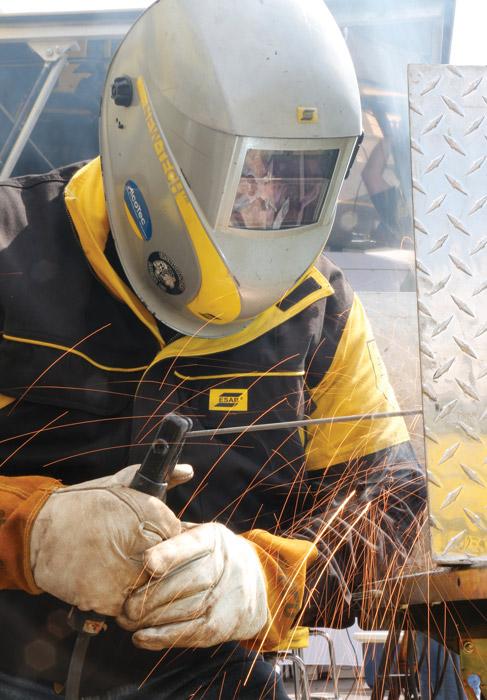
Stick welding is one of the most widely used welding methods in the world. If you have ever seen a welder wearing a protective helmet and holding a rod that sparks as it touches metal, you have witnessed stick welding in action.
Despite the rise of newer techniques, stick welding remains popular for its simplicity, toughness, and ability to work in different environments. Let’s explore what stick welding is, how it works, and why it’s still important today.
What Is Stick Welding?
Stick welding, officially known as Shielded Metal Arc Welding (SMAW), is a process that uses an electric current and a coated metal rod (the “stick”) to join metals together. When the rod touches the metal, electricity creates an arc that melts both the rod and the metal surface. As the rod melts, it releases a gas that shields the weld from air, preventing defects.
The process is called “stick welding” because the electrode (the rod) looks like a stick. It’s a versatile method, used for building bridges, repairing machinery, and even art projects. Stick welding can work on steel, iron, aluminum, and many other metals.
How Stick Welding Works
Understanding the basic steps helps you see why stick welding is both simple and powerful:
- Setup: The welder connects the stick electrode holder to a power supply. The piece of metal to be welded is connected with a ground clamp.
- Creating the Arc: The welder touches the stick to the metal, then pulls it back slightly. This creates a bright arc that starts melting both the stick and the workpiece.
- Welding: The welder moves the stick along the joint, keeping a steady distance. The stick melts into the joint, and the flux coating turns into gas and a layer of slag, protecting the weld.
- Cooling and Cleaning: As the weld cools, the slag is chipped away to reveal a solid, strong weld beneath.
Stick welding can be done indoors, outdoors, or even in windy conditions where other methods struggle.
Credit: www.thefabricator.com
Key Features And Advantages
Stick welding stands out for several reasons:
- Portability: Equipment is lightweight and easy to move.
- All-Position Welding: You can weld flat, vertical, or overhead.
- Low Cost: Machines and rods are affordable.
- Works in Harsh Environments: Dirt, rust, or wind do not stop stick welding.
One non-obvious benefit is that stick welding is less sensitive to drafts and dirty surfaces compared to TIG or MIG welding. That’s why it’s trusted for repairs in remote or tough locations.
Common Applications
Stick welding is used everywhere you find metalwork:
- Construction: Building steel frames, bridges, and pipelines.
- Maintenance & Repair: Fixing farm equipment, trucks, and railways.
- Shipbuilding: Creating strong joints on ships and oil rigs.
- Home Projects: Making gates, fences, and art pieces.
Unlike some high-tech methods, stick welding does not require a perfectly clean surface. This makes it ideal for field repairs where cleaning is impossible.

Credit: kongfangmetal.com
Equipment Needed For Stick Welding
If you want to start stick welding, you will need:
- Welding machine (AC or DC)
- Electrode holder
- Ground clamp
- Stick electrodes (rods with flux coating)
- Protective gear (helmet, gloves, jacket)
- Chipping hammer (to clean slag)
Here’s a simple comparison of stick welding equipment with other common welding methods:
| Equipment | Stick Welding | MIG Welding | TIG Welding |
|---|---|---|---|
| Power Source | AC/DC | DC | DC |
| Gas Needed | No | Yes | Yes |
| Portability | High | Medium | Low |
| Skill Level | Beginner+ | Beginner | Advanced |
Advantages And Limitations
Stick welding has many strengths, but it’s not perfect for every job.
Advantages
- Durable Welds: Produces strong joints even in tough conditions.
- Cost-Effective: Lower equipment and maintenance costs.
- Versatility: Suitable for many types of metals and environments.
Limitations
- Slower Than Some Methods: Not as fast as MIG welding for big projects.
- Slag Cleanup: Each weld must be cleaned for best results.
- Less Suitable for Thin Metals: Can burn through very thin materials.
Here’s how stick welding compares to MIG and TIG for common tasks:
| Task | Stick Welding | MIG Welding | TIG Welding |
|---|---|---|---|
| Outdoor Repairs | Excellent | Poor | Poor |
| Precision Work | Average | Good | Excellent |
| Welding Rusty Metal | Good | Poor | Poor |
| Thin Sheet Metal | Poor | Good | Excellent |

Credit: tooliom.com
Safety In Stick Welding
Stick welding produces intense light, heat, and fumes. Safety is critical. Always wear a welding helmet with a proper shade, heavy gloves, and protective clothing. Work in a well-ventilated area to avoid breathing fumes. Be aware of fire risks—keep flammable items away.
A tip many beginners miss: never weld near wet surfaces or in the rain. Water can conduct electricity, increasing the risk of shock.
Tips For Beginners
Starting with stick welding is easier if you keep these tips in mind:
- Use the right electrode: Match the rod to your metal type and thickness.
- Practice arc striking: Striking an arc is like lighting a match. Too slow, and it sticks; too fast, and it won’t start.
- Watch travel speed: Move the rod steadily. Too fast, and the weld is weak. Too slow, and it piles up too much metal.
- Clean between passes: Always remove slag before adding another layer.
One insight new welders miss: older rods can absorb moisture, causing poor welds. Store rods in a dry, warm place for best results.
Frequently Asked Questions
What Is The Main Advantage Of Stick Welding?
Stick welding works in almost any environment, indoors or outdoors, and does not need extra shielding gas. This makes it ideal for repairs and construction in tough conditions.
Can Stick Welding Be Used On Aluminum?
Yes, but it is challenging. Special aluminum electrodes are needed, and controlling the arc requires more skill. For most aluminum jobs, TIG welding is preferred.
Why Does My Electrode Keep Sticking?
The stick usually sticks if the arc gap is too small or the current is too low. Try increasing the amperage and practicing your arc-start technique.
Is Stick Welding Good For Beginners?
Yes, because stick welding equipment is affordable and simple to set up. However, mastering the arc takes some practice.
Where Can I Learn More About Welding Techniques?
You can find trusted guides and tutorials on the Wikipedia page for SMAW.
Stick welding continues to be a reliable choice for joining metals around the world. Whether you are repairing a tractor on a farm or building a skyscraper, stick welding’s simplicity, toughness, and versatility make it a skill worth learning.