
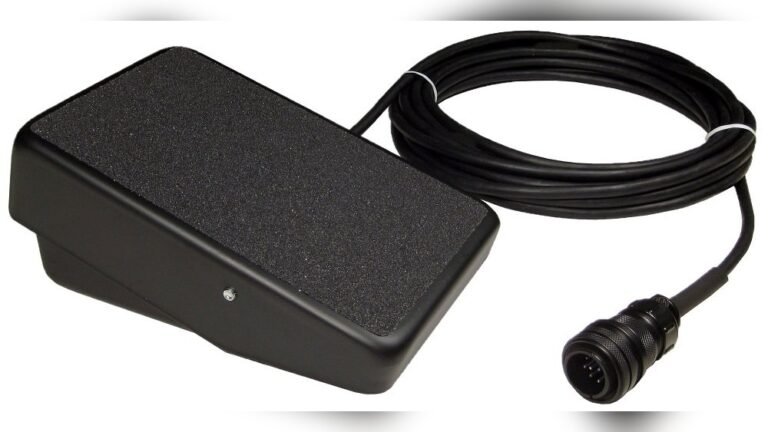
Understanding The 14-pin Tig Foot Pedal
A TIG welding foot pedal is a crucial tool for controlling the amperage of your TIG welder. It allows you to adjust the heat output with your foot, giving you precise control over the weld puddle. This is especially important for delicate work or when welding different material thicknesses. While many TIG welders come with a basic amperage control, a foot pedal offers a significant upgrade in usability and precision.
This article focuses on the 14-pin TIG foot pedal, a common connector type found on many popular TIG welding machines. We will explore what makes these pedals useful, their typical features, and how to choose the right one for your needs. Understanding the 14-pin interface is key to ensuring compatibility with your welding equipment.
Why Use A Tig Foot Pedal?
The primary benefit of using a TIG foot pedal is hands-free amperage control. Imagine you’re welding a thin piece of aluminum. You need to start with a higher amperage to break through the oxide layer, then quickly reduce it to avoid burning through. With a hand-held torch, this adjustment is difficult and often leads to inconsistent welds. A foot pedal lets you make these rapid changes smoothly and efficiently.
This precise control is invaluable for various applications. It helps in avoiding weld defects like burn-through or lack of fusion. For experienced welders, it opens up possibilities for more complex and intricate welds. For beginners, it offers a more forgiving way to learn TIG welding, as you can gradually increase or decrease heat as needed.

Credit: www.amazon.com
Key Features Of 14-pin Tig Foot Pedals
14-pin foot pedals are designed to communicate a range of information back to the welding machine. The 14-pin connector itself is a standard that allows for multiple control signals. This means these pedals can often do more than just control amperage.
Amperage Control
The most fundamental feature is variable amperage control. You press down further to increase the current and ease off to decrease it. This mimics the feel of a throttle on a vehicle, allowing for intuitive adjustment. The range of amperage controlled typically matches the welder’s maximum output.
Start-up Amperage
Some pedals allow you to set a start-up amperage. This is the initial current when you first press the pedal, useful for quickly establishing the arc or melting the base metal. You can then modulate the heat for the rest of the weld.
Preset Amperage Buttons
Many 14-pin pedals include preset amperage buttons. These allow you to quickly switch between different pre-programmed amperage levels. This is incredibly useful when welding materials that require distinct heat settings, like tacking a joint versus fully welding it.
Features Table
Here’s a look at some common features found in 14-pin TIG foot pedals:
| Feature | Description | Benefit |
|---|---|---|
| **Variable Amperage** | Foot-actuated control over welding current. | Precise heat management, smooth arc control. |
| **Start-Up Amperage** | Sets initial current when the pedal is first pressed. | Faster arc initiation, easier melting of base metal. |
| **Preset Buttons** | Buttons to select pre-defined amperage levels. | Quick switching between different heat settings for various tasks. |
| **Up/Down Slope Control** | Ability to control the rate at which amperage increases or decreases. | Smoother transitions, better puddle control during dynamic changes. |
| **Gas Pre-Flow/Post-Flow** | Some pedals can control the gas settings. | Automated gas management, improved weld quality and shielding. |
Build Quality And Materials
The durability of a foot pedal is important, especially if it will be used in a workshop or on job sites. Look for pedals made from sturdy materials like heavy-duty steel or aluminum. The pedal mechanism itself should feel robust and responsive. Anti-slip surfaces on the pedal are also a good feature to prevent accidental movement.
Connecting Your 14-pin Pedal
The 14-pin connector is the standard for many Miller, Lincoln, and other compatible TIG welding machines. Always double-check your welder’s manual to confirm compatibility before purchasing a pedal. The connection is usually straightforward: simply plug the pedal’s cable into the designated port on the front or back of your welder.
Compatibility Considerations
While 14-pin is a standard, there can be subtle differences in how different manufacturers implement the pin functions. Some pedals might offer features that your welder doesn’t fully support, or vice versa. For instance, a pedal with advanced slope control might only utilize the basic amperage signal if the welder doesn’t have the corresponding inputs.
Pro Tip: Always verify the specific welder models the foot pedal is designed for. Manufacturers often list compatible machines on their product pages or manuals. This avoids purchasing a pedal that won’t function correctly.

Credit: shopweldingsupplies.com
Popular 14-pin Tig Foot Pedal Models
When looking for a 14-pin TIG foot pedal, several reputable brands offer excellent options. These pedals vary in features, build quality, and price.
1. Miller Electric 300877 Foot Pedal
This is a popular choice for Miller welders. It offers smooth, proportional amperage control and is known for its robust construction. It’s designed to work seamlessly with many Miller Dynasty and Maxstar series machines.
2. Lincoln Electric K870 Foot Amperage Control
A reliable option for Lincoln TIG welders, the K870 provides excellent control and durability. It’s designed for Lincoln’s Square Wave and Power MIG series machines that feature a 14-pin connector.
3. Esab 0700500001 Foot Pedal
ESAB also offers 14-pin compatible foot pedals. This model is known for its ergonomic design and responsive feel, suitable for various ESAB TIG welders.
4. Weld-pro 14-pin Foot Pedal
Weld-Pro offers more budget-friendly options that are still highly functional. Their 14-pin pedals often include preset buttons and good build quality, making them a solid choice for hobbyists and professionals alike.
5. Htp America 14-pin Foot Pedal
HTP America provides pedals that are compatible with a range of machines. They focus on providing good value with features like durable construction and responsive control.
6. Longevity Force 14-pin Foot Pedal
Longevity offers pedals designed for their TIG welders. These often include features like pre-set amperage controls and a comfortable, non-slip design.
7. Ahp 14-pin Foot Pedal
AHP offers pedals that are typically designed for their own brand of welders but can sometimes be compatible with others. They often provide a good balance of features and affordability.
8. Everlast 14-pin Foot Pedal
Everlast provides pedals that are specifically designed to work with their range of TIG welders. They are built for reliability and offer precise control.
9. Ck Worldwide F-14 Foot Pedal
CK Worldwide is known for high-quality TIG welding consumables and accessories. Their 14-pin pedals are built to exacting standards, offering superior feel and durability for demanding applications.
10. Radnor 14-pin Foot Pedal
Radnor offers a range of welding accessories, including 14-pin foot pedals. These are often designed as reliable, general-purpose controls for compatible machines.
11. Jasic 14-pin Foot Pedal
Jasic pedals are designed for their own line of TIG welders and offer standard amperage control features. They are built to be robust for workshop use.
12. Primeweld 14-pin Foot Pedal
PrimeWeld offers pedals that are compatible with their TIG welders. They focus on providing reliable performance and good value for the features offered.