
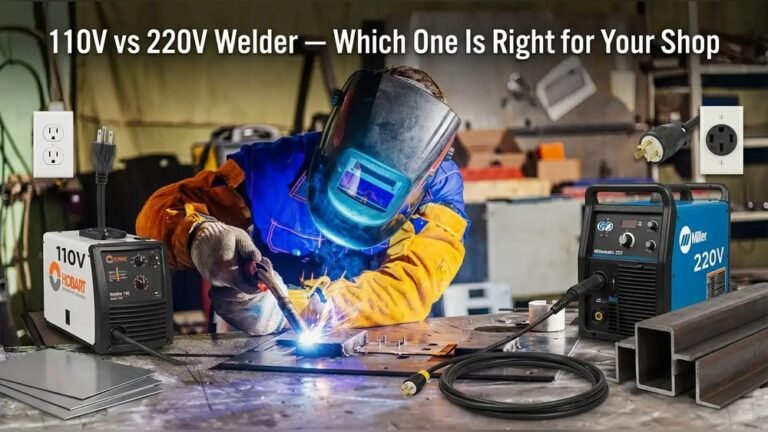
Choosing the right welder can make or break your welding projects. One of the most important decisions is picking between a 110V welder and a 220V welder. These numbers refer to the voltage required to run the machine, and each has its own strengths and weaknesses. Whether you’re a hobbyist or a professional, understanding this difference is key to getting the best results—and avoiding costly mistakes.
Key Differences Between 110v And 220v Welders
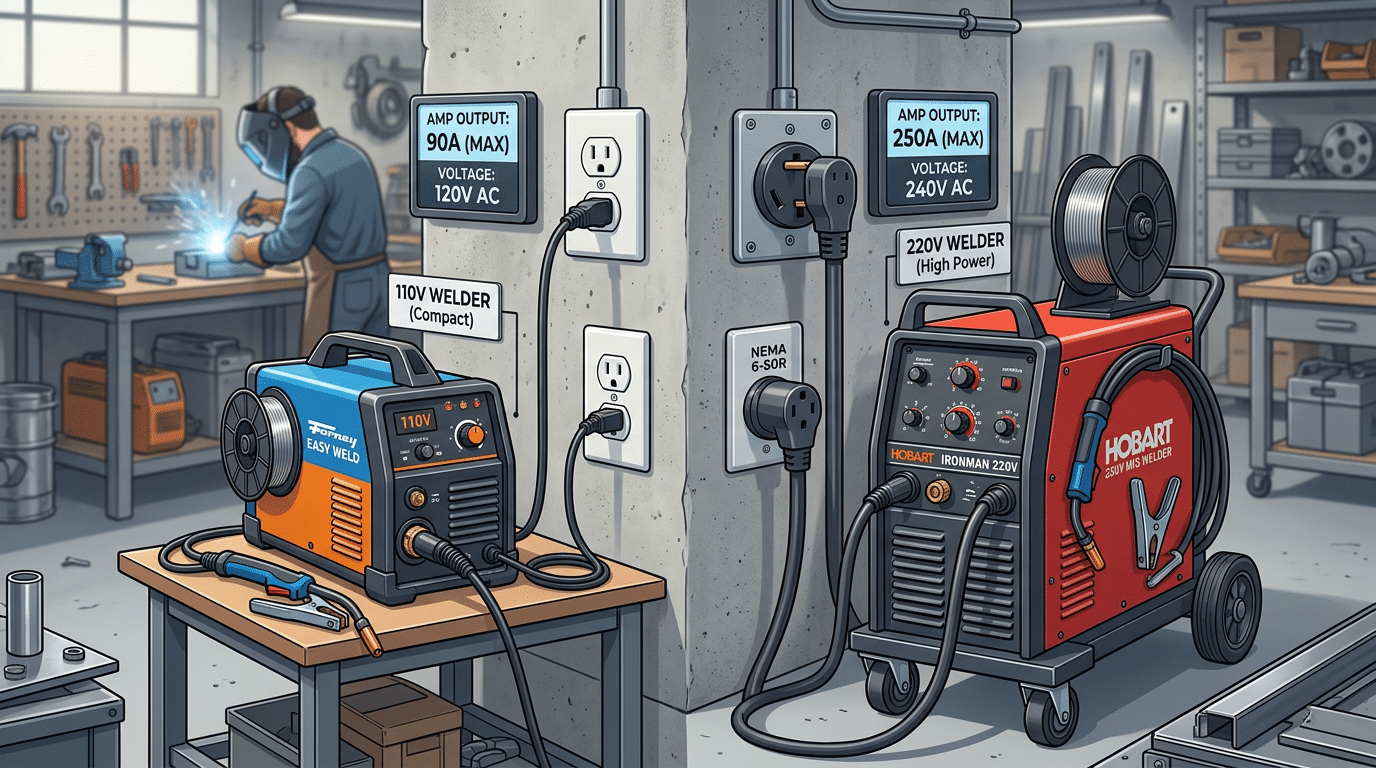
The main difference is the power supply. In the US, most homes have 110V outlets, while 220V outlets are often used for heavy appliances. Welders designed for 110V can plug into standard outlets, making them more accessible. 220V welders need special outlets, but they deliver more power and can handle tougher jobs.
| Feature | 110V Welder | 220V Welder |
|---|---|---|
| Power Output | Lower (up to 140A) | Higher (up to 250A+) |
| Portability | High | Medium-Low |
| Usable Outlet | Standard household | Dedicated circuit |
| Material Thickness | Up to 1/8” steel | Up to 1/2” steel |
Performance And Practical Use
110v Welders
These are popular for small projects and DIY repairs. You can use them for tasks like fixing gates, small frames, or auto bodywork. They’re easy to move and set up, and you don’t need to modify your electrical system.
However, 110V welders are limited in power. They struggle with thick materials, and prolonged use can overheat the machine. Most models max out at about 140 amps, which limits the types of electrodes and welding wire you can use.
220v Welders
If you need more strength and versatility, a 220V welder is the better choice. These machines can weld thicker steel, run for longer periods, and handle demanding jobs. They’re common in fabrication shops and construction sites.
While 220V welders can cost more and need a special outlet, their extra power means you can use larger electrodes, weld faster, and work with a wider range of metals. Some newer models are dual-voltage, offering both 110V and 220V options.
| Task | 110V Welder | 220V Welder |
|---|---|---|
| Car body repair | Yes | Yes |
| Farm equipment | No | Yes |
| Structural steel | No | Yes |
| Light maintenance | Yes | Yes |
Credit: oceanplayer.com
Safety And Efficiency
Electrical Safety
A common mistake is overloading a 110V circuit. Many beginners plug their welder into an old outlet, not realizing that other appliances or weak wiring can cause tripped breakers or even fire hazards. Always check the circuit’s amperage before use. For 220V welders, ensure the wiring and outlet are up to code—never use adapters or extension cords unless rated for high voltage.
Efficiency
220V welders are more efficient with power. They draw less current for the same output, leading to cooler wires and less energy loss. This matters for long welding sessions, as it helps prevent overheating. With a 110V welder, you may notice the machine slowing down or shutting off after heavy use.
Cost And Investment
There’s a clear price gap. 110V welders usually start around $150, while 220V welders can range from $400 to $2000, depending on features. Installation cost for a 220V outlet can add another $200–$400. But if you plan to weld thick materials or want professional results, the investment pays off.
Many people overlook the hidden costs—like buying an extension cord rated for welding or upgrading your electrical system. It’s best to factor these into your budget before deciding.
| Welder Type | Average Price | Installation Cost |
|---|---|---|
| 110V | $150–$400 | None |
| 220V | $400–$2000 | $200–$400 |

Credit: www.hitboxweld.com
Choosing The Right Welder
Think about your main uses. For home repairs, light fabrication, or hobby projects, a 110V welder is often enough. If you plan to weld thicker materials or need professional-grade performance, a 220V welder is the smarter choice.
Other factors to consider:
- Project size: Small jobs vs. heavy-duty work
- Portability: Moving the machine often vs. keeping it stationary
- Electrical setup: Availability of 220V outlets in your workspace
- Budget: Total cost including installation and accessories
Many welders now offer dual-voltage capability, letting you switch between 110V and 220V. This is ideal if you move between job sites or want flexibility.
Common Mistakes And Insights
Beginners often underestimate the importance of circuit capacity. Plugging a 110V welder into a busy circuit can lead to frequent interruptions. For 220V welders, some forget to check the outlet amperage—using a low-amp outlet can damage the machine.
Another overlooked point: weld quality. Thicker metals require more heat, and underpowered welders can cause weak joints. Always match the welder’s capacity to the job.
For more technical details, you can visit Wikipedia.

Credit: www.youtube.com
Frequently Asked Questions
What’s The Main Advantage Of A 110v Welder?
A 110V welder is easy to use in most homes. You don’t need a special outlet, and setup is simple. It’s perfect for small repairs and lightweight projects.
Is A 220v Welder Always Better?
Not always. While a 220V welder is more powerful, it’s only worth it if you need to weld thicker materials or work professionally. For small jobs, a 110V welder is more practical.
Can I Use A 110v Welder For Structural Steel?
No. Structural steel is too thick for most 110V welders. You need a 220V welder for strong, safe welds on heavy metal.
How Do I Install A 220v Outlet?
You should hire a licensed electrician. Installing a 220V outlet involves upgrading wiring and breakers. Never attempt it yourself unless you are qualified.
Are Dual-voltage Welders Reliable?
Yes, dual-voltage welders are reliable and flexible. They let you switch between 110V and 220V, making them ideal for users who work in different locations.
When choosing between a 110V and 220V welder, think about your needs, workspace, and future projects. The right welder will save you time, money, and frustration—so make your decision with confidence.