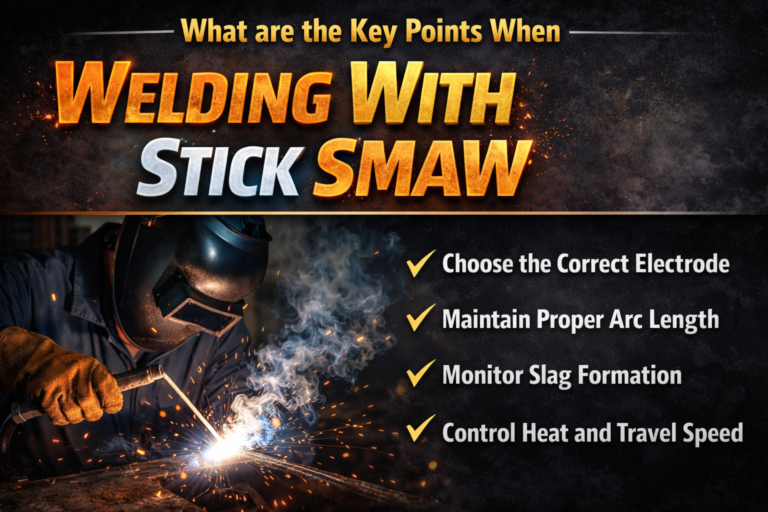
Welding is a skill many people want to learn. One popular way to weld is using Stick SMAW. This stands for Shielded Metal Arc Welding. It is a simple and useful method. If you want to weld well, you need to know some key points. This article will explain these points in clear and easy words.
What is Stick SMAW Welding?
Stick SMAW uses a stick called an electrode. The electrode melts and joins two pieces of metal. The stick also has a coating that makes a gas. This gas protects the melted metal from air. It stops bad things like rust and cracks.
This type of welding is strong and works on many metals. It is popular because the tools are simple and cheap. But it needs some skills to do it right.
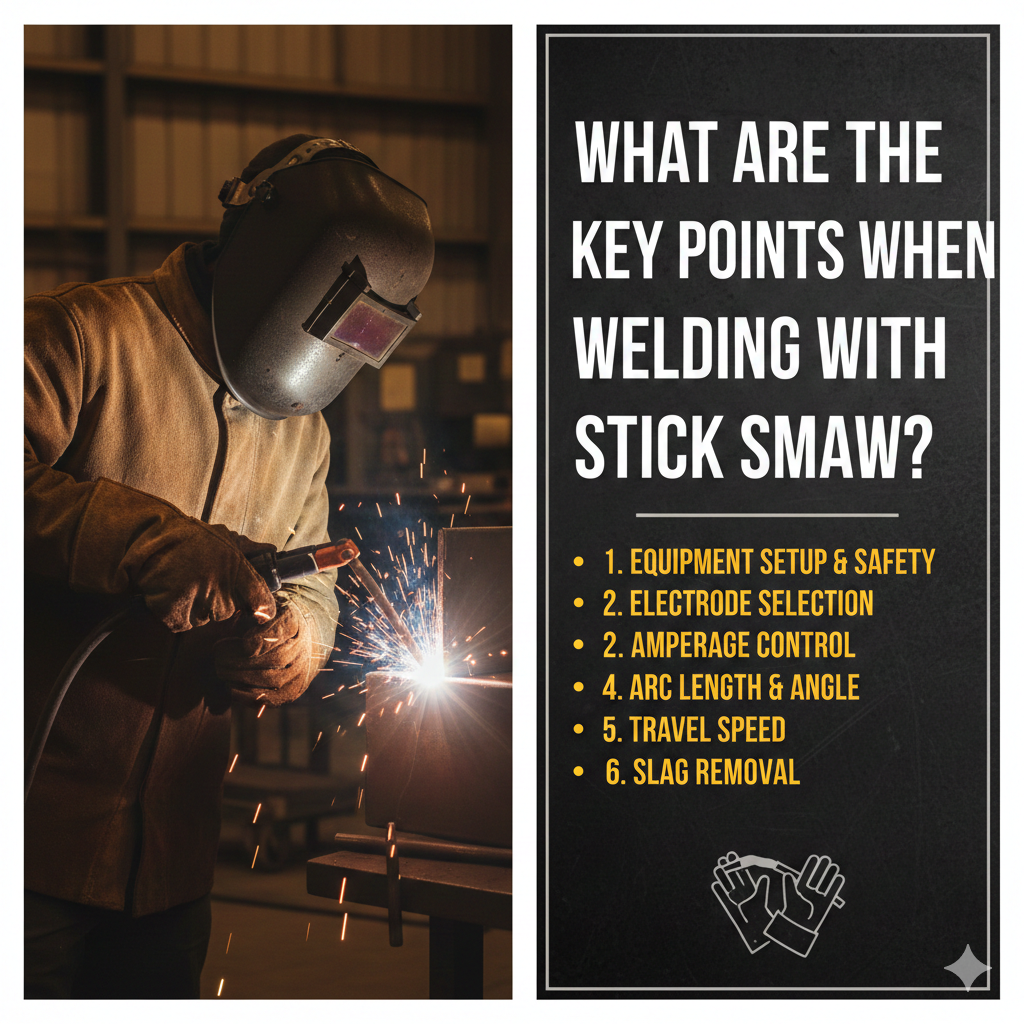
Key Points When Welding With Stick SMAW
1. Choose The Right Electrode
Electrodes come in many types. Each type fits a different job. Some work well on steel. Others work on cast iron or stainless steel. You must pick the right electrode for your metal. The number on the electrode shows what it can do.
For example, an electrode called 6013 works well for thin metal. Another called 7018 is good for strong and thick metal. Using the wrong electrode can cause weak welds or cracks.
2. Set The Correct Welding Current
Welding current means how strong the electric power is. It is measured in amperes, or amps. You need to set the machine to the right amps for your electrode and metal thickness.
If the current is too low, the electrode will not melt well. If it is too high, the metal may burn or make big holes. Check the electrode package for the right current range.
Read Best Mig Welder 2026 for Durable and Efficient Welding Projects
3. Prepare The Metal Surface
Before welding, clean the metal well. Remove rust, paint, dirt, and oil. Use a wire brush or grinder to clean the surface. Clean metal helps the weld stick better.
If the surface is dirty, the weld may be weak or full of holes. Always start with a clean surface to get good results.
4. Hold The Electrode Correctly
How you hold the electrode matters. Hold it at an angle of about 15 degrees from the metal surface. This angle helps the weld pool flow smoothly.
Keep the electrode steady. Move it slowly along the joint. If you move too fast, the weld will be thin. If you move too slow, the weld will be too thick.
5. Maintain The Right Arc Length
Arc length is the gap between the electrode tip and metal. Keep it short, about the same length as the electrode core wire diameter.
Too long an arc causes sparks and weak welds. Too short an arc sticks the electrode to the metal. Keep the right distance for a good, clean weld.
6. Use Proper Welding Speed
Welding speed is how fast you move the electrode. It needs balance. Move too fast, and the weld will be thin and weak. Move too slow, and the weld will be thick and full of slag.
Practice to find the right speed for your job. Steady and smooth is best.
7. Control The Heat
Heat affects welding quality. Too much heat can make metal warp or burn through. Too little heat means the metal will not melt well.
Use the right current and speed to control heat. For thin metals, use low heat. For thick metals, use more heat.
8. Watch The Slag
Slag is the leftover coating on the weld. After welding, let the weld cool a bit. Then use a chipping hammer or wire brush to remove slag.
Removing slag helps you see the weld clearly. It also helps the next weld layer stick well if you weld in layers.
9. Safety First
Welding can be dangerous. Always wear safety gear. Use a welding helmet with a dark lens to protect your eyes. Wear gloves, long sleeves, and boots to protect your skin.
Work in a well-ventilated area. Avoid breathing smoke and gases from welding. Keep a fire extinguisher nearby in case of fire.
10. Practice And Patience
Welding with Stick SMAW takes practice. At first, your welds may not look good. Keep trying and learn from mistakes.
Watch how the weld pool behaves. Notice the sound and sparks. This helps you improve your skill over time.