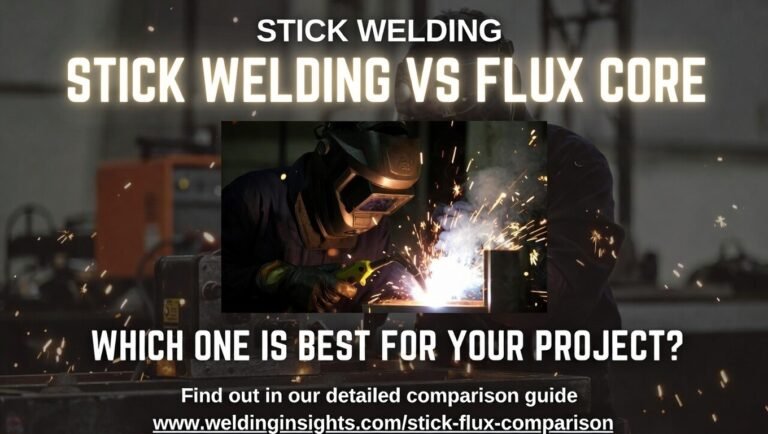
When you want to join metal pieces, welding is the way. But which type to pick? Stick welding and flux core welding are two popular choices. Each has its strengths and weaknesses. This guide will help you understand both types easily.
What is Stick Welding?
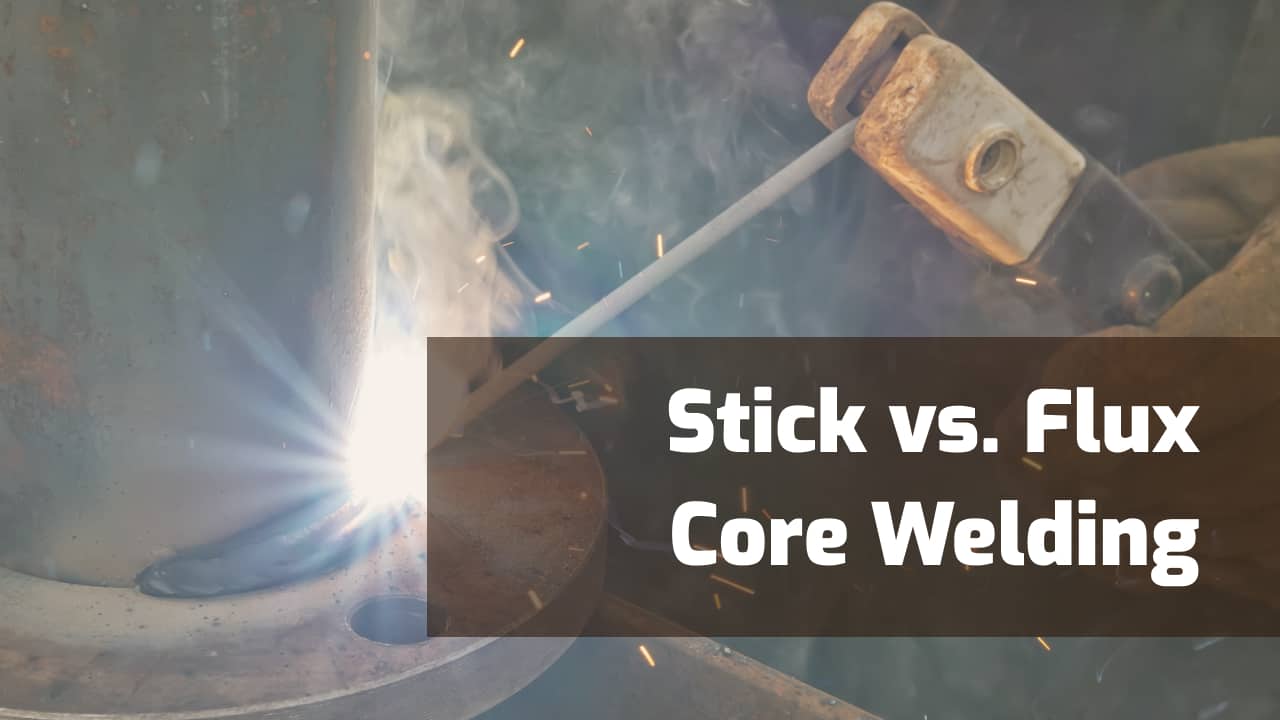
Stick welding, also called Shielded Metal Arc Welding (SMAW), uses a stick or electrode. The electrode is covered with a special coating. When you weld, the coating melts and creates a gas. This gas protects the weld from dirt and air. This keeps the weld strong.
Stick welding works well outside. It can handle wind and bad weather. It also works on rusty or dirty metal. That makes it a favorite for many workers.
How Does Stick Welding Work?
You hold the electrode close to the metal.
An electric current passes through the electrode.
The electrode melts and joins the metal pieces.
The coating melts, making gas to protect the weld.
After welding, the melted coating forms slag on the weld.
You remove the slag to see the clean weld underneath.
What is Flux Core Welding?
Flux core welding is similar to MIG welding but uses a special wire. This wire is hollow and filled with flux inside. When you weld, the flux creates gas to protect the weld. This means you don’t need a separate gas tank.
Flux core welding is good for outdoor work. It works well in wind and on dirty metals too. It is often easier to learn than stick welding.
How Does Flux Core Welding Work?
The machine feeds the wire automatically.
Electric current melts the wire and metal together.
The flux inside the wire melts and makes protective gas.
It also forms slag on top of the weld.
You clean the slag after welding.
Key Differences Between Stick Welding and Flux Core Welding
Feature
Stick Welding
Flux Core Welding
Electrode Type
Stick electrode with coating
Hollow wire filled with flux
Shielding Gas
Gas made by electrode coating
Gas made by flux inside wire
Equipment
Simple stick welder
Wire feeder and power source
Ease of Use
Harder to learn
Easier for beginners
Work Environment
Great for outdoors, wind, and dirty metal
Good for outdoors, but less tolerant to wind than stick
Clean-up
Slag must be chipped off
Slag and more spatter to clean
Cost
Lower equipment cost
Higher wire cost, but no gas tank needed
Weld Strength
Strong and reliable welds
Strong but may need more heat control
Credit: ssmalloys.com
Advantages of Stick Welding
Works well outdoors in wind and rain.
Good for rusty or dirty metals.
Simple machine, easy to move around.
Strong welds for many projects.
Lower cost for machine and supplies.
Disadvantages of Stick Welding
Harder to learn for beginners.
Slag must be cleaned after welding.
Electrodes wear out quickly and need replacement.
Not ideal for thin metals.
Credit: weldguru.com
Advantages of Flux Core Welding
Wire feeds automatically for faster welding.
Easier to learn and use.
No need for a gas tank.
Works well outdoors and in wind.
Good for many welding projects at home.
Disadvantages of Flux Core Welding
More smoke and fumes produced.
More spatter means more cleaning.
Flux-cored wire costs more than stick electrodes.
Needs more heat control to avoid burning the metal.
Which One Should You Choose?
Both types have good uses. It depends on your needs.
If you work outside a lot, stick welding is great. It handles bad weather and dirty metals well.
If you want something easier and faster, flux core welding is better. It feeds wire automatically and is simpler to use.
For beginners, flux core welding may be less tricky to start. But learning stick welding is useful for tough jobs.
Summary Table: Quick Look
Criteria
Stick Welding
Flux Core Welding
Best For
Outdoor, rough work
DIY, faster jobs
Learning Curve
Steeper
Easier
Equipment Cost
Lower
Moderate
Clean-up
Moderate (slag)
High (slag and spatter)
Portability
Highly portable
Less portable (needs wire feeder)
Tips for Beginners
Start with flux core welding for easy learning.
Practice welding on scrap metal first.
Always wear proper safety gear.
Learn how to clean slag and spatter well.
Try stick welding when ready for tougher jobs.
Frequently Asked Questions
What Type Of Welder Is Best For A Beginner?
A MIG welder suits beginners best due to its ease of use, continuous wire feed, and clean welds. Flux-cored welders work well outdoors but create more spatter. Stick welders are versatile but harder to master. TIG welders require advanced skills and coordination.
What Are The Disadvantages Of Flux Core?
Flux core welding produces slag that needs removal and creates more spatter. It generates excessive smoke and fumes. The flux-cored wire costs more than solid wire. It also puts higher heat into the weld, increasing distortion risk.
Is Stick Welding The Strongest Weld?
Stick welding creates strong, durable welds suitable for outdoor and heavy-duty jobs. Strength depends on technique and materials. It’s not always the strongest weld type but offers excellent versatility and reliability.
Is Stick Welding Becoming Obsolete?
Stick welding is not becoming obsolete. It remains essential for outdoor, dirty metal, and heavy-duty applications. Its affordability and versatility keep it relevant despite newer methods. Many professionals still prefer stick welding for its strong, reliable welds in challenging environments.
Conclusion
Stick welding and flux core welding both join metals well. Each has clear benefits and some downsides.
Think about your work type, budget, and skill level. Choose the welding type that fits your needs.
With practice, both can make strong, lasting welds. So pick one and start welding safely today!