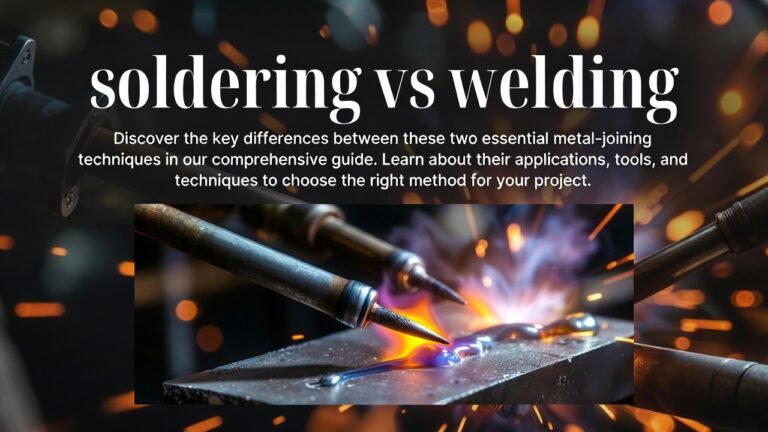
When we want to join metals, two common methods are soldering and welding. Both help connect metal parts. But they do it in very different ways.
What Is Soldering?
Soldering is a way to join metals using low heat. It uses a metal called solder. This solder melts and sticks the parts together. But the metals being joined do not melt.
People often use soldering in electronics and plumbing. It works well for small parts and delicate jobs.
How Does Soldering Work?
- Heat is applied with a soldering iron or small torch.
- The solder melts, but the metal pieces stay solid.
- The melted solder flows between the parts.
- When cool, the solder solidifies and holds parts together.
Where Is Soldering Used?
- Fixing circuit boards in electronics.
- Joining copper pipes in plumbing.
- Making jewelry repairs.
- Small metal crafts and delicate projects.
What Is Welding?
Welding is a process that melts the metals being joined. It uses very high heat. The metals melt and fuse together. This creates a strong bond.
Welding is common in building and heavy metal work. It is used when strength is very important.
How Does Welding Work?
- Very high heat melts the metal parts.
- The melted metals mix and join as one.
- When cooled, the metals form a strong, solid joint.
- Often, extra filler metal is added to the joint.
Where Is Welding Used?
- Building bridges and buildings.
- Making cars and heavy machines.
- Metal fabrication and repair.
- Shipbuilding and pipelines.
Key Differences Between Soldering and Welding
| Feature | Soldering | Welding |
|---|
| Heat Level | Uses low heat (below 450°C) | Uses very high heat (melts base metals) |
| Material Joined | Does not melt the base metals | Melts the base metals |
| Bond Strength | Weaker; good for electrical or plumbing | Very strong; good for heavy, structural work |
| Filler Material | Uses solder (a low melting metal) | Often uses welding rods or wire |
| Equipment Needed | Soldering iron or small torch | Welding machine or torch |
| Applications | Electronics, plumbing, jewelry | Construction, automotive, heavy metal work |
Why Choose Soldering?
Soldering is better for delicate or small parts. It uses less heat, so it won’t damage sensitive materials. It is easy to learn and use. Soldering is perfect for electrical connections and water pipes.
If you want to join thin wires or circuit boards, soldering is best. It is also cheaper and safer for small projects.
Why Choose Welding?
Welding is for strong and lasting joins. It melts the metal pieces together. This makes the joint as strong as the metal itself. Welding can handle heavy loads and rough use.
Use welding when you build cars, bridges, or metal frames. Welding is also needed for thick metals that must hold tight.
Summary: Soldering Vs Welding
Both soldering and welding join metals. But they work very differently.
- Soldering uses low heat and melts only solder.
- Welding uses high heat and melts the base metals.
- Soldering is good for small, delicate jobs.
- Welding is good for strong, heavy-duty jobs.
- Choose soldering for electronics and plumbing.
- Choose welding for construction and metalwork.
Which One Should You Use?
If you need a strong, permanent joint, welding is best. It can hold heavy weight and last a long time.
If your project is small or has parts that heat can damage, soldering is safer. It works well on electronics and copper pipes.
Think about your project needs. What material do you join? How strong should the joint be? What tools do you have? These questions help you pick the right method.
Final Thoughts
Soldering and welding are both useful skills. They help us build and fix many things.
Understanding their differences helps you choose the right method. It saves time, money, and effort.
Next time you join metals, remember: soldering for delicate, welding for strong.
Frequently Asked Questions
Is Soldering Just Mini Welding?
Soldering is not mini welding. Welding melts base metals for strong joints; soldering uses low heat and filler metal without melting. Soldering suits delicate, electrical, or plumbing tasks, while welding handles heavy-duty, structural connections.
Is Soldering Easier Than Welding?
Soldering is easier than welding due to lower heat and simpler equipment. It suits delicate or electrical tasks. Welding requires high heat and skills for strong, permanent joints.
When Should Soldering Be Used Instead Of Welding?
Soldering should be used for delicate, heat-sensitive, or electrical projects requiring low heat and non-structural bonds. Choose soldering for electronics, plumbing, and jewelry repairs. Welding suits heavy-duty, permanent, and structural metal connections where high strength is necessary.
Can Solder Hold Metal Together?
Solder can hold metal together by bonding surfaces with a filler metal at low heat. It creates a weaker joint than welding. Solder suits electrical or delicate metal connections, not heavy structural support. Use solder for light-duty metal joining or electronic repairs.