
Welding is a way to join metals by melting them together. Two common types are MIG and TIG welding. Both have good uses but work differently. This article explains Mig vs Tig welding in easy words.
What Is MIG Welding?
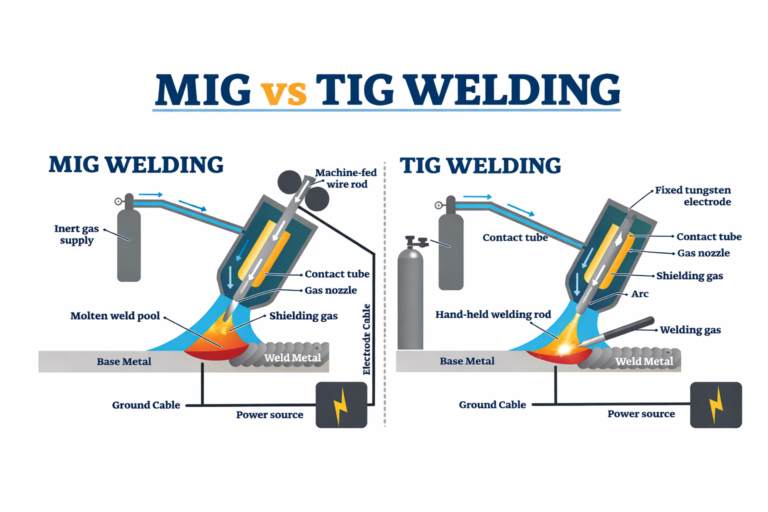
MIG means Metal Inert Gas welding. It uses a wire that melts to join metals. The wire comes from a spool and feeds into the weld area. A gas shield protects the hot metal from air.
How MIG Welding Works:
- A wire fed through a gun melts and joins metal pieces.
- Gas flows around the wire to stop air from making weak welds.
- The welder moves the gun along the joint to make a line of weld.
Mig Welding Pros
- Faster than TIG welding.
- Easy to learn for beginners.
- Works well on thick metals.
- Good for many types of metals.
- Great for big projects and repairs.
Mig Welding Cons
- Less precise than TIG welding.
- Produces more sparks and splatter.
- Not good for very thin metals.
- Welds can be rougher and less clean.
What Is TIG Welding?
TIG means Tungsten Inert Gas welding. It uses a non-melting tungsten electrode to create heat. A filler rod is added by hand to join metals. Like MIG, a gas shield protects the weld.
How TIG Welding Works:
- A tungsten rod creates heat without melting.
- The welder adds a filler rod by hand to fill the joint.
- Gas flows to keep the weld clean and strong.
- The welder moves slowly to make a smooth weld.
Tig Welding Pros
- Makes very clean and neat welds.
- Works well on thin metals like aluminum.
- Gives more control over the weld.
- Can weld many types of metals.
- Strong and precise joints.
Tig Welding Cons
- Slower than MIG welding.
- Needs more skill and practice.
- Equipment can be more expensive.
- Not ideal for very thick metals.
Comparing MIG and TIG Welding
Both MIG and TIG welding have good points. The best choice depends on your project. Let’s look at a simple table to compare.
| Feature | MIG Welding | TIG Welding |
|---|---|---|
| Speed | Fast | Slow |
| Skill Level | Easy for beginners | Needs practice |
| Weld Appearance | Rougher, more spatter | Clean and smooth |
| Metal Thickness | Thick metals | Thin metals |
| Cost | Lower equipment cost | Higher equipment cost |
| Common Uses | Repairs, construction, factories | Artistic work, aerospace, automotive |
When to Use MIG Welding
Choose MIG welding if you want fast work. It is simple and good for thick metals. It works well on steel and other common metals. Many beginners start with MIG welding because it is easy to learn.
MIG welding is good for:
- Building metal frames.
- Fixing cars and machines.
- Making large metal parts.
- Projects where speed matters.
When to Use TIG Welding
Use TIG welding if you need a nice, clean weld. It is best for thin metals like aluminum and stainless steel. TIG welding is good when strength and look are important.
TIG welding is good for:
- Making bike frames or car parts.
- Metal art and custom designs.
- Thin metal sheets.
- Projects needing strong, neat welds.
Which Welding Is Stronger?
Many people ask which weld is stronger. TIG welds are often stronger on thin metals because of good control. MIG welds are strong on thick metals and big jobs.
Strength depends on metal type, skill, and project. So, neither is always stronger. Use the right method for your work.
Cost and Equipment
MIG welding machines cost less and are easier to find. You get a full setup for lower price. They also use less gas.
TIG welding machines cost more. They need special parts and more gas. You also need extra tools for filler rods.
For beginners on a budget, MIG welding is better. For serious hobbyists or pros, TIG welding is a good choice.
Summary: Mig Vs Tig Welding
Let’s sum up the key points:
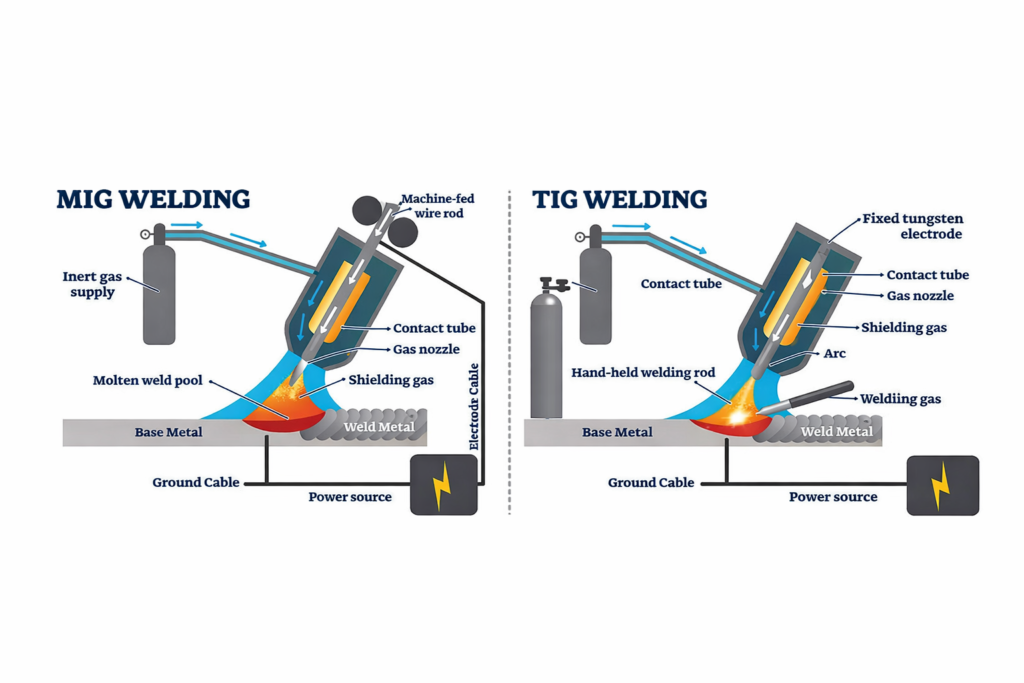
- MIG Welding is fast, easy, and good for thick metals.
- TIG Welding is slow, skillful, and perfect for thin metals.
- MIG welding is great for beginners and big jobs.
- TIG welding is best for clean, strong, and fine welds.
- Neither is always better; choose based on your needs.
Think about your project size, metal type, and skill before picking a method. Both MIG and TIG welding are useful tools. With practice, you can make strong metal joints.