
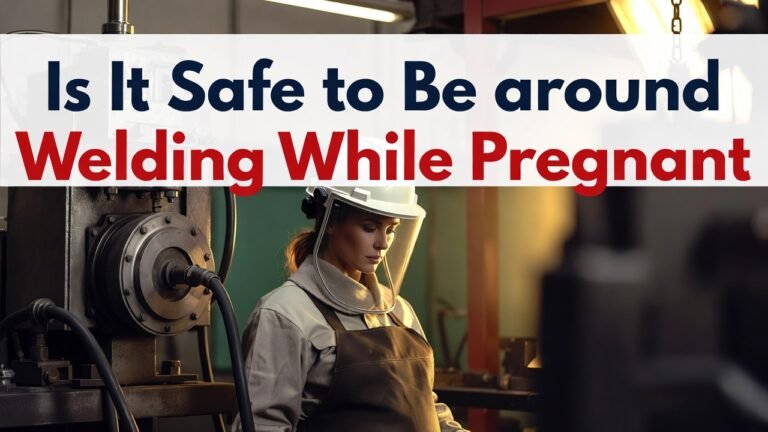
Executive Summary: A Clear and Immediate Answer
No, it is not considered safe for pregnant individuals to be around welding operations without stringent, verified protections in place. Exposure to welding fumes, gases, radiation, and the associated physical hazards presents significant risks to both maternal and fetal health. The recommended course of action is to avoid direct exposure entirely and implement rigorous administrative and engineering controls if avoidance is impossible.
This guidance is based on occupational health standards, toxicological research, and advisories from health authorities worldwide. This article will detail the specific risks, the science behind them, and the essential precautions that must be taken.
Disclaimer: This article is for informational purposes and is based on current occupational health and safety guidelines and medical understanding. It is not a substitute for professional medical or industrial hygiene advice. Always consult with qualified professionals for guidance specific to your situation.
Understanding the Risks: What Makes Welding Hazardous During Pregnancy?
Welding generates a complex mixture of hazards, each carrying potential implications for pregnancy.
1. Welding Fumes and Metals
The plume from welding contains ultrafine metal particles that can be inhaled and enter the bloodstream.
- Hexavalent Chromium (CrVI): Found in stainless steel welding fumes, it is a known human carcinogen and reproductive toxicant. It can cross the placental barrier.
- Manganese: Excessive manganese exposure is linked to neurotoxicity and may pose risks to fetal neurological development.
- Nickel, Aluminum, and Other Metals: Systemic exposure can have toxic effects. The developing fetus is particularly vulnerable to toxins.
2. Hazardous Gases
- Ozone (O3) and Nitrogen Oxides (NOx): Formed by the interaction of welding arcs with atmospheric oxygen, these gases are severe respiratory irritants. Compromised maternal respiratory health can affect oxygen delivery to the fetus.
- Shielding Gases (Argon, CO2, Helium): While inert, they can displace oxygen in confined spaces, leading to asphyxiation—a critical risk for the mother and fetus.
3. Radiation
- Ultraviolet (UV) Radiation: The welding arc emits intense UV light, which can severely damage the eyes (“welder’s flash”) and skin. More critically for pregnancy, there is no research establishing a safe threshold of UV exposure to the abdomen during pregnancy. Direct or reflected radiation reaching the abdominal area is a theoretical risk that must be avoided on a precautionary principle.
4. Physical Hazards
- Noise: Prolonged exposure to high noise levels from welding processes is a stressor and, in extreme cases, may be linked to maternal hypertension and potential hearing loss in the fetus.
- Heat Stress and Ergonomic Strain: The welding environment can be hot and physically demanding, increasing the risk of dehydration, fatigue, and musculoskeletal injury—all of which are best avoided during pregnancy.
What Does the Science and Expert Guidance Say?
Authoritative bodies are clear on the level of caution required:
- Occupational Safety and Health Administration (OSHA): Classifies welding fumes as a potential reproductive hazard. They mandate the Hierarchy of Controls: Elimination, Substitution, Engineering Controls, Administrative Controls, and PPE.
- American Conference of Governmental Industrial Hygienists (ACGIH): Sets Threshold Limit Values (TLVs) for airborne substances, with specific notations for materials that can be absorbed through the skin or are recognized reproductive hazards.
- Medical Research: Studies have indicated potential associations between welding fume exposure and adverse outcomes, including low birth weight, preterm delivery, and developmental issues. The ethical limitations of human studies mean a precautionary approach is the medical and industrial hygiene standard.
Essential Precautions: A Framework for Safety
If complete avoidance of welding areas is not feasible (e.g., for a supervisor, inspector, or partner in a shared workspace), the following controls, in this order of priority, are non-negotiable.
1. Elimination and Substitution
- Remove the Pregnant Worker from the Hazardous Area: This is the most effective control. Can tasks be reassigned? Can inspections be conducted when welding is not active?
- Consider Alternative Processes: Can a less fume-generating process (like laser welding) be used?
2. Engineering Controls
- Local Exhaust Ventilation (LEV): A properly designed and maintained fume extraction system (hood or gun-mounted) must be in place, capturing fumes at the source. General ventilation is NOT sufficient.
- Physical Barriers: Use welding screens to contain UV radiation and spatter. Ensure the pregnant individual is never in the line-of-sight of the welding arc.
3. Administrative Controls
- Strict Exposure Limitation: Minimize time spent in areas where welding occurs. Schedule visits or work during breaks in welding activity.
- Comprehensive Training: The pregnant individual and all welders must be trained on these specific risks and protocols.
- Hygiene Practices: Enforce strict hand-washing policies and prohibit eating, drinking, or storing personal items in welding areas to prevent ingestion of contaminants.
4. Personal Protective Equipment (PPE) – The Last Line of Defense
PPE alone is insufficient but must be used in conjunction with the controls above.
- Respiratory Protection: A tight-fitting, properly fit-tested respirator (e.g., N95, P100, or half-mask with appropriate filters) is essential if there is any chance of fume exposure. A PAPR (Powered Air-Purifying Respirator) may offer higher protection and comfort.
- Full-Body Protection: Flame-resistant clothing that covers the arms and legs, along with gloves, is mandatory.
- Consult Healthcare Providers: A doctor and an industrial hygienist should be involved in selecting appropriate PPE, as pregnancy can affect fit and comfort.
Critical Advice for Pregnant Welders and Their Partners
- For the Pregnant Welder: You must inform your employer and your healthcare provider immediately. This initiates your right to a risk assessment and the implementation of the controls described above. Do not rely on general workshop ventilation.
- For Partners/Family Members Who Weld: Do not bring contaminated work clothes home. Change and shower at work if possible. Launder work clothes separately from the family laundry to prevent secondary exposure at home.
Conclusion: A Principle of Precaution
The combination of known toxicants, lack of definitive safe-exposure data for pregnant individuals, and the irreversible nature of potential harm leads to a clear expert consensus: prudent avoidance is the safest path.
Prioritize health by utilizing the Hierarchy of Controls rigorously. Always consult with your occupational health department and your prenatal healthcare provider for personalized guidance based on your specific workplace and pregnancy. Your safety and the safety of your developing child are paramount, and the risks associated with welding exposure are not worth taking.