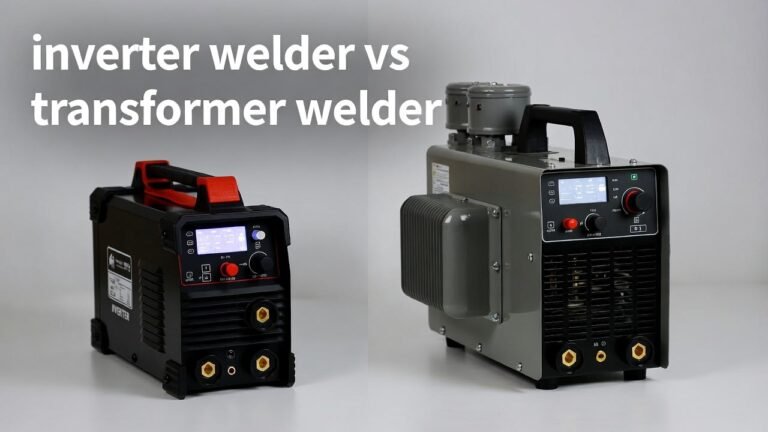
If you want to start welding, you will see two main types of machines. These are inverter welders and transformer welders. Both types help join metals. But they work in different ways. Which one should you pick? This article will explain their differences. It will help you understand which welder fits your needs.
What Is a Transformer Welder?
A transformer welder is the older type. It uses a big metal core called a transformer. This changes the power from the wall to a level you can use for welding. Transformer welders are heavy and large. They need strong power to work. They are simple machines. Many people trust them because they last long and are easy to fix.
What Is an Inverter Welder?
An inverter welder uses modern electronics. It changes the power to a high frequency first. Then it lowers the power to the right level for welding. This makes the machine small and light. It can do more things than a transformer welder. Inverter welders use less energy and work well for many types of welding jobs.
Read How Do I Know If Welding is for Me: Ultimate Career Guide
Key Differences Between Inverter and Transformer Welders
| Feature | Inverter Welder | Transformer Welder |
|---|
| Size & Weight | Small and light, easy to carry | Large and heavy, hard to move |
| Power Use | Uses less electricity, energy-efficient | Uses more electricity, less efficient |
| Performance | Smoother arc, better control, pulsed welding | Good for heavy-duty, steady high power |
| Durability | More sensitive to dust and moisture | Strong, works well in rough places |
| Cost | More expensive to buy, cheaper to run | Cheaper to buy, costs more to run |
| Maintenance | Complex electronics, hard to fix | Simple parts, easy to repair |
| Use Cases | Good for portable jobs and fine work | Best for heavy and long welding jobs |
How Do They Work?
Transformer welders use a coil of wire wrapped around a metal core. When electricity flows, the core changes the power level. This makes a strong electric arc for welding. But the machine is heavy and uses a lot of power.
Inverter welders first change the power to very high frequency. Then they use electronic parts to lower the power. This process makes the machine smaller. It also gives better control of the welding arc. You get smoother and cleaner welds.
Advantages of Transformer Welders
- Strong and durable: They last a long time.
- Simple to use: Easy to understand and fix.
- Good for tough environments: Works well with dust and dirt.
- Lower upfront cost: You pay less at first.
- Consistent power: Great for long welding jobs.
Advantages of Inverter Welders
- Lightweight and portable: Easy to carry anywhere.
- Energy efficient: Saves electricity and money.
- Better arc control: Makes smooth and neat welds.
- More features: Can do different welding styles.
- Modern technology: Uses less space.
Disadvantages of Transformer Welders
- Heavy and hard to move.
- Uses more electricity.
- Not good for fine or detailed work.
- Less control over the welding arc.
Disadvantages of Inverter Welders
- More expensive upfront cost.
- Electronics can be damaged by dust or moisture.
- Needs stable power supply to work well.
- More difficult to repair if broken.
Which One Should You Choose?
The answer depends on what you need. Here are some points to help:
- If you want a machine for heavy work in a workshop, a transformer welder works well. It is strong and simple.
- If you need a light machine to carry around, an inverter welder is best. It saves power and gives good results.
- If you plan to weld for a long time, consider running costs. Inverters save money over time.
- If you work in a dirty place, a transformer welder may be better. It handles dust and dirt well.
- If you want better control and clean welds, go for an inverter welder.
Summary Table: When to Choose Each Welder
| Need | Transformer Welder | Inverter Welder |
|---|
| Heavy, long welding jobs | Best choice | Not ideal |
| Portable welding work | Not easy to move | Perfect choice |
| Low upfront cost | Cheaper | More expensive |
| Energy saving | Uses more power | Uses less power |
| Working in rough places | Good for dust and dirt | Needs clean environment |
| Need smooth, precise welds | Less control | Better control |
Final Thoughts
Both inverter and transformer welders have strong points. Transformer welders are simple, tough, and good for heavy jobs. Inverter welders are small, smart, and save energy. Think about your work style and budget. This will help you pick the right welder. Always choose a machine that fits your welding needs. That way, you will get the best work done with less trouble.
Frequently Asked Questions
What Is A Disadvantage Of An Inverter Type Welding Machine?
A disadvantage of an inverter welding machine is its sensitivity to power fluctuations, requiring a stable power source for best performance. It also tends to have higher upfront costs compared to traditional transformer welders.
What Are The Disadvantages Of Transformer Inverter?
Transformer inverters are larger, heavier, and costlier than transformerless inverters. They offer lower efficiency and less portability.
Why Is An Inverter Welder Better?
An inverter welder is better because it is lightweight, energy-efficient, portable, and offers precise, stable arc control. It consumes less power and is easier to handle than traditional transformer welders.
Is It Easier To Weld With An Inverter Welder?
Yes, inverter welders are easier to use due to their lightweight design and precise arc control. They offer better portability and smoother welding, making them ideal for beginners and versatile tasks.