
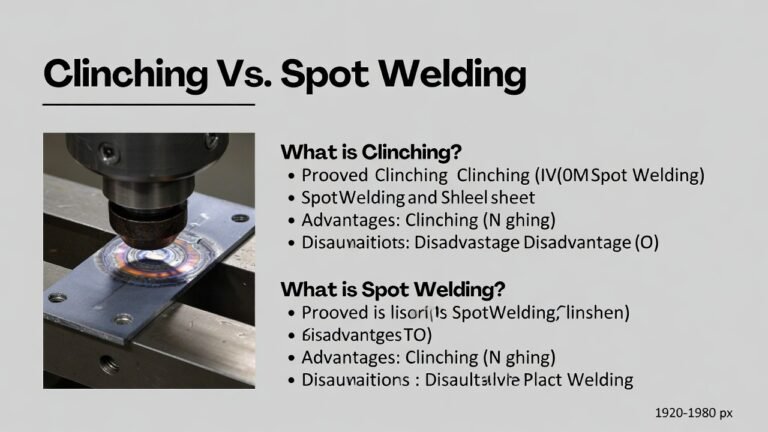
In many industries, joining metal sheets is very important. Two common methods are clinching and spot welding. Both connect metal parts but work in different ways. This article will explain the differences clearly.
What is Clinching?
Clinching joins two or more sheets of metal without heat. It uses a special tool to press and lock the sheets together. The metal bends and hooks around, making a strong joint. No screws, bolts, or rivets are needed.
Since clinching does not use heat, it is called a cold joining method. It is quick and clean. The metal does not melt or change its shape much.
How Does Clinching Work?
- The machine presses two metal sheets together.
- The tool pushes the metal to form a hook or interlock.
- This hook holds the sheets tightly.
- The joint is permanent and strong.
Where Is Clinching Used?
Clinching is common in making HVAC duct fittings. It is also used in car parts, furniture, and appliances. It works well when welding is hard to do or not needed.
What is Spot Welding?
Spot welding joins metal sheets by using heat. An electric current passes through the metal, melting a small spot. When it cools, the metal fuses together. This makes a strong bond at the melted points.
Spot welding is a type of resistance welding. It is very popular in industries like car manufacturing.
How Does Spot Welding Work?
- Two metal sheets are placed between electrodes.
- Electric current passes through the metals.
- Heat melts a small area, making a weld spot.
- The metal cools and forms a strong joint.
Where Is Spot Welding Used?
Spot welding is used a lot in making car bodies. It is also used in electronics and metal furniture. It works best with thin metal sheets.
Key Differences Between Clinching and Spot Welding
| Feature | Clinching | Spot Welding |
|---|---|---|
| Joining Method | Cold mechanical joining, no heat | Heat-based, melts metal at spots |
| Material Used | No filler or bolts needed | Metal fuses at weld spots |
| Metal Thickness | Works with thin to medium sheets | Best for thin sheets |
| Speed | Fast and clean process | Fast but needs cooling time |
| Equipment Cost | Lower initial cost | Higher initial cost |
| Heat Effect | No heat, no metal distortion | Heat can cause metal changes |
| Joint Strength | Strong mechanical hold | Strong metallurgical bond |
| Suitability for Coated Metals | Good, coatings remain intact | May damage coatings with heat |
Advantages of Clinching
- Does not use heat or electricity.
- Safe to use and low risk of fire.
- Preserves metal coatings and paint.
- Works well for coated or painted sheets.
- Lower cost for small shops.
- Quick setup and fast joining.
- Good for different metal types.
Advantages of Spot Welding
- Makes very strong metal bonds.
- Good for mass production.
- Works well with thin steel sheets.
- Process is automated in many factories.
- Allows quick assembly in car plants.
Disadvantages of Clinching
- Not always as strong as welding.
- Requires access to both sides of metal.
- Not good for very thick metals.
- Joint shape may be visible on surface.
Disadvantages of Spot Welding
- High initial cost for machines.
- Needs power and cooling systems.
- Heat can cause metal warping.
- Not good for thick metal sheets.
- May damage painted or coated surfaces.
Choosing Between Clinching and Spot Welding
Which method is better depends on your needs.
If you want no heat and low cost, clinching is good.
If you need very strong joints and have thin metal, spot welding works well.
Think about the metal type, thickness, and if you want to keep paint.
Also consider the cost of equipment and power supply.