
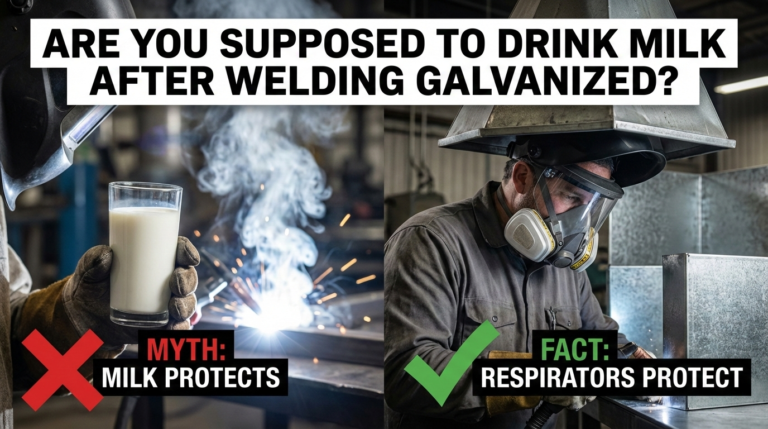
Many people wonder if drinking milk after welding galvanized steel helps. This question comes from old stories and advice passed down. But is it true? Let’s look at the facts.
What Happens When You Weld Galvanized Steel?
Galvanized steel is steel coated with zinc. Zinc helps stop rust. When you weld galvanized steel, the heat melts the zinc. This creates zinc fumes. These fumes can be harmful if you breathe them in.
Breathing zinc fumes can cause a sickness called metal fume fever. It feels like having the flu. You may get chills, fever, cough, and tiredness. This sickness usually goes away in a day or two. But it is not fun to have.
Is Drinking Milk After Welding Helpful?
Some people say drinking milk after welding galvanized steel helps avoid metal fume fever. But this is a myth. There is no proof that milk stops metal fume fever. Let’s see why.
How Zinc Fumes Affect Your Body
Zinc fumes enter your body through your lungs. When you breathe the air, the fumes go into your lungs. They can cause inflammation and sickness there. Your stomach does not get these fumes.
Where Does Milk Go?
When you drink milk, it goes to your stomach and digestive system. Milk cannot stop the fumes in your lungs. So, milk cannot protect you from the zinc fumes you breathe in.
Scientific Studies Say No
Health experts and safety groups say milk does not prevent metal fume fever. The Health and Safety Executive (HSE) warns people not to trust old stories about milk. They say milk does not stop metal fume fever.
Safety Disclaimer: Metal fume fever is a serious respiratory condition. This content is for educational purposes and does not replace professional medical advice or OSHA safety standards. Always use a certified respirator and proper ventilation when welding. If symptoms persist, seek medical attention immediately.
Both the Occupational Safety and Health Administration (OSHA) and the American Welding Society (AWS) explicitly state that there is no medical evidence to support the ‘milk myth.’ Instead, they mandate the use of engineering controls—like local exhaust ventilation—and personal protective equipment (PPE) to keep workers safe.
Can Milk Make Things Worse?
Drinking milk may not only be useless but might cause problems. Milk can increase mucus in your throat. More mucus can make coughing and breathing harder. Also, milk has fats that might bind some toxins. This could keep toxins longer in your body.
So, drinking milk after welding might make some symptoms worse. It is not a good way to protect yourself from zinc fumes.
What Is the Right Way to Stay Safe?
Instead of drinking milk, focus on real safety steps when welding galvanized steel. Here are important tips:
- Use proper ventilation. Work in a place with good airflow to remove fumes.
- Wear a respirator mask. A good mask helps stop you from breathing zinc fumes.
- Remove the zinc coating if possible. Grinding off the zinc before welding lowers fumes.
- Take breaks outdoors. Fresh air helps clear any fumes you breathe.
- Use proper welding techniques. This can reduce the amount of fumes made.
According to OSHA standard 1910.1000, employers must ensure that workers are not exposed to zinc oxide fumes above specific legal limits. The AWS recommends that welders always use a respirator specifically rated for metal fumes (such as a P100 filter) when working with galvanized coatings to prevent respiratory injury.
What To Do If You Feel Sick After Welding
If you feel sick after welding galvanized steel, follow these steps:
- Stop welding and go to fresh air immediately.
- Rest and drink water to stay hydrated.
- If you have fever, chills, or cough, see a doctor.
- Tell the doctor you welded galvanized steel and breathed fumes.
Do not rely on milk to fix the problem. Seek medical help if needed.
Why Do People Still Believe in Milk?
Some old stories say milk helps with metal fume fever. These stories may come from times when people had no other advice. Milk feels soothing for the stomach. So, some think it helps after welding.
But feeling better in your stomach is not the same as stopping lung sickness. Zinc fumes affect your lungs, not your stomach.
Summary Table: Milk and Welding Galvanized Steel
| Claim | Fact |
|---|---|
| Milk stops metal fume fever | No scientific proof; does not protect lungs |
| Milk neutralizes zinc fumes | Zinc fumes enter lungs; milk goes to stomach |
| Milk helps symptoms after welding | May increase mucus; might worsen symptoms |
| Best way to avoid sickness | Use ventilation, respirators, and safety steps |
Final Thoughts
Do not trust old advice about drinking milk after welding galvanized steel. It is an old wives’ tale. Milk does not stop metal fume fever. The best way to stay safe is to use proper gear and ventilation.
Always protect your lungs first. Use a good mask, work outside or in a ventilated room. If you feel sick, get fresh air and medical help.
Remember, safety comes from good habits, not milk.
Frequently Asked Questions
Does Drinking Milk Help When Welding Galvanized?
Drinking milk does not prevent metal fume fever from welding galvanized steel. Proper ventilation and respirators offer real protection. Milk only soothes stomach upset but cannot neutralize toxic zinc fumes inhaled into the lungs. Avoid relying on milk; use safety gear instead for effective protection.
Is It Safe To Eat Food Grown In Galvanized Steel?
Eating food grown in galvanized steel containers is generally safe if the metal is intact and not corroded. Avoid using rusty or damaged galvanized steel, as zinc can leach into food. Use food-safe materials for best safety and health.
How To Treat Galvanized Welding Sickness?
Treat galvanized welding sickness by resting and drinking plenty of water. Use fresh air or oxygen to ease breathing. Avoid smoking and seek medical help if symptoms worsen. Milk does not prevent or cure this sickness; rely on proper ventilation and protective gear to avoid it.
Is Galvanized Metal Safe To Drink From?
Galvanized metal is unsafe for drinking. Acidic drinks can dissolve zinc coating, causing harmful zinc leaching. Avoid using galvanized containers for beverages.