
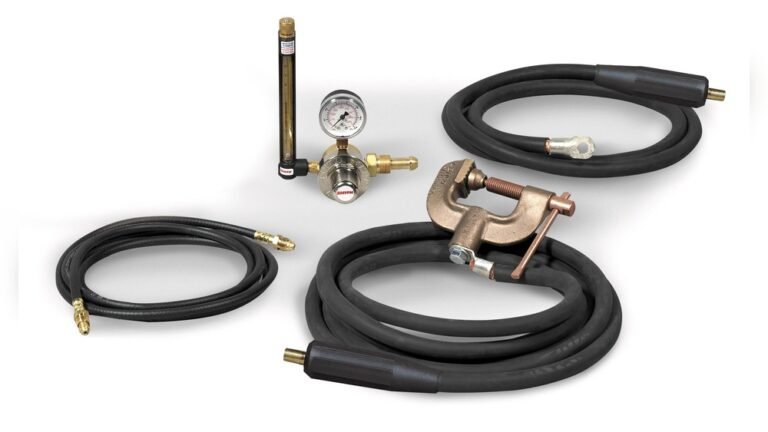
When you’re working with a MIG welder, a crucial piece of equipment you’ll encounter is the MIG work clamp. This clamp, also known as a ground clamp, is more than just a metal clip; it’s essential for completing the electrical circuit needed for welding. Without a proper connection through the work clamp, your MIG welder won’t be able to produce the arc necessary to join metal. Understanding how to use it correctly ensures safety, efficiency, and the quality of your welds.
Why The Work Clamp Matters
The MIG welding process relies on an electrical circuit. The welding gun provides the positive side of the circuit, delivering electricity to the wire and the workpiece. The work clamp connects the negative side of the circuit to the metal you are welding. This connection allows the electricity to flow from the power source, through the clamp, into the workpiece, and back to the welder, creating the arc that melts the metal. A poor connection can lead to erratic arcs, spatter, and weak welds.
Selecting The Right Work Clamp
Not all work clamps are created equal. The size and type of clamp you need depend on the amperage of your welder and the type of work you do.
Amperage Rating
Work clamps are rated for a specific amperage. Using a clamp that is under-rated for your welder can cause it to overheat, melt, or fail. For lower amperage welders (under 150 amps), a smaller clamp might suffice. However, for higher amperage machines (200 amps and above), you’ll need a heavy-duty clamp designed to handle the electrical load. Always check the clamp’s specifications to ensure it matches or exceeds your welder’s maximum output.
Clamp Design
There are several common designs for MIG work clamps:
- C-Clamps: These are robust and offer a strong grip, making them suitable for thicker materials or situations where the clamp needs to stay firmly attached for extended periods.
- Spring-Loaded Clamps: These are quick to attach and detach. They use a strong spring to maintain pressure on the workpiece.
- Magnetic Clamps: These use magnets to hold the clamp in place. They are convenient for quick setup but may not provide as secure a connection on painted or dirty surfaces.
Material And Construction
Look for clamps made from high-conductivity copper or brass. These metals are excellent at conducting electricity, which is vital for a good weld. The clamp should have a solid construction with minimal plastic parts that could melt or break. The connection point for the welding cable should be secure and well-insulated.

Credit: americantorchtip.com
Proper Placement Of The Work Clamp
Where you place the work clamp is as important as the clamp itself. The goal is to create the shortest and most direct path for the electricity to travel to the welding area.
Proximity To The Weld
Ideally, the work clamp should be placed as close as safely possible to the area you are welding. This minimizes the resistance in the electrical path. A longer cable run increases resistance, which can lead to voltage drop and a weaker welding arc.
Clean Metal Contact
This is arguably the most critical factor for a good ground connection. The clamp must make direct contact with clean, bare metal. Rust, paint, grease, dirt, or even thick mill scale can act as insulators, preventing electricity from flowing properly.
Pro Tip: If you’re welding on a painted or rusty surface, use a wire brush or an angle grinder to create a small, clean spot for the clamp to attach. Ensure the clamp’s jaws are firmly gripping this clean area.
Secure Grip
Once placed, ensure the clamp has a firm and secure grip on the workpiece. A loose clamp can move during welding, interrupting the circuit and causing inconsistent welds. If using a spring-loaded clamp, squeeze the handles firmly to engage the spring. For C-clamps, tighten them sufficiently to ensure good contact.
Connecting The Work Clamp To The Welder
The work clamp connects to your MIG welder via a ground cable. This cable is usually a thick, flexible wire designed to carry high currents.
Cable Condition
Inspect the ground cable regularly for any signs of damage, such as frayed insulation, exposed wires, or corroded connectors. A damaged cable is a safety hazard and will impair your welding performance. If you find damage, the cable should be replaced immediately.
Connector Type
The end of the ground cable that connects to the welder usually has a specific connector, such as a DINSE connector or a clamp-style lug. Ensure this connector is clean and fits snugly into the corresponding port on your welder. A loose connection here can also cause problems.
Cable Length
While you want the clamp close to the workpiece, the ground cable itself shouldn’t be excessively long. Longer cables mean more resistance. If you need to weld far from your welder, consider using an extension cord that is rated for the amperage draw of your machine, or reposition your welding setup.

Credit: www.lincolnelectric.com
Common Issues And Troubleshooting
Even with the best practices, you might encounter issues with your work clamp. Here are some common problems and how to fix them:
Inconsistent Arc
- Cause: Loose clamp, dirty contact point, damaged cable.
- Solution: Ensure the clamp is firmly attached to clean metal. Inspect the cable and connections for damage.
Spatter
- Cause: Often a sign of a poor ground connection, leading to an unstable arc.
- Solution: Re-check clamp placement, clean the contact area thoroughly, and ensure a secure grip.
Overheating Clamp
- Cause: Clamp is under-rated for the amperage, or the connection is poor, causing resistance.
- Solution: Use a heavier-duty clamp rated for your welder’s amperage. Improve the connection to reduce resistance.
Clamp Falling Off
- Cause: Inadequate grip, vibration, or thin material.
- Solution: Use a clamp with a stronger grip, reposition it for better contact, or consider using a C-clamp for a more secure hold.
Safety Precautions
Working with electricity and welding requires strict adherence to safety rules.
Never Weld Without A Ground
Always ensure the work clamp is properly connected before starting to weld. Operating a MIG welder without a ground can damage the machine and is extremely dangerous.
Insulation
Keep the ground cable and the clamp itself in good condition. Damaged insulation can lead to electric shock. Always wear appropriate welding gloves when handling the clamp and connecting/disconnecting cables.
Work Area
Ensure the area around your workpiece is free of flammable materials. A good ground connection is essential for a stable arc, but a stable arc can still cause sparks.

Credit: blog.red-d-arc.com
Comparing Work Clamp Types
Here’s a look at how different clamp types stack up for various welding situations.
| Feature | Spring-Loaded Clamp | C-Clamp | Magnetic Clamp |
|---|---|---|---|
| **Ease of Use** | Very Easy (quick on/off) | Moderate (requires tightening) | Very Easy (instant attachment) |
| **Grip Strength** | Good | Excellent | Fair to Good (depends on surface) |
| **Reliability** | High (if clean contact) | Very High | Moderate (can slip on non-ferrous) |
| **Best For** | General purpose, frequent repositioning | Thick materials, permanent setups | Quick setups, light fabrication |
| **Amperage** | Available in various ratings | Typically robust, high amperage rated | Usually lower to moderate amperage |
Work Clamp Maintenance
To ensure your work clamp performs reliably, a little maintenance goes a long way.
Regular Cleaning
Periodically clean the jaws of the clamp to remove any build-up of weld spatter or corrosion. This ensures good electrical contact every time.
Connection Checks
Frequently check the connection between the ground cable and the clamp itself. Ensure the cable lug is tight and free of corrosion. A loose or corroded