
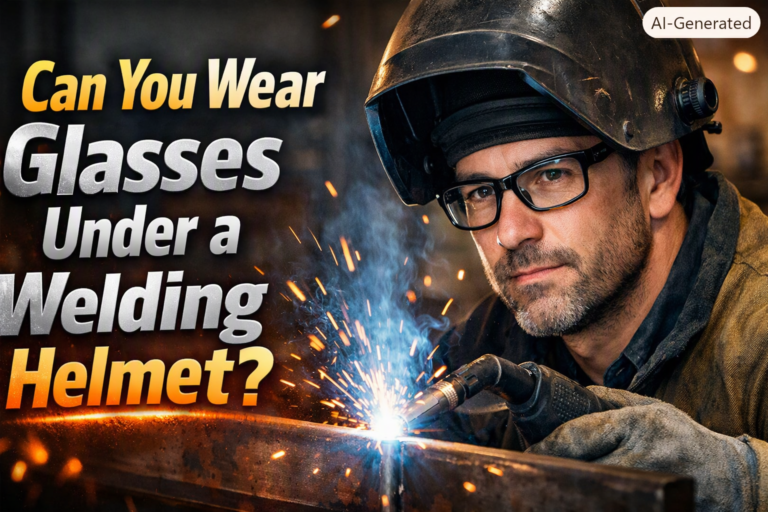
Welding is a job that demands both skill and safety. One common question among welders is whether you can wear glasses under a welding helmet. Many people need vision correction for clear, accurate work, but they also need strong protection for their eyes and face. Finding the right balance can feel tricky, especially if you’re new to welding or have never combined safety gear with prescription eyewear before.
Why Vision Clarity Matters In Welding
Welding involves joining metals using intense heat and light. Clear vision is not just about comfort—it’s a matter of precision and safety. Poor eyesight can lead to mistakes, misaligned welds, or even accidents. The American Welding Society notes that nearly 90% of welders rely on glasses, either for vision correction or for additional protection.
Welding arcs emit ultraviolet (UV) and infrared (IR) radiation. Prolonged exposure can lead to “arc eye” or permanent damage. So, wearing proper eye protection is essential, but so is being able to see your work clearly. That’s why many welders look for ways to combine their prescription glasses with a welding helmet.
Can You Wear Glasses Under A Welding Helmet?
The simple answer is yes—you can wear glasses under a welding helmet. Most modern welding helmets are designed with enough space to fit standard eyeglasses. However, there are important details to consider so you stay comfortable and safe.
What To Expect
- Fit and Comfort: The helmet should not press against your glasses. If it does, you might experience headaches, or your glasses could shift during work.
- Fogging: Heat and sweat can cause glasses to fog up, reducing visibility at critical moments.
- Lens Scratching: If your glasses touch the helmet’s lens, both can get scratched, making vision worse.
- Helmet Size: Oversized or very tight helmets can create pressure points, especially around the temples and nose.
Here’s how different helmet types compare for glasses wearers:
| Helmet Type | Glasses Compatibility | Comfort Level |
|---|---|---|
| Standard Flip-Front | Good for most frames | Medium |
| Auto-Darkening | Fits larger glasses | High |
| Fixed-Shade | Can be tight for big frames | Low to Medium |
Prescription Glasses Vs. Alternatives
There are a few ways to handle vision correction while welding. Each has advantages and drawbacks.
1. Regular Glasses Under A Helmet
Most welders start this way. It’s simple, but sometimes not the most comfortable.
2. Prescription Safety Glasses
These are made from impact-resistant materials and meet safety standards. They combine vision correction with protection, but can be more expensive.
3. Helmet Lens Inserts
Some helmets allow you to add prescription lens inserts. This keeps your regular glasses safe from sparks and fog, but not all helmets support inserts.
4. Contact Lenses
Contacts free you from the bulk of glasses, but they are not recommended for all welders. Metal dust or fumes can cause irritation. The American Optometric Association warns that welding environments are risky for contact wearers, especially if proper ventilation is lacking.
Here’s a quick comparison:
| Option | Protection Level | Comfort | Cost |
|---|---|---|---|
| Regular Glasses | Low to Medium | Medium | Low |
| Prescription Safety Glasses | High | High | High |
| Lens Inserts | High | High | Medium |
| Contact Lenses | Low | High | Medium |
Practical Tips For Wearing Glasses With A Welding Helmet
Making glasses and helmets work together is possible with a few smart strategies:
- Choose the Right Helmet: Look for helmets labeled “over-the-glasses” or “roomy fit.” Try before you buy, if possible.
- Use Anti-Fog Sprays or Wipes: These reduce fogging, especially during long welds.
- Check for Pressure Points: Adjust the helmet’s straps and position until nothing presses on your glasses’ arms or nose bridge.
- Clean Both Lenses Often: Soot and sparks can cloud your vision. Use a soft cloth, not your shirt.
- Replace Scratched Lenses: Both your glasses and helmet lens should be clear for safety.
- Consider Side Shields: For extra protection from sparks, side shields can be added to some glasses.
A common mistake is buying the cheapest helmet and hoping it will fit. An uncomfortable helmet leads to poor focus and safety risks. Instead, prioritize comfort and fit, even if it means spending a little more.
Real-world Example
Tom, a sheet metal welder with 20 years’ experience, started with regular glasses and a basic helmet. He soon noticed headaches from pressure points and foggy lenses. After switching to a helmet with an insert for prescription lenses, his vision improved, and he could work longer without discomfort. Many experienced welders share similar stories—investing in the right setup pays off.
Safety Standards And Regulations
According to OSHA (Occupational Safety and Health Administration) standards, eye protection must meet ANSI Z87.1 requirements. Regular streetwear glasses do not meet this standard, but prescription safety glasses do. Always check your gear for compliance, especially if you work for an employer with strict safety rules.
For more detail, refer to the official OSHA Eye Protection guidelines.
Frequently Asked Questions
Can I Wear Sunglasses Under A Welding Helmet?
No, standard sunglasses do not offer enough protection from welding arcs. Use approved welding lenses or auto-darkening filters only.
What Is The Best Type Of Welding Helmet For Glasses Wearers?
Helmets with a roomy interior or those specifically marked for “over-the-glasses” use are best. Auto-darkening helmets are also a popular choice due to their extra space and convenience.
Do Prescription Glasses Protect Against Sparks And Debris?
Regular prescription glasses offer limited protection. For full safety, use prescription safety glasses that meet ANSI Z87.1 standards.
Can I Use Contact Lenses While Welding?
It’s possible, but not recommended. Contact lenses can trap fumes or particles and cause irritation or injury. Always wear approved safety eyewear over contacts if you must use them.
How Do I Stop My Glasses From Fogging Inside The Helmet?
Use anti-fog sprays, wipes, or choose helmets with built-in ventilation. Keeping both your glasses and helmet lens clean also helps reduce fogging.
Welding is demanding work, and clear vision is non-negotiable. With the right helmet and a smart approach, you can wear glasses under a welding helmet safely and comfortably. Take time to find the best combination for your needs—your eyes will thank you for it.