
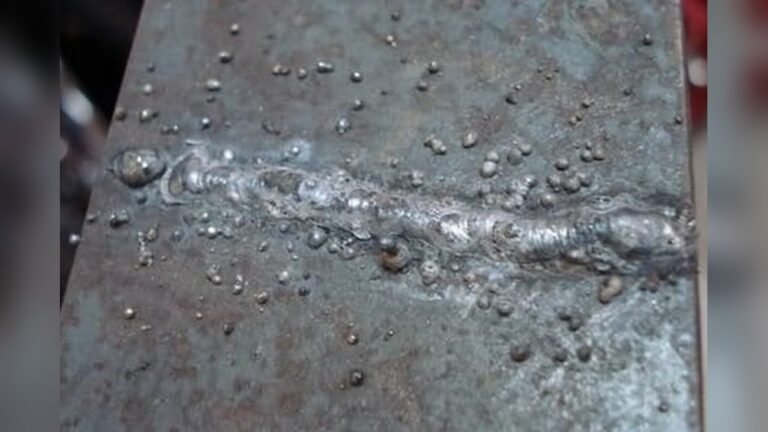
When you use a flux core welder, you expect smooth welding with minimal problems. But sometimes, you hear loud popping sounds or see excessive spatter flying around. These issues can ruin your welds, waste materials, and make your workspace messy.
Understanding why this happens—and how to fix it—can help you weld better and safer.
What Causes Popping And Spattering In Flux Core Welding?
Flux core welding is popular because it works well outdoors and on dirty metal. However, several factors can lead to popping and spattering:
- Incorrect voltage and wire feed speed
- Dirty or rusty metal surfaces
- Bad welding technique
- Wrong wire size or type
- Faulty machine or worn parts
If you hear constant popping, it means something is wrong with your setup or process.
Common Settings Mistakes
Let’s look at typical settings mistakes that lead to problems. See the comparison between ideal and problematic settings:
| Setting | Ideal | Problematic |
|---|---|---|
| Voltage | 18–21V (for 0.035” wire) | Too low/high (under 16V or over 24V) |
| Wire Feed Speed | 150–220 IPM | Too slow/fast (below 120 or above 250 IPM) |
Fixing Flux Core Welder Popping And Spattering
Solving these issues starts by checking your setup, technique, and materials.
1. Adjust Voltage And Wire Feed Speed
Your machine’s settings control the arc. If voltage is too low, the wire melts in bursts, causing popping. If feed speed is too high, spatter increases.
- Start with recommended settings from the wire packaging.
- Adjust voltage up or down in small steps while watching the arc.
- If the arc sounds smooth and steady, you’re close to the right settings.
This table shows how different wire feed speeds affect spatter:
| Wire Feed Speed | Spatter Level |
|---|---|
| 120 IPM | High |
| 180 IPM | Medium |
| 220 IPM | Low |
2. Clean Your Metal Surfaces
Dirty surfaces cause poor electrical contact. Paint, rust, and oil block the arc, making it unstable.
- Use a wire brush or grinder to clean the area before welding.
- Remove thick rust and paint for best results.
- Even small amounts of oil can increase spatter.
3. Use The Right Wire Type And Size
Flux core wires come in different sizes and types. Using the wrong one can cause popping.
- Check your welder’s manual for recommended wire sizes.
- Most home welders use 0.030” or 0.035” wire.
- For thicker steel, use larger wire.
Not all wires work with every machine. Some wires are made for AC, others for DC.
4. Maintain Your Welding Equipment
Worn parts lead to trouble. If the contact tip is dirty or damaged, the wire won’t feed smoothly.
- Replace contact tips regularly.
- Check the wire liner for kinks or dirt.
- Keep the gun nozzle clean.
This table compares new and worn contact tips:
| Condition | Wire Feed Quality | Spatter Risk |
|---|---|---|
| New | Smooth | Low |
| Worn | Erratic | High |
5. Improve Your Welding Technique
Technique matters as much as settings. If you move the gun too fast or too slow, you’ll get popping.
- Keep the gun angle between 10–15 degrees from vertical.
- Move at a steady pace—not too fast, not too slow.
- Hold the gun close enough for a stable arc, but not so close that the tip touches the puddle.
6. Watch Out For Wire Quality
Cheap wire can cause extra spatter and popping. Some wire brands use recycled metals or poor coatings.
- Buy wire from trusted brands.
- Store wire in dry places to avoid rust.

Credit: www.youtube.com
Non-obvious Insights For Beginners
- Wire Stickout Length: Many beginners don’t realize that the length of wire sticking out from the gun tip affects arc stability. Keep stickout between 3/8” and 1/2” for best performance. Too long increases spatter.
- Shielding Gas Confusion: Flux core wires don’t need external shielding gas. However, some dual-shield wires do. Using the wrong wire for your setup can cause more popping.
Practical Example
Imagine welding on a rusty fence with a basic flux core welder. You set voltage at 16V and wire speed at 110 IPM. The arc pops and spatter flies everywhere. After cleaning the metal, increasing voltage to 19V, and wire speed to 180 IPM, the arc becomes smooth and spatter drops by half.

Credit: americantorchtip.com
Final Thoughts
Fixing popping and spattering in flux core welding isn’t difficult, but it requires careful setup and maintenance. Clean your metal, adjust your settings, use the right wire, and keep your equipment in good shape. With these steps, you’ll get cleaner welds and less mess.
If your problems persist, check your machine for worn parts or consult a professional.
If you want more details about welding equipment, check this Lincoln Electric resource.
Frequently Asked Questions
Why Does My Flux Core Welder Make Popping Noises?
Popping sounds happen when the arc is unstable. This usually means your voltage or wire feed speed is incorrect, or your metal is dirty.
How Can I Reduce Spatter When Welding?
Clean your metal, adjust your settings, and use quality wire. Keeping the right gun angle and stickout length also helps minimize spatter.
What Wire Size Should I Use For Flux Core Welding?
Most home welders use 0.030” or 0.035” wire. For thicker steel, use larger wire. Always check your machine’s manual for guidance.
Is It Okay To Weld Rusty Metal With Flux Core?
You can weld on rusty metal, but cleaning the area first gives better results. Rust can cause more spatter and weak welds.
How Often Should I Replace Contact Tips?
If you weld regularly, replace tips every few weeks. If you notice erratic wire feed or more popping, check the tip immediately.

Credit: www.reddit.com