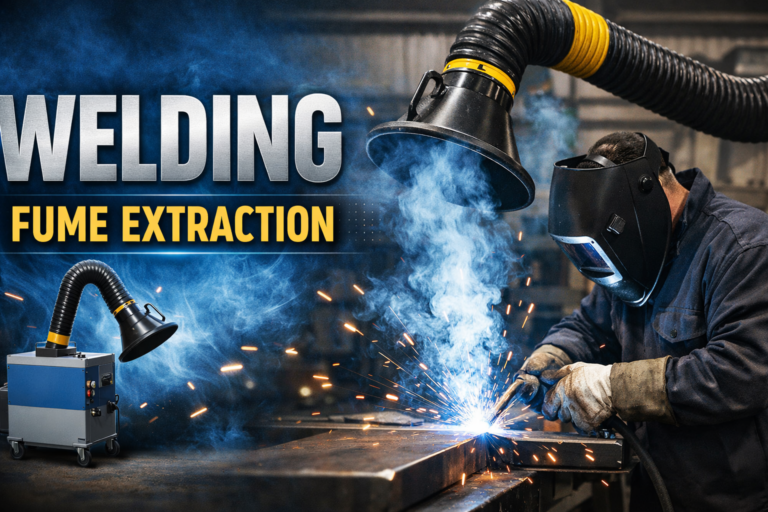
Welding is everywhere—from car factories to small workshops. But when metal meets heat, the process creates welding fumes. These fumes are more than just smoke; they contain dangerous particles and gases. Over time, breathing welding fumes can cause health issues like asthma, lung cancer, or metal poisoning. This is why welding fume extraction matters so much. In this article, you’ll learn what welding fume extraction is, why it’s important, how it works, and how to choose the best solution for your needs.
What Are Welding Fumes?
Welding fumes are a mix of very fine metal particles and gases. They form when the welding arc melts metal, and some of this metal turns into vapor. Once the vapor cools, it becomes airborne dust. Fumes often contain iron, manganese, chromium, and sometimes even lead or cadmium—all harmful if inhaled.
The gas side includes ozone, nitrogen oxides, and carbon monoxide. These gases can cause headaches, dizziness, or more serious health risks after long exposure.
Why Welding Fume Extraction Is Essential
Welding is risky partly because of these fumes. Studies show that welders are up to 40% more likely to develop respiratory diseases than non-welders. In many countries, workplace safety laws require proper ventilation and extraction. But even in smaller shops, using extraction tools can save lives and prevent long-term health problems.
Without extraction, fumes linger in the air. This can affect not only welders but also anyone nearby. Good extraction removes fumes at the source, reducing risk for everyone.
Types Of Welding Fume Extraction Systems
There are several ways to control fumes, but not every method fits all workplaces. Here’s a look at the main options.
| System Type | How It Works | Best For |
|---|---|---|
| Local Exhaust Ventilation (LEV) | Captures fumes right at the welding point | Workshops, manufacturing plants |
| Portable Fume Extractors | Mobile units with flexible arms and filters | Small shops, on-site jobs |
| Downdraft Tables | Suction pulls fumes down through table surface | Bench welding, grinding |
| General Ventilation | Moves air out of the building, less focused | Large open spaces |
Local Exhaust Ventilation (lev)
LEV systems use arms or hoods to catch fumes where they start. They are highly effective and widely used. However, they require proper placement and regular maintenance.
Portable Fume Extractors
These are flexible and easy to move. Ideal for jobs where you can’t install permanent systems. They use HEPA filters to trap particles. But they may not suit heavy, continuous welding.
Downdraft Tables
These tables suck fumes downward. They work well for small parts or bench work. However, they can be costly and need careful cleaning.
General Ventilation
This method dilutes fumes by moving air through the entire space. It’s less effective than local extraction, but helpful in large, open workshops.
Key Factors When Choosing A Welding Fume Extraction System
Selecting the right system is about more than just price. Consider these factors:
- Welding process: Some processes produce more fumes. For example, MIG and stick welding create heavy fumes, while TIG is lighter.
- Workplace size: Small shops may need portable extractors, while big factories often use central LEV systems.
- Airflow rate: The system must move enough air to capture fumes. Look for systems rated for your welding volume.
- Filter type: HEPA and activated carbon filters trap different particles and gases. Make sure your filter matches the fume type.
- Maintenance needs: Some systems require frequent filter changes or cleaning. Choose one that fits your team’s routine.
- Compliance: Check local safety laws. Some regions require specific extraction methods.
| Factor | Why It Matters |
|---|---|
| Airflow | Too little airflow means fumes escape |
| Filter Quality | Poor filters let harmful particles through |
| System Placement | Bad placement reduces effectiveness |
Non-obvious tip: Many beginners overlook the need to position extraction arms close to the weld, ideally within 12 inches. Also, extraction should run before and after welding to clear lingering fumes.
Health Benefits And Safety Improvements
Proper fume extraction protects workers from lung diseases and metal poisoning. It also improves general air quality, reducing headaches, fatigue, and eye irritation. According to OSHA, effective extraction can lower workplace injuries and absenteeism by up to 25%.
Some systems come with air quality monitors. These warn when fume levels are high and help maintain safe conditions. Investing in extraction can also reduce insurance costs and legal risks.
Common Mistakes With Welding Fume Extraction
- Ignoring maintenance: Dirty filters or clogged ducts reduce effectiveness.
- Bad placement: Arms too far from the weld zone miss most fumes.
- Underestimating airflow needs: Small systems may not handle large jobs.
- Skipping PPE: Extraction doesn’t replace personal protective equipment like masks.
- Assuming general ventilation is enough: It rarely captures all dangerous particles.
Non-obvious insight: Some metals, like stainless steel, create hexavalent chromium. This is highly toxic and needs special filters. Always check the material you’re welding before choosing a system.
Real-world Example
A car factory in Michigan switched to LEV systems with HEPA filters. Air quality improved by 40%, and welders reported fewer breathing issues. Maintenance staff also noticed less dust buildup, making the workspace safer overall.
For more scientific data on welding fumes and extraction, visit the OSHA Welding Safety page.
Frequently Asked Questions
What Are The Health Risks Of Welding Fumes?
Welding fumes can cause lung diseases, asthma, cancer, and metal poisoning. The risks depend on the metal and how often you weld.
How Close Should Extraction Arms Be To The Weld?
Extraction arms should be within 12 inches of the welding spot. This captures most fumes before they spread.
Do I Still Need A Mask With Fume Extraction?
Yes. Extraction systems reduce risk, but a respirator mask gives extra protection, especially during heavy welding.
How Often Should Filters Be Replaced?
Most filters need changing every 3-6 months, but it depends on welding frequency and fume levels. Check manufacturer guidelines.
Is General Ventilation Enough For Welding Safety?
No. General ventilation helps, but local extraction is needed to capture dangerous particles and gases near the welding area.
Welding fume extraction is not just a legal requirement; it’s a smart investment in health and safety. Choosing the right system protects workers, improves air quality, and meets regulations. With proper extraction, welding becomes safer and more productive for everyone.