
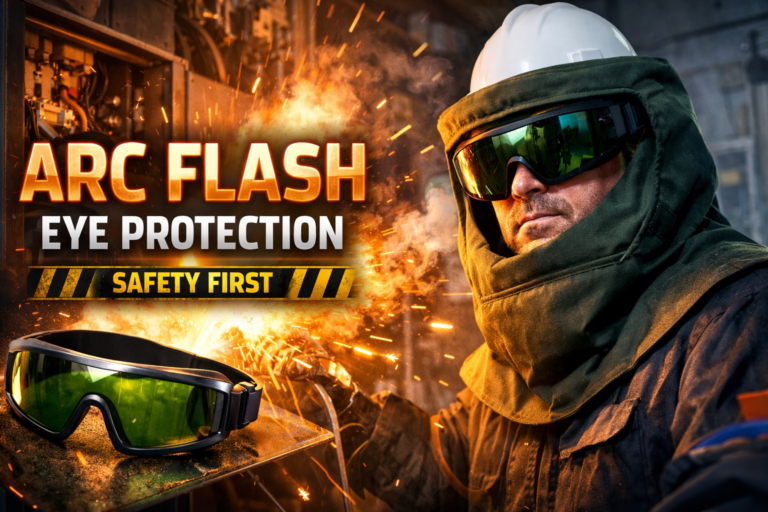
Arc flash is a dangerous electrical event that can cause serious injury. When an arc flash happens, it releases intense heat, light, and energy. One of the most vulnerable parts of the body is the eyes. Protecting your eyes from arc flash is not just a safety rule—it is a must for anyone working around electricity. This article explains why eye protection matters, what types are available, and how to choose the best gear. You will also find practical tips, data, and answers to common questions.
Why Arc Flash Eye Protection Matters
Arc flashes can reach temperatures of up to 35,000°F—about four times hotter than the sun’s surface. The bright light and energy released can cause burns, blindness, and permanent eye damage. Workers in power plants, factories, and construction sites face this risk daily.
According to OSHA, more than 2,000 people are treated each year in the US for arc flash injuries. A significant number suffer eye injuries because they were not wearing proper protection. Even a brief exposure to an arc flash can result in retinal burns, cataracts, or loss of vision.
Many believe that regular safety glasses are enough. However, typical eyewear does not protect against the specific hazards of arc flash. Specialized eye protection is designed to withstand both the heat and optical radiation.
Types Of Arc Flash Eye Protection
The right eye protection depends on the task, environment, and risk level. Here are the most common types:
| Type | Features | Suitable For |
|---|---|---|
| Safety Glasses | Impact-resistant, some with arc-rated lenses | Low-risk electrical work |
| Goggles | Seal around eyes, arc-rated options available | Medium-risk, dusty or confined areas |
| Face Shields | Full-face coverage, arc flash rating, anti-fog | High-risk, direct arc flash exposure |
Arc-rated face shields are the most effective. They are tested to withstand high temperatures and prevent both heat and optical burns. Some shields are tinted to reduce glare and filter dangerous wavelengths.
Goggles provide extra protection against flying debris and dust, which can be stirred up during an arc flash. For most high-voltage tasks, combining goggles with a face shield offers the highest safety.
Standards And Ratings Explained
Not all eye protection is equal. The best gear meets strict safety standards. Look for these key ratings:
- ANSI Z87.1: This US standard sets requirements for impact resistance and optical clarity. Arc flash eye protection must meet or exceed this.
- ASTM F2178: This tests face shields for arc flash resistance. Products that pass can withstand heat and light without melting or cracking.
- NFPA 70E: This electrical safety standard outlines PPE requirements, including eye protection.
Check the labeling on any product. It should state the arc rating (cal/cm²), which measures how much energy it can withstand. For example, a face shield with a 12 cal/cm² rating is suitable for moderate arc flash risks.
| Arc Rating (cal/cm²) | Protection Level | Recommended Use |
|---|---|---|
| 8 | Basic protection | Low-voltage panels |
| 12 | Moderate protection | Medium-voltage work |
| 25+ | High protection | High-voltage/Industrial settings |
A common mistake is using eyewear with no arc rating. Even if it meets impact standards, it will not protect against arc flash energy.
Choosing The Right Eye Protection
Selecting the best arc flash eye protection involves more than picking a brand. Here are practical tips:
- Assess Your Work Environment: Identify voltage levels and risk of arc flash. Higher voltages require higher arc ratings.
- Check Comfort and Fit: Uncomfortable gear is often removed. Choose protection that fits well and does not fog up.
- Look for Certification Labels: Always check for ANSI, ASTM, and NFPA standards on the product.
- Consider Compatibility: Eye protection should work with helmets, hearing protection, and respirators if needed.
- Maintenance Matters: Clean and inspect your eye protection regularly. Damaged lenses can reduce visibility and protection.
Many users overlook compatibility. For example, some face shields do not fit all hard hats. Always test equipment together before use.
Real-world Example
A major power utility reported that after switching to arc-rated face shields and goggles, eye injuries dropped by 70%. Workers also noticed less glare and eye fatigue during long shifts. This shows that the right gear makes a big difference.
Another insight: Some arc flash incidents result from unexpected events, like tools slipping or accidental contact. Even low-risk tasks can cause flashes, so consistent protection is essential.
Additional Safety Tips
- Train workers on proper use and care of eye protection.
- Replace lenses immediately if scratched or cracked.
- Store eye protection in a clean, dry place.
- Do not rely on tinted lenses alone—they must be arc rated.
For more information on PPE standards, visit OSHA PPE guidelines.
Frequently Asked Questions
What Is The Minimum Arc Rating For Eye Protection?
The minimum recommended arc rating is 8 cal/cm². For higher risk environments, use shields with ratings of 12 cal/cm² or more.
Can Regular Safety Glasses Protect Against Arc Flash?
No. Standard safety glasses are not designed to withstand arc flash energy. Only arc-rated eyewear provides proper protection.
How Often Should Eye Protection Be Replaced?
Replace eye protection if the lens is scratched, cracked, or after any arc flash incident. Otherwise, follow manufacturer guidelines—usually every 2–3 years.
Are Tinted Lenses Enough For Arc Flash?
Tinted lenses help with glare, but they do not block arc flash energy unless specifically arc rated. Always check the rating before use.
Should I Use Both Goggles And Face Shields?
For high-risk tasks, using goggles and a face shield together offers extra protection. Goggles protect from debris, while shields guard against heat and light.
Arc flash eye protection saves lives and vision. By understanding the risks, knowing the standards, and choosing the right gear, you can stay safe in any electrical environment. Remember, consistent and proper use of arc-rated eye protection is not just a requirement—it is your best defense against a dangerous workplace hazard.