
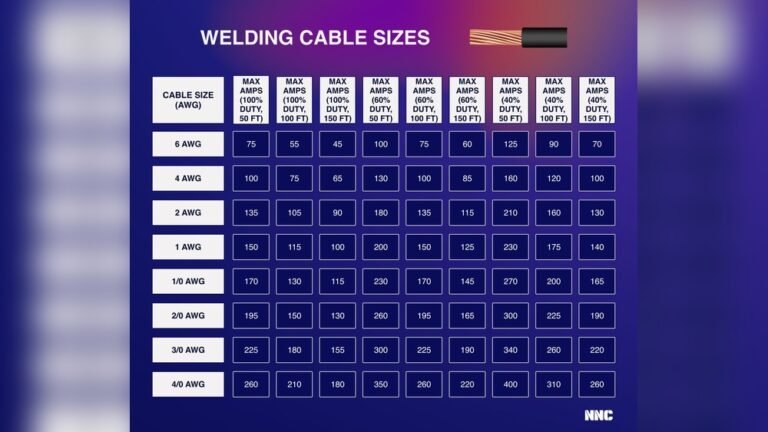
When you work with welding machines, choosing the right welding cable size is not just a technical detail—it’s about safety, performance, and avoiding costly mistakes. Picking the wrong cable can lead to overheating, voltage drop, or even dangerous accidents. Many beginners overlook how cable length, amperage, and even the work environment affect their choice. This guide breaks it all down, so you can select the perfect welding cable size for your needs.
Why Welding Cable Size Matters
The cable size directly impacts how much current can flow safely from your welder to your workpiece. If the cable is too thin, it will heat up quickly, lose energy, and may even melt. Too thick, and you waste money on heavy, hard-to-handle cables. Getting it right means efficient energy use, maximum safety, and a machine that works as intended.
A common mistake is to use whatever cable is available, not realizing that length and amperage matter just as much as the cable’s thickness. For example, a cable suitable for 100 amps at 25 feet may not be safe for 100 feet.
Understanding Welding Cable Sizes
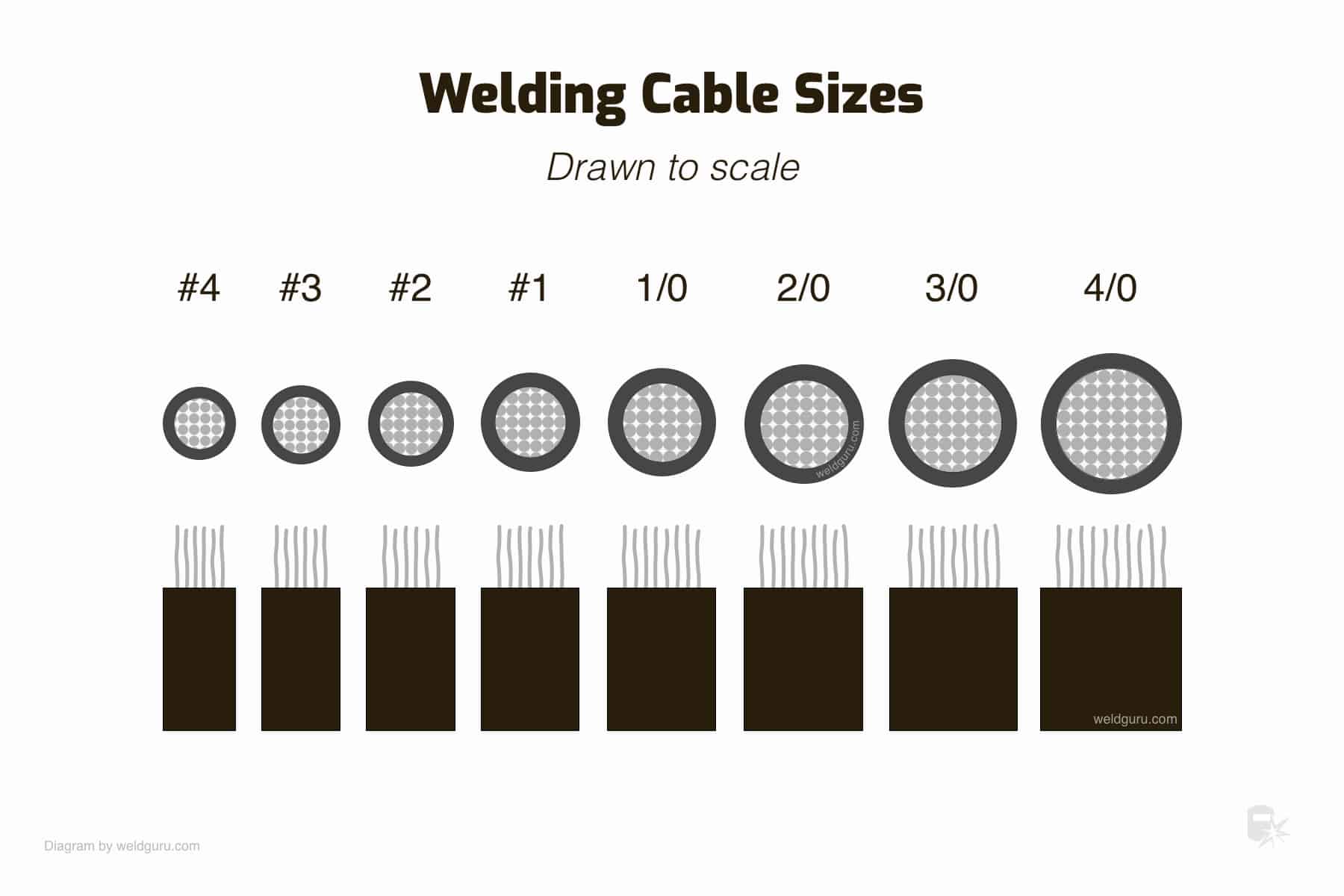
Welding cables are measured in American Wire Gauge (AWG). The lower the AWG number, the thicker the cable. Most welders use sizes between 6 AWG (thin) and 4/0 AWG (very thick). Here’s how AWG translates to actual copper diameter and common uses:
| AWG Size | Diameter (inches) | Common Use |
|---|---|---|
| 6 AWG | 0.162 | Light welding (100A or less, short runs) |
| 2 AWG | 0.258 | Medium welding (150-200A, moderate runs) |
| 1/0 AWG | 0.324 | Heavy welding (300A+, longer runs) |
| 4/0 AWG | 0.460 | Industrial welding, very high current |
Credit: weldguru.com
Key Factors For Choosing Welding Cable Size
Several factors affect your choice of cable size:
- Amperage: The higher the current, the thicker the cable needed.
- Cable length: Longer cables require bigger sizes to prevent voltage drop.
- Duty cycle: More continuous welding heats the cable more.
- Type of insulation: Some insulations allow higher temperatures.
- Ambient temperature: Hot environments may need thicker cables.
Ignoring these can mean unsafe conditions or poor machine performance.
Welding Cable Size Chart
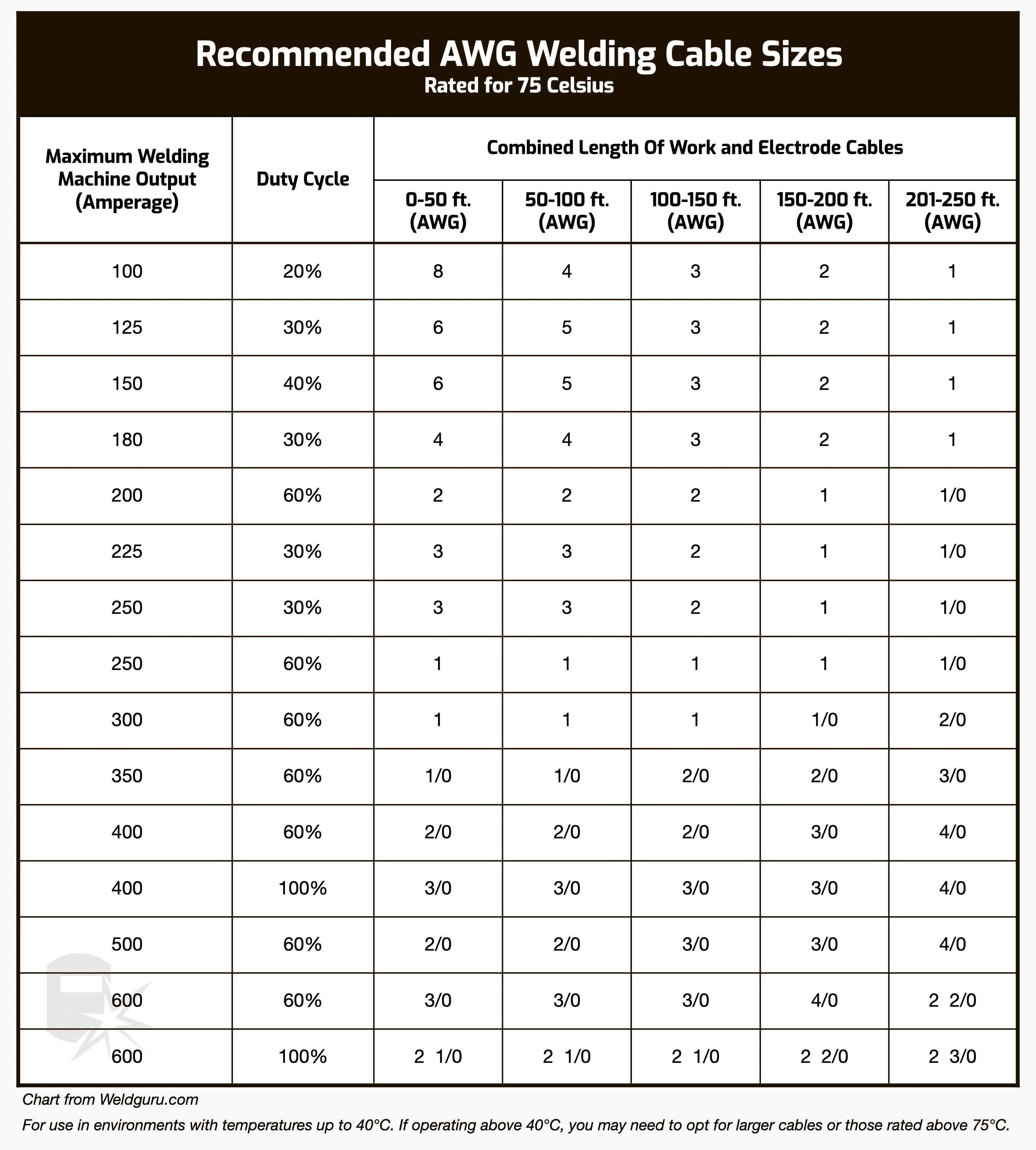
Use this chart as a quick reference for selecting cable size based on amperage and length:
| Max Amps | 25 ft | 50 ft | 100 ft |
|---|---|---|---|
| 100A | 6 AWG | 4 AWG | 2 AWG |
| 150A | 4 AWG | 2 AWG | 1/0 AWG |
| 200A | 2 AWG | 1/0 AWG | 2/0 AWG |
| 250A | 1/0 AWG | 2/0 AWG | 3/0 AWG |
| 300A | 2/0 AWG | 3/0 AWG | 4/0 AWG |
Note: This chart assumes 100% duty cycle and copper cable. For aluminum cable, use a larger size.

Credit: onetouchexim.com
Real-world Examples
Suppose you have a 150A welder and need to run the cable over 75 feet. The chart suggests at least a 1/0 AWG cable. If you use a smaller size, you risk voltage drop, which can make your arc unstable.
Now, consider welding outdoors in summer. High temperatures reduce cable efficiency, so it’s wise to go one size larger than the chart suggests.
Common Mistakes To Avoid
- Using too small a cable because it “looks thick enough.” Always check the AWG and chart.
- Ignoring length: Many only check the amp rating, not realizing cable length increases resistance.
- Mixing cable types: Don’t use automotive battery cables for welding; their insulation isn’t rated for welding’s heat and flexing.
Tips For Buying Welding Cable
- Buy extra length if you’re unsure—you can always coil excess cable.
- Choose flexible cable if you’ll move it often. Welding cable is made to bend, unlike regular power cable.
- Check for copper—it carries more current than aluminum and is more durable.
Most welding supply stores can cut cable to custom lengths. If you’re setting up in a new workshop, measure twice and buy once.
Advanced Insights Beginners Miss
One detail often missed: duty cycle. If your welder only runs at 60% duty cycle, you can sometimes use a slightly smaller cable, but only if you’re sure you won’t exceed that limit. Another overlooked factor is cable bundling—if you run several cables together, heat builds up, so you’ll need thicker cables or more spacing.
Credit: weldguru.com
Comparing Welding Cable To Battery Cable
Many people ask if they can use battery cable for welding. Here’s a side-by-side look:
| Feature | Welding Cable | Battery Cable |
|---|---|---|
| Strand count | Very high (more flexible) | Lower (stiffer) |
| Insulation | Heat and abrasion resistant | Standard automotive insulation |
| Price | Higher | Lower |
| Designed for | High amps, flexing | Short bursts, little movement |
Conclusion: Always use welding cable for welding jobs. It’s safer and lasts longer.
Frequently Asked Questions
What Happens If I Use A Smaller Cable Than Required?
Using a too-small cable causes overheating, voltage drops, and may even start a fire. Your welder’s performance will suffer, and safety risks increase.
Can I Use Welding Cable For Other Electrical Jobs?
Yes, but welding cable is more flexible and expensive than regular power cable. It’s great for battery banks, RVs, or anywhere you need a flexible, high-amperage wire.
Is Aluminum Welding Cable Safe?
Aluminum cable is lighter and cheaper, but carries less current than copper cable of the same size. Always use a larger size for aluminum, and only where allowed by code.
How Do I Know If My Cable Is Copper Or Aluminum?
Copper cable is heavier and has a reddish color at the ends. Aluminum is lighter and silver. Check the label or ask the supplier to be sure.
Where Can I Find Official Welding Cable Standards?
You can find detailed welding cable standards from the American Welding Society. For more technical details, visit the Welding Cable Wikipedia page.
Making the right choice in welding cable size keeps your work safe, efficient, and trouble-free. When in doubt, always go one size bigger—your welder (and your wallet) will thank you.