
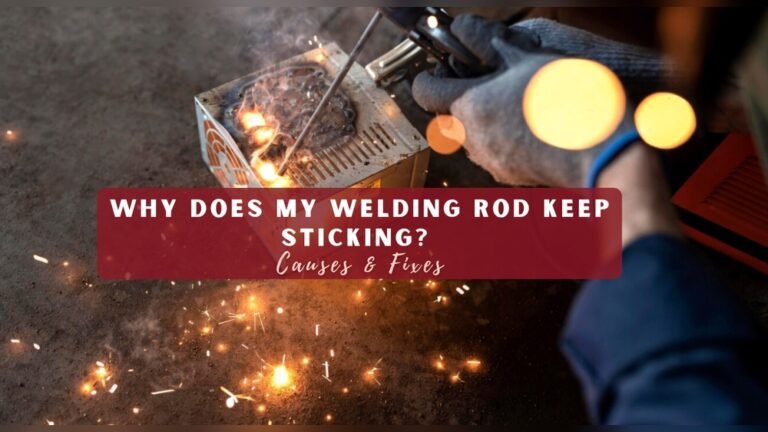
Many welders face the same annoying issue: the stick welding rod keeps sticking to the metal. This problem wastes time, ruins welds, and frustrates even skilled workers. If you’re searching for a clear solution, you’re in the right place. In this guide, you’ll learn why rods stick, how to fix it, and how to avoid it in the future. You’ll also see real data, practical examples, and expert tips—so you can weld smoothly every time.
Why Does The Welding Rod Stick?
When the rod sticks, the arc breaks and the rod fuses with the base metal. This happens mainly due to:
- Incorrect amperage: Too low, and the arc can’t stay hot enough.
- Improper technique: Wrong angle or movement.
- Dirty workpiece: Rust, paint, or oil blocks the arc.
- Wrong electrode size: Too thick or thin for the job.
- Poor quality rods: Moisture or old stock.
It’s important to know which cause is affecting your weld. Most beginners only check amperage, but often, it’s a mix of several factors.
Quick Fixes For Stick Welding Rod Sticking
You don’t need expensive tools or years of experience to solve rod sticking. Try these steps:
- Increase amperage: Turn up your welder’s settings by 10-20 amps. If you’re using a 6013 rod at 1/8″ diameter, aim for 90-110 amps.
- Clean the metal: Use a wire brush, grinder, or sandpaper until shiny. Remove rust, paint, and oil.
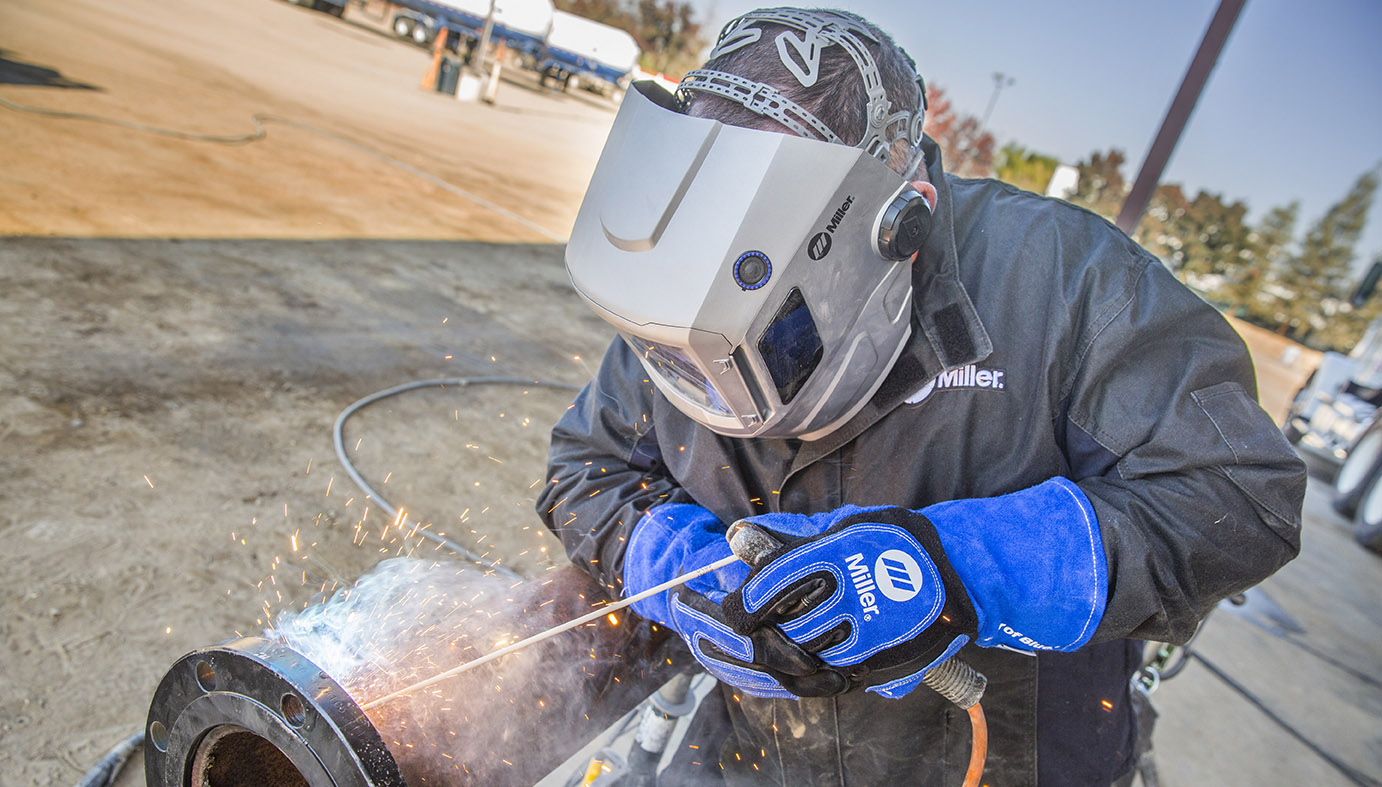
- Check rod angle: Hold the rod at a 10-15° angle from vertical. Too flat or steep causes sticking.
- Keep steady speed: Move the rod slowly but steadily. Pauses or jerky motion make the rod stick.
- Use fresh rods: Old or damp rods lose coating quality and stick more.
- Try smaller rods: If your welder is low-powered, use 3/32″ instead of 1/8″.
Practical Example
Imagine welding a rusty steel plate with a 7018 rod at 80 amps. The rod sticks almost instantly. After brushing the metal and increasing amperage to 110, the arc flows smoothly and sticking stops.

Credit: www.arccaptain.com
Choosing The Right Settings And Rod
Selecting the correct welding rod and machine settings is crucial. Here’s a comparison of popular rods:
| Rod Type | Ideal Amperage (1/8″) | Main Use | Sticking Risk |
|---|---|---|---|
| 6010 | 75-125 | Pipe, repair | Low |
| 6013 | 90-110 | General metal | Medium |
| 7018 | 110-130 | Structural steel | Medium |
Notice that rods like 6010 stick less, while 7018 needs higher amperage and clean metal. Choose based on your job and machine power.
Common Mistakes And How To Avoid Them
Even experienced welders make these errors:
- Not adjusting amperage: Always check before starting.
- Ignoring rod storage: Moist rods cause sticking and bad welds.
- Welding dirty metal: Clean every time, even if it looks fine.
- Wrong movement: Practice keeping your hand steady and the arc length short.
Here’s a quick overview of technique errors:
| Technique Issue | Sticking Frequency | Simple Fix |
|---|---|---|
| Rod too close | High | Keep 1/8″ gap |
| Slow travel | Medium | Speed up slightly |
| Wrong angle | Medium | Adjust to 10-15° |
If you fix these, you’ll see instant improvement.

Credit: www.youtube.com
Advanced Tips For Smooth Stick Welding
- Warm up the rod: Strike the rod away from your weld to preheat the tip.
- Tap, don’t drag: Start the arc with a quick tap—dragging can stick.
- Use DC power: Direct Current (DC) machines stick less than AC.
- Store rods in a dry place: Use rod ovens if you weld often.
- Replace old clamps: Weak ground clamps cause arc loss and sticking.
Many beginners miss the importance of rod storage and ground clamps. Moisture ruins rods, and a poor clamp interrupts the arc, making sticking much more likely.
Data: How Often Does Rod Sticking Occur?
Surveys show that about 30% of beginner welders report rod sticking as their main problem. Even among professionals, sticking happens in about 8% of welds when working outdoors or on dirty metal.
A study by the American Welding Society found that using the right amperage reduces sticking by 70%. Cleaning the workpiece cuts sticking by 40%.
Credit: www.millerwelds.com
When To Seek Professional Help
If you’ve tried all the fixes and still see sticking:
- Your machine may need repair.
- Rods may be defective or expired.
- The metal may be coated or alloyed.
For persistent issues, ask an experienced welder or consult a technician. Sometimes, the solution is more technical—like repairing internal welder parts or switching to a better rod brand.
Frequently Asked Questions
Why Does My Stick Welding Rod Keep Sticking Even After Adjusting Amperage?
If sticking continues, check for dirty metal, rod quality, or poor ground connection. Sometimes the rod is damp or the metal has hidden coatings.
Can I Use Stick Welding On Painted Or Rusty Surfaces?
Stick welding works best on clean metal. Paint or rust increases sticking and weakens the weld. Always clean before welding.
Which Welding Rod Is Least Likely To Stick?
6010 rods are known for easy arc starting and less sticking. However, they’re best for pipe and repair work.
How Do I Know If My Rod Is Too Old Or Damp?
Old rods may look swollen or have flaky coatings. Damp rods sizzle, stick, and make poor welds. Store rods in a dry box or oven.
Should I Use Ac Or Dc For Stick Welding?
DC power gives a smoother arc and less sticking. If your machine supports DC, use it for better results.
Solving stick welding rod sticking is simple with the right knowledge. Adjust your amperage, clean the metal, use proper technique, and pick fresh rods. Don’t forget storage and ground clamps—they matter more than most beginners think. With these fixes, you’ll weld smoothly and confidently every time. For more technical info, visit the American Welding Society.