
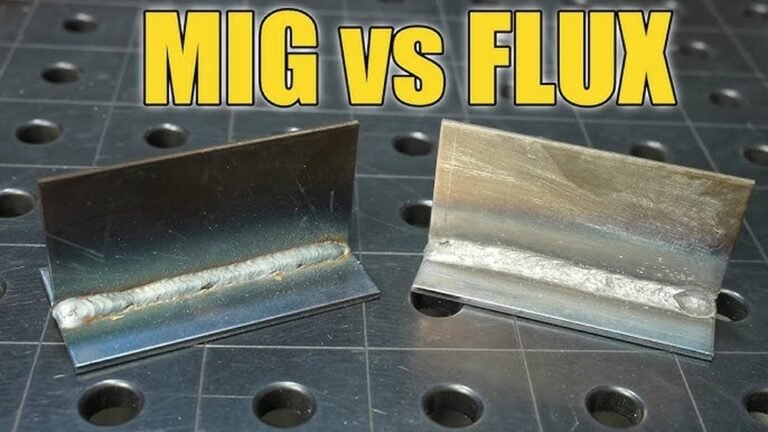
When you want to weld steel at home or in your shop, choosing the right process is important. Two popular options are flux core welding and MIG welding. Both can join metal quickly, but they work in different ways. The big question many beginners have is: “Do I really need gas for welding?” Let’s look closely at flux core vs MIG, so you can decide which is best for your needs.
How Flux Core And Mig Welding Work
Flux core welding uses a special wire filled with flux powder. When you weld, the flux melts and creates gas that protects the weld from air. This means you don’t have to buy or set up a gas tank. It’s often called FCAW (Flux Cored Arc Welding).
MIG welding, or Gas Metal Arc Welding (GMAW), uses a solid wire and a bottle of shielding gas, usually argon or a mix of argon and CO₂. The gas keeps the weld clean and smooth by blocking out oxygen and moisture.
Here’s a side-by-side look at how each system works:
| Process | Wire Type | Shielding | Setup Complexity |
|---|---|---|---|
| Flux Core | Hollow, flux-filled | Flux creates gas | Simple |
| MIG | Solid | External gas | More involved |
Do You Really Need Gas?
The main advantage of flux core welding is you do not need a gas tank. The wire makes its own shield when it burns. This makes flux core great for outdoor jobs, especially when it’s windy. Gas from a bottle can blow away, but flux core keeps the weld protected.
MIG welding needs a steady flow of shielding gas. If you try to use MIG without gas, the weld will turn out weak, with lots of holes and rust. Some machines let you swap between flux core and MIG by changing the wire and turning off the gas.

Credit: www.amazon.com
Pros And Cons: Flux Core Vs Mig
Choosing between flux core and MIG depends on your goals. Here’s a breakdown of what you get with each:
| Feature | Flux Core | MIG |
|---|---|---|
| Shielding Gas Needed? | No | Yes |
| Best for Outdoors? | Yes | No |
| Weld Appearance | More spatter, rougher | Smoother, cleaner |
| Material Thickness | Thicker metals | Thin to medium metals |
| Learning Curve | Moderate | Easier for beginners |
Flux Core Strengths
- No gas tank needed – Set up anywhere.
- Penetrates thicker steel – Good for farm, auto, and heavy work.
- Works in wind – Outdoor projects are easier.
Mig Strengths
- Cleaner welds – Less spatter and almost no slag to chip away.
- Easier to learn – Beginners often get better results fast.
- Best for thin metals – Ideal for bodywork and home repairs.
Real-world Examples
Many home welders start with a flux core machine because it’s cheaper and needs less gear. For example, building a garden gate or fixing a trailer frame outdoors is easier with flux core.
If you want to weld car panels or furniture, a MIG setup gives a smoother look. It’s popular in auto shops and for detailed work where appearance is important.
Some machines let you use both methods, simply by switching the wire and toggling the gas. This is a flexible solution if you want the best of both worlds.

Credit: www.youtube.com
Cost Comparison
The cost to start flux core welding is usually lower. You only need the welder and the special wire. MIG welding costs more up front because of the gas tank, regulator, and hose.
Here’s a quick price comparison:
| Item | Flux Core | MIG |
|---|---|---|
| Welder (Entry-Level) | $200–$400 | $300–$600 |
| Wire (10 lbs) | $25–$40 | $20–$30 |
| Gas Tank & Regulator | Not needed | $150–$300 |
| Total Startup Cost | $225–$440 | $470–$930 |
One thing beginners often miss: flux core wire is more expensive per pound than solid MIG wire, but you save on not buying gas.
Common Mistakes And Insights
A common mistake is using flux core wire indoors without good ventilation. The smoke and fumes are stronger than with MIG, so always use a fan or open windows.
Also, many people believe MIG is always easier, but if you’re working outside, wind can ruin your welds by blowing the gas away. In this case, flux core is a much better choice.
Here’s a non-obvious tip: flux core can weld rusty or dirty metal better than MIG. The flux helps clean the metal as you weld, which means less prep for some jobs.
Which Should You Choose?
- Pick flux core if you need to weld outside, want to save money, or will work with thick or rusty steel.
- Choose MIG if you want neat welds on clean, thin metal, and can work indoors or in a sheltered space.
If you have the budget, consider a dual-purpose welder that can switch between flux core and MIG. This gives you more options as you learn and take on new projects.
Remember, your skill matters more than the machine. Take time to practice, read your welder’s manual, and watch trusted tutorials like those from the American Welding Society or Lincoln Electric.
Making the right choice now will help you enjoy welding and get better results from the start.
Frequently Asked Questions
What Metals Can I Weld With Flux Core And Mig?
You can weld mild steel with both methods. MIG also works on aluminum and stainless steel with the right wire and gas, but flux core is usually just for steel.
Can I Use Flux Core Wire In A Mig Welder?
Yes, most MIG welders can use flux core wire if you turn off the gas and swap the polarity. Check your machine’s manual for details.
Is Flux Core Welding Stronger Than Mig?
On thicker steel, flux core can make deeper welds, which means more strength. On thin metal, MIG is usually better and avoids burning through.
Why Does My Flux Core Weld Look Messy?
Flux core creates more spatter and slag. Clean the weld with a wire brush or chipping hammer. Adjust your settings and try to keep a steady hand for smoother results.
Do I Need Special Safety Gear For Flux Core Welding?
Both methods need welding helmets, gloves, and protective clothing. Because flux core makes more smoke, good ventilation and a respirator are extra important.

Credit: www.uti.edu