

When it comes to cutting through tough materials, an angle grinder diamond blade is a game-changer. These blades are built to handle stone, concrete, and tile with precision and ease. They last longer than standard blades and offer cleaner cuts, making your work smoother. Whether you’re tackling a small home project or a more demanding job, having the right diamond blade on your angle grinder can make all the difference. It’s about getting the job done efficiently without unnecessary wear or frustration.
Precision 4.5″ Diamond Blade
This Angle Grinder Diamond Blade is suited for professionals and DIYers needing clean cuts on tile, porcelain, and granite.

This 4.5-inch diamond blade is designed for angle grinders to handle cutting tasks on hard surfaces like porcelain, ceramic, granite, and marble. Its ultra-thin X-teeth turbo mesh rim helps reduce chipping, providing precise and smooth cuts, which is especially useful for detailed tile work.
Using this blade feels steady and controlled due to its thicker core that minimizes vibrations. It works well both wet and dry, letting me switch between tasks without changing blades frequently, which saves time and effort on the job.
Practical Insights for Tile Cutting
- Delivers clean cuts with minimal chipping thanks to its thin turbo mesh rim.
- Operates efficiently in wet or dry conditions, offering flexibility.
- Thicker core reduces vibration, improving comfort and safety.
- Compatible with standard 7/8″ arbor angle grinders and tile saws.
- Durable diamond matrix extends blade life, lowering replacement frequency.
Choosing This Blade Wisely
This blade fits users who need precise tile cuts without frequent blade swaps or excess chipping. Its design supports both professionals and serious hobbyists working on porcelain or granite surfaces.
However, those expecting a blade for heavy-duty concrete cutting might find it less suited, as it’s optimized for thin tile and masonry materials rather than thick or highly abrasive stone.
Thoughts on Using the ZORUNNA Diamond Blade
The blade handles tile cutting with a good balance of precision and durability. Its ultra-thin design noticeably improves cut smoothness compared to standard blades. The reduced vibration makes longer cutting sessions more comfortable and controlled.
One minor limitation is that its thinness, while great for precision, may not be ideal for rougher, thicker materials where a sturdier blade is preferred. Still, for its intended use, it offers consistent performance and good value over time.
Considerations Before Purchase
This blade is a solid choice if you regularly cut porcelain or ceramic tiles and want clean edges without hassle. Avoid it if your work involves heavy concrete or very thick stone, as it’s not designed for those materials.
Remember to match the blade’s arbor size to your grinder to ensure proper fit and safety. With appropriate use, it’s a dependable tool that keeps your cuts precise and your workflow smooth.
Dewalt 4.5-inch Diamond Blade
This Angle Grinder Diamond Blade is ideal for professionals and DIYers who need precise, durable cutting on masonry and dry materials.
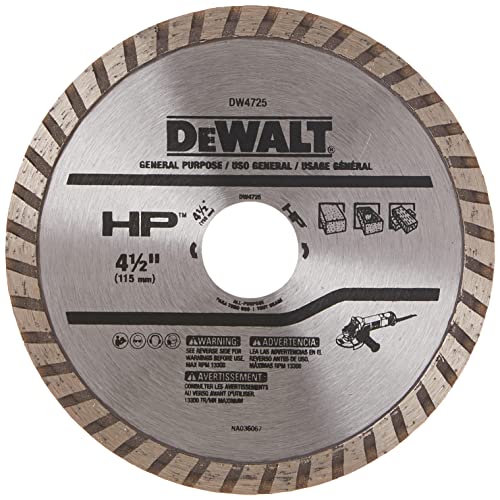
Key Points for Masonry Cutting
- High-performance diamond matrix extends blade life significantly compared to standard abrasives
- Continuous rim design ensures smooth, clean cuts on dry materials
- Thinner kerf speeds up cutting while reducing dust generation
- Fits standard 7/8-inch arbor angle grinders for easy mounting
- Compact 4.5-inch diameter balances maneuverability and cutting depth
Considerations for Use
The DEWALT diamond blade feels sturdy and reliable during operation. It cuts through masonry with minimal effort, allowing for confident, precise work without frequent blade changes. Dust is noticeably less compared to other blades, which helps maintain a cleaner workspace. Its slim design contributes to faster cuts, saving time on projects.
One trade-off is the blade’s size, which is best suited for smaller, detailed cuts rather than heavy-duty deep cuts. Users looking for larger cutting capacity may find it limiting.
Thoughts on Choosing This Blade
This blade fits well for those who handle masonry or dry cutting tasks with an angle grinder and want a durable blade that reduces dust and cuts faster. Its continuous rim design is particularly useful for smooth finishes. However, if your projects require cutting thicker or denser materials, consider a blade with a larger diameter.
For occasional use or smaller jobs, this blade offers a good balance of performance and ease of use. Keep the blade clean and avoid overheating to maintain its lifespan. Overall, it delivers consistent results without unnecessary complexity.
Zorunna 4.5″ Tile Grinder Diamond Blade
This Angle Grinder Diamond Blade is suited for professionals and DIY enthusiasts needing precise cuts in tile and stone materials.

Practical Features for Tile and Stone Cutting
- Ultra-thin design reduces chipping for cleaner cuts.
- Works wet or dry, adapting to different job site conditions.
- Thicker core reduces vibration for safer handling.
- Compatible with most angle grinders and tile saws.
- Durable diamond matrix extends blade life and cutting efficiency.
This is a set of five 4.5-inch diamond saw blades made for cutting tile, porcelain, ceramic, granite, and marble. It addresses the common issue of chipping and uneven cuts with its ultra-thin X-teeth turbo mesh rim design, making precise cuts easier to achieve.
Using these blades feels controlled and smooth. The reduced vibration and spark-free operation help maintain confidence while working. I found they save time by cutting efficiently without needing frequent blade changes.
Who Benefits Most from This Blade
This blade is a good fit for tile installers, contractors, or hobbyists who need accurate and clean cuts on ceramic and stone materials. Its compatibility with multiple cutting tools adds convenience for users with varied equipment.
Those who require blades for heavy-duty concrete cutting or large-scale demolition might find this less suitable, as it is optimized for tile and similar materials and is thinner than some heavy-duty blades.
- Best for precision tile and masonry cutting.
- Ideal when working on both wet and dry cuts.
- Not designed for thick concrete or metal cutting.
Thoughtful Choice for Tile Cutting Tasks
If your work involves detailed tile cutting where smooth edges matter, this blade set offers a reliable option. It suits those who value control and minimal material damage over brute force cutting. However, if your projects demand tougher blades for dense materials, consider alternatives.
To get the most from these blades, ensure your angle grinder fits the 7/8″ arbor and maintain steady pressure during cuts. This approach will help you avoid unnecessary wear and extend blade life.
Overall, it’s a practical choice for anyone focused on neat, consistent tile cutting without fuss.
Lozlin 4.5″ Diamond Angle Grinder Blades
The LOZLIN 4.5″ Angle Grinder Diamond Blade is ideal for professionals and DIYers who need reliable multi-material cutting performance.

Practical Features for Multi-Material Cutting
- Designed to cut marble, quartz, stone, tile, metal, and plastic
- 4.5-inch diameter with a 0.87-inch arbor hole for compatibility
- Diamond-coated edge provides durable, sharp cutting
- Cooling holes reduce overheating during intense use
- Pack of three blades offers convenience for extended projects
Thoughts on Everyday Use
This diamond blade feels sturdy and precise when fitted on an angle grinder. The cuts are clean and consistent across different materials, which saves time and reduces the need for rework. I noticed the blade stays cooler thanks to the vent holes, which means less downtime waiting for it to cool off.
A Balanced Choice for Craftsmen and Hobbyists
This product suits those who regularly work with varied materials and need a dependable blade that handles multiple surfaces without switching discs constantly. It may not be the best fit for someone only working on one material type or requiring ultra-specialized blades for precision stone cutting.
- Great for multitasking across stone, tile, and metal
- Durable enough for professional or home workshop use
- Three blades provide good value for frequent users
- May be overkill for casual users or single-material tasks
Guidance for Prospective Buyers
If you need a versatile and reliable diamond blade for your angle grinder, especially for projects mixing stone and metal, this LOZLIN set is a sensible option. Those who only cut soft materials or need ultra-precise specialty blades might want to explore other choices. Keep in mind that maintaining the blade’s sharpness depends on proper use and cooling, but the built-in design helps with this.
Overall, this set offers a practical balance of durability, precision, and convenience that should support steady work without surprises.
Makita 4-1/2″ Continuous Rim Diamond Blade
This Angle Grinder Diamond Blade suits professionals and DIYers who cut tile, stone, or ceramic and need precision and durability.

Performance Highlights for Tile and Stone Cutting
- Optimum bond matrix ensures smoother, longer-lasting cuts on tile, granite, and stone.
- Continuous rim design offers precise contact and a cleaner finish than segmented blades.
- High-quality diamonds speed up cutting while extending blade life.
- Balanced steel core reduces vibration, making it easier to control during use.
- Works well with standard 4-1/2″ angle grinders.
- Not ideal for heavy-duty concrete cutting or demolition tasks.
- Continuous rim may cut slower on very hard materials compared to segmented blades.
Thoughts on the Makita Diamond Blade
This blade focuses on delivering a clean, smooth cut for general-purpose tile and stone work. Its continuous rim design means less chipping and a more precise finish, which is helpful for detailed projects. The blade feels stable in hand thanks to the balanced steel core, reducing fatigue over longer jobs.
While it’s not built for aggressive cutting of concrete, it excels in tasks requiring accuracy and a refined edge. I found it easy to handle and confident in the consistency of its performance on porcelain and ceramic tiles.
Guidance for Choosing This Diamond Blade
If you often work with tile, granite, or ceramic and want a blade that prioritizes smooth, clean cuts over speed, this Makita blade fits well. It’s especially suited for those who value control and a polished finish.
However, if your projects involve rougher materials or fast demolition cutting, this blade may feel limiting. It’s designed more for precision than heavy-duty use.
- Best for tile and stone cutting with angle grinders.
- Not recommended for heavy concrete work.
- Easy to use and reduces vibration during cutting.
Considerations Before You Buy
This blade is a solid choice when you need accuracy and a smooth cut on tile and stone. It won’t speed through concrete but offers a reliable, cleaner cut for general-purpose use. If your priority is detailed work, it’s worth considering.
Those who require fast, aggressive cutting might want to look elsewhere. For careful cutting jobs, this blade will hold up well and help you maintain control.
One tip: pair it with a steady angle grinder and proper safety gear for best results. Overall, it’s a dependable tool for specific cutting needs without surprises.
Finding The Right Angle Grinder Diamond Blade For Your Needs
Choosing the right diamond blade for your angle grinder depends largely on the materials you plan to cut. Consider whether you mostly work with tile, stone, or mixed materials. Blade thickness and rim type affect cutting speed and smoothness. Most people overlook the arbor size and compatibility with their grinder. It’s best to confirm the blade fits your tool’s specifications before buying. Also, think about whether you need blades for wet or dry cutting. These factors narrow down your choices quickly and help you avoid mismatched blades.
The 30-second Angle Grinder Diamond Blade Checklist
- Does the blade fit your grinder’s arbor size?
- Is the blade designed for the material you cut most often?
- Can the blade handle wet and dry cutting if needed?
- Is the blade thickness suitable for your preferred cutting speed and precision?
- Does the blade’s design reduce vibration during use?
- Is the blade durable enough to match your cutting frequency?
Preventing Buyer’s Regret With Angle Grinder Diamond Blades
Regret #1: Buying a blade that doesn’t fit your angle grinder. Check the arbor size and blade diameter carefully to ensure compatibility. This simple step avoids wasted money and effort.
Regret #2: Choosing a blade unsuitable for your material. Using a tile blade on granite or vice versa can cause poor cuts and faster blade wear. Match the blade to your main cutting material for better results.
Regret #3: Overlooking blade thickness and rim type. A thicker blade can slow cuts but last longer, while a thinner blade offers precision but may wear faster. Decide what matters most for your projects before purchasing.
Quick Pick Table For Angle Grinder Diamond Blade Selection
| If you want… | Look for this | Avoid this |
|---|---|---|
| Fast, smooth cuts on tiles | Super thin blades with turbo mesh rims | Thick, continuous rim blades |
| Long-lasting blade life | High-performance diamond matrix blades | Blades with low diamond concentration |
| Multi-material cutting versatility | Multi-purpose blades designed for stone, metal, and tile | Blades specialized only for one material type |
| Reduced vibration and safer handling | Blades with thicker core and balanced steel design | Lightweight blades prone to wobbling |
| Compatibility with your angle grinder | Blades with a 7/8-inch arbor size (common standard) | Blades with non-matching arbor sizes |
Tips For Using And Caring For Your Angle Grinder Diamond Blade
- Always verify the blade is securely mounted and the arbor lock is tight before use.
- Use appropriate safety gear such as gloves, eye protection, and dust masks during cutting.
- Allow the blade to cool down between long cuts to avoid overheating and premature wear.
- Clean the blade after use to remove debris and prevent buildup that could affect performance.
- Store blades flat in a dry place to maintain their shape and prevent damage.
Angle Grinder Diamond Blade Faqs
Will this blade fit all angle grinders?
Most diamond blades for angle grinders have a standard 7/8-inch arbor size. Check your grinder’s arbor size to ensure compatibility before buying. Using the wrong size can be unsafe and damage the tool.
Can I use the same blade for wet and dry cutting?
Some blades are designed for both wet and dry cutting, but not all. Verify the product details to see if your blade supports wet cutting. Wet cutting reduces dust and blade heat.
How do I know if the blade is suitable for my material?
Blades vary by material type, such as tile, granite, or metal. Choose a blade designed for the main materials you cut to get cleaner, more efficient cuts. Using the wrong blade can cause chipping or fast wear.
How long do diamond blades usually last?
Blade life depends on usage, material hardness, and blade quality. High-performance blades last longer but still need replacement with regular use. Inspect your blade for signs of wear or damage before each job.
Is vibration a common problem with diamond blades?
Vibration can occur if the blade is unbalanced or the core is too thin. Look for blades with a thicker core and balanced design to reduce wobble. Proper mounting also minimizes vibration.
Can I sharpen a diamond blade when it gets dull?
Diamond blades typically do not require sharpening. If cutting slows down, you may need to dress the blade using a dressing stone or replace it if worn out.
Are diamond blades noisy during operation?
Diamond blades produce some noise like any cutting tool, but vibration and noise vary by blade design. Blades with balanced cores and quality construction tend to operate quieter.
Closing Thoughts On Choosing An Angle Grinder Diamond Blade
Selecting the right angle grinder diamond blade comes down to matching the blade with your materials and tool. Focus on fit, cutting style, and blade durability to find what suits your projects best. The one that fits your grinder and cuts your most common materials well is usually the best choice.
When in doubt, prioritize compatibility and material suitability above extra features. This simple rule helps prevent most buyer regrets and ensures your blade performs reliably.