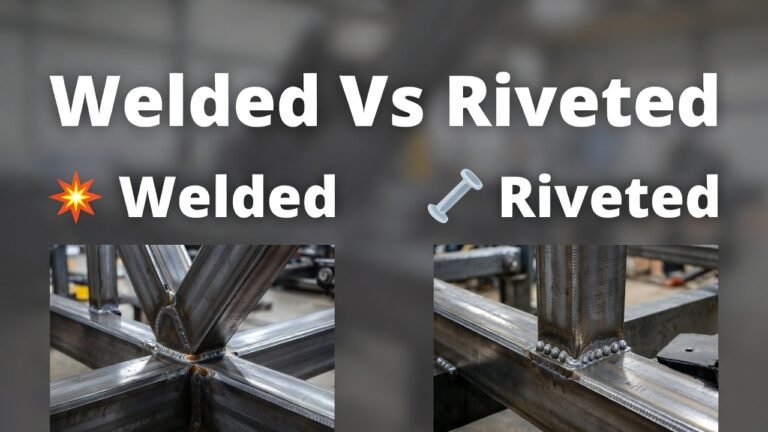
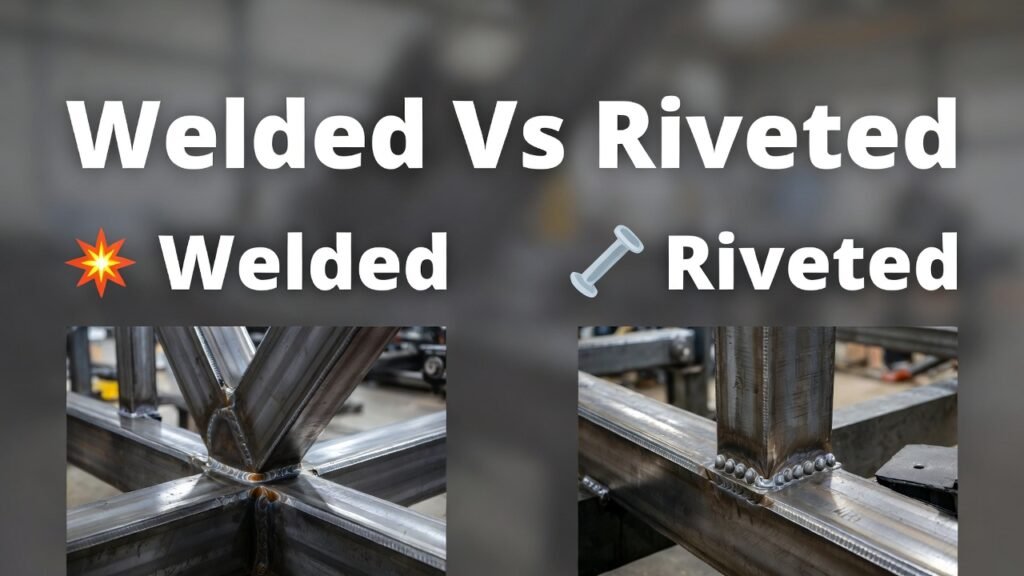
When we join metal parts, two common ways are welding and riveting. Both ways connect metal pieces, but they work very differently. This article will help you understand welded vs riveted joints. We will see what each method means, their good and bad points, and where people use them.
What is Welding?
Welding uses heat to melt metals. The melted parts join and become one piece. The connection is strong and usually does not let water pass. Welding is a permanent way to join metals. It needs special tools and people with skill.
How Welding Works
Heat melts the edges of metal pieces.
The molten metal cools and solidifies.
The parts become one solid piece.
Where Welding Is Used
Welding is common in places where strength is very important. For example:
Building steel frames for buildings
Making car parts
Joining pipes for water or gas
Building heavy machines
What is Riveting?
Riveting uses metal pins called rivets. These pins hold metal parts together. The rivets go through holes in the metal. Then, they are hammered or pressed to hold tightly. Riveting does not melt metal. It is a mechanical way to join parts.
How Riveting Works
Drill holes in the metal pieces.
Put rivets through the holes.
Press or hammer the rivet ends.
Rivets hold the parts together.
Where Riveting Is Used
Riveting is often used where parts need to be strong but easy to fix or check. For example:
Building airplanes
Making bridges
Joining sheet metal parts
Building boats with riveted hulls
Comparing Welded and Riveted Joints
Now let’s look at the main differences between welding and riveting. This table will help you see them clearly.
Feature
Welding
Riveting
Strength
Very strong, parts become one
Strong, but less than welding
Waterproof
Seamless and leak-proof
Can develop leaks over time
Appearance
Neat, smooth, no holes
Visible rivets or bumps
Skill Needed
Requires trained workers
Less skill needed
Speed of Joining
Slower, needs setup
Faster, simple tools
Repair and Maintenance
Difficult to separate parts
Easy to remove and fix
Effect of Heat
Heat can weaken thin metals
No heat, no weakening
Weight
Lighter, no extra parts
Heavier due to rivets
Cost
More expensive
Less expensive
Advantages of Welding
Welding offers many benefits, especially when strength matters most.
Stronger joints: The metals fuse to form one piece.
Water-tight: No holes or gaps to leak water.
Good for heavy loads: Used in strong structures.
Clean look: Smooth surface without bolts or rivets.
Lighter weight: No extra parts like rivets add weight.
Disadvantages of Welding
Welding also has some downsides.
Needs skilled workers: You must train people well.
Special equipment: Welding machines cost money.
Heat can damage metal: Thin metals may warp or weaken.
Hard to repair: You cannot easily take joints apart.
Inspection is tricky: Some defects are hard to see.
Advantages of Riveting
Riveting also has many good points.
Easy to install: Faster than welding in many cases.
No heat damage: Metals do not weaken from heat.
Good for vibration: Holds well in moving parts.
Easy to fix: Remove rivets and repair parts.
Lower cost: Tools and labor are cheaper.
Disadvantages of Riveting
Riveting has some drawbacks too.
Less strong: Not as strong as welded joints.
Leaks possible: Holes can let water or air in.
Visible rivets: Not as neat looking as welding.
Heavier: Rivets add extra weight.
Why Are Airplanes Riveted?
Airplanes mostly use rivets, not welding. Why?
Aluminum weakens with heat from welding.
Rivets hold well even with vibration.
Rivets let parts move slightly, avoiding cracks.
Easy to check and fix riveted joints.
Why Are Boats Welded?
Many boats have welded hulls for these reasons:
Welding creates a strong, solid hull.
Seams are waterproof and do not leak.
Less maintenance needed than riveted boats.
Welding gives a smooth, clean hull surface.
When to Choose Welding or Riveting?
Choosing depends on what you need.
Choose welding: When strength and waterproofing are most important.
Choose riveting: When easy repair and vibration resistance matter.
Material matters: Some metals cannot be welded well.
Budget and skills: Riveting is cheaper and easier.
Summary
Welding and riveting both join metal parts well. Welding fuses metals with heat. It gives strong, sealed joints. But it needs skill and can damage thin metals.
Riveting uses metal pins to hold parts. It works well for vibration and easy repair. Riveted joints are less strong and may leak. Still, riveting is faster and cheaper.
For building cars, bridges, airplanes, and boats, the choice matters. Welding suits heavy structures needing strength. Riveting suits airplanes and parts needing repair.
Think about your project needs before choosing. Both methods have good uses.
Frequently Asked Questions
Are Rivets Better Than Welds?
Rivets provide better vibration resistance and easier repairs, ideal for aerospace and disassemblies. Welding offers stronger, leak-proof, and seamless joints perfect for structural integrity and waterproofing. Choose rivets for flexibility and welding for durability and strength.
Why Are Airplanes Riveted And Not Welded?
Airplanes use rivets because riveting avoids heat damage to aluminum and provides strong, durable joints. Rivets resist vibration better and allow easier repairs than welding. Welding weakens thin aluminum and is harder to inspect, making riveting the safer, more reliable choice for aircraft structures.
Is A Welded Or Riveted Boat Better?
Welded boats offer stronger, leak-proof seams and better durability than riveted boats. Riveted boats allow easier repairs and resist vibration better but may leak. Choose welding for strength and rivets for flexibility or high-vibration needs.
What Are The Disadvantages Of Welded Joints Over Riveted Joints?
Welded joints need skilled labor and special equipment. Heat can weaken materials, cause warping, and create inspection challenges. They aren’t suitable for all metals and cannot be easily disassembled like riveted joints.